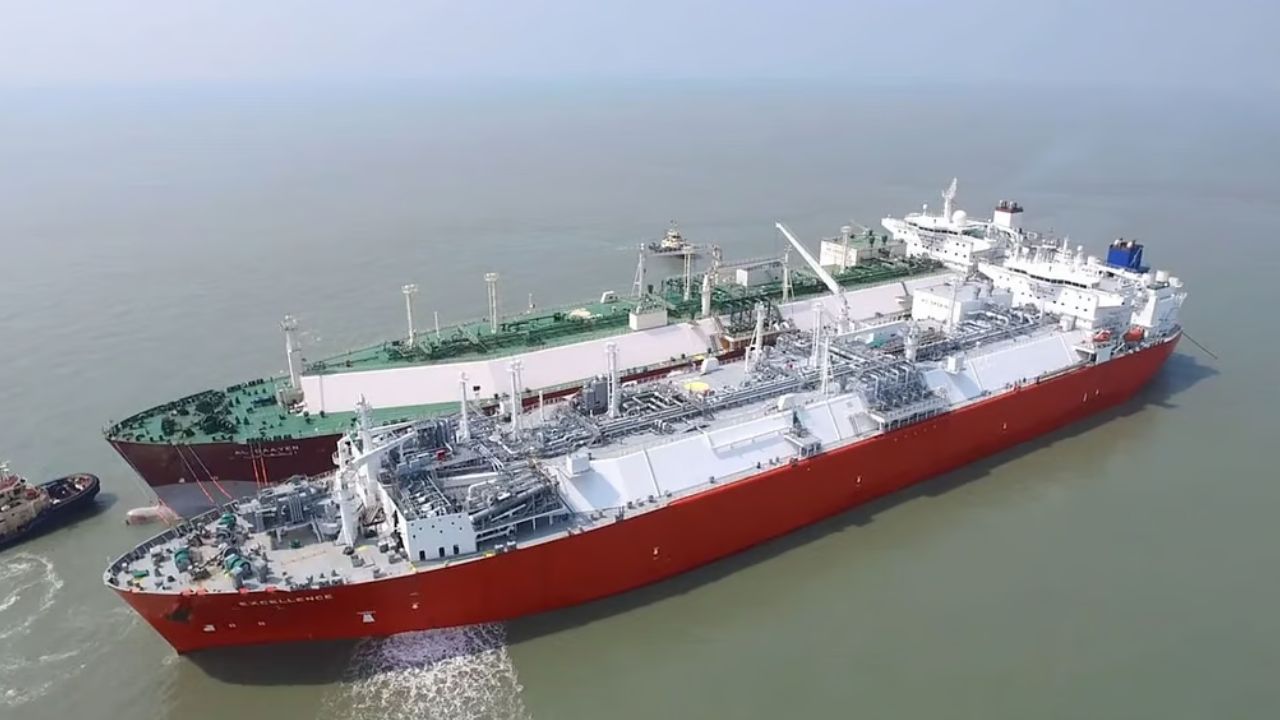



Bangladesh’s fragile gas supply system has suffered a major fresh blow as rough weather and mechanical faults simultaneously disrupted both floating LNG terminals at Moheshkhali, reducing their combined gas supply to just around 300 million cubic feet (MMcf) on Friday – less than one-third of their normal output.
Petrobangla sources say, of the two floating storage and regasification units (FSRUs) at Moheshkhali, the Summit-operated terminal remained completely out of operation on Friday, while the terminal operated by the US-based Excelerate Energy was supplying gas at roughly half its normal capacity.
The disruption comes at a critical time for Bangladesh’s energy sector, which is already struggling to meet a persistent gap between gas demand and supply. The simultaneous loss of capacity at both LNG terminals has further exposed the vulnerability of the country’s LNG-dependent gas network.
Petrobangla Senior General Manager Engineer Saiful Islam Sarkar told TIMES of Bangladesh that adverse weather prevented an LNG carrier carrying cargo for the Summit terminal from berthing, leaving the facility unable to receive the LNG needed to maintain supplies.
“As the LNG carrier could not berth due to adverse weather, gas supply from the Summit terminal remained suspended,” he said.
Weather blocks LNG delivery
Weather conditions remained particularly rough in the offshore waters of Maheshkhali on Friday with strong winds and rough seas disrupting LNG carrier operations.

Petrobangla officials said wind speeds in the area reached around 38 knots, while LNG carriers require wind speeds below about 20 knots for safe berthing operations. The carrier scheduled to deliver LNG to the Summit terminal therefore could not berth, forcing the terminal to suspend gas supply.
The disruption illustrates how vulnerable Bangladesh’s LNG supply chain remains to weather conditions, particularly because the country depends heavily on offshore floating terminals and ship-to-terminal transfer operations.
Mechanical fault hits second terminal
While the Summit terminal was affected by the weather, the Excelerate-operated terminal was hit by a separate mechanical problem.
According to Saiful Islam Sarkar, one of the two boilers at the US-operated terminal has been kept out of operation because of a mechanical fault, reducing gas supply from the facility to roughly half its normal level.




The repair itself could require a complete shutdown of the boiler system.
“Both boilers will have to be shut down simultaneously to carry out the necessary repairs to the mechanical system,” he said, adding that Petrobangla is awaiting a decision from the ministry on whether to proceed with the full shutdown and repair.
As a result, the country is facing a rare double disruption at its two major LNG import facilities – one caused by weather and the other by an equipment failure.
A second blow within weeks
The latest setback comes just weeks after a major incident at the Excelerate-operated FSRU.
A fire broke out on 21 July during an LNG ship-to-ship transfer operation, forcing the terminal to shut down and cutting around 450 MMcf per day from the national gas supply. The incident caused a prolonged disruption at a facility that plays a critical role in Bangladesh’s gas network.
The recurrence of problems at Moheshkhali LNG hub is raising fresh questions about the resilience and reliability of Bangladesh’s LNG infrastructure.
LNG security under pressure
Bangladesh currently produces around 1,600-1,900 MMcf of natural gas a day from its domestic fields, while total national supply is around 2,600-2,700 MMcf against demand of nearly 3,800 MMcf.
The resulting shortfall is being met largely through imported LNG. The two Moheshkhali FSRUs together can supply around 1,000 MMcf per day to the national grid, meaning LNG regasification normally accounts for roughly 37-38% of the country’s total gas supply.
The latest disruption demonstrates that Bangladesh’s LNG security depends on more than simply securing cargoes on the international market. A vessel may be carrying LNG and waiting offshore, but adverse weather can prevent it from reaching the terminal. At the same time, a mechanical failure can disable another regasification facility.
The result is a sharp reduction in gas availability across the national grid.
With one FSRU completely shut down and the other operating at roughly half capacity, Petrobangla faces mounting pressure to restore both facilities quickly. Any prolonged disruption could further tighten gas supplies to power plants, fertiliser factories, industries and other major consumers.
The crisis also highlights the strategic risk of Bangladesh’s heavy dependence on only two offshore FSRUs for a substantial share of its LNG-based gas supply. When both facilities encounter problems simultaneously, there is little immediate redundancy in the system.
For Bangladesh, therefore, the latest disruption at Moheshkhali is more than a temporary operational setback. It is a warning that the country’s gas security remains vulnerable to a combination of weather, vessel movements and ageing or malfunctioning equipment at critical LNG infrastructure.
Unless the Summit terminal can resume operations after weather conditions improve and the mechanical fault at the Excelerate facility is repaired without a prolonged shutdown, the pressure on an already stretched national gas supply system is likely to intensify.