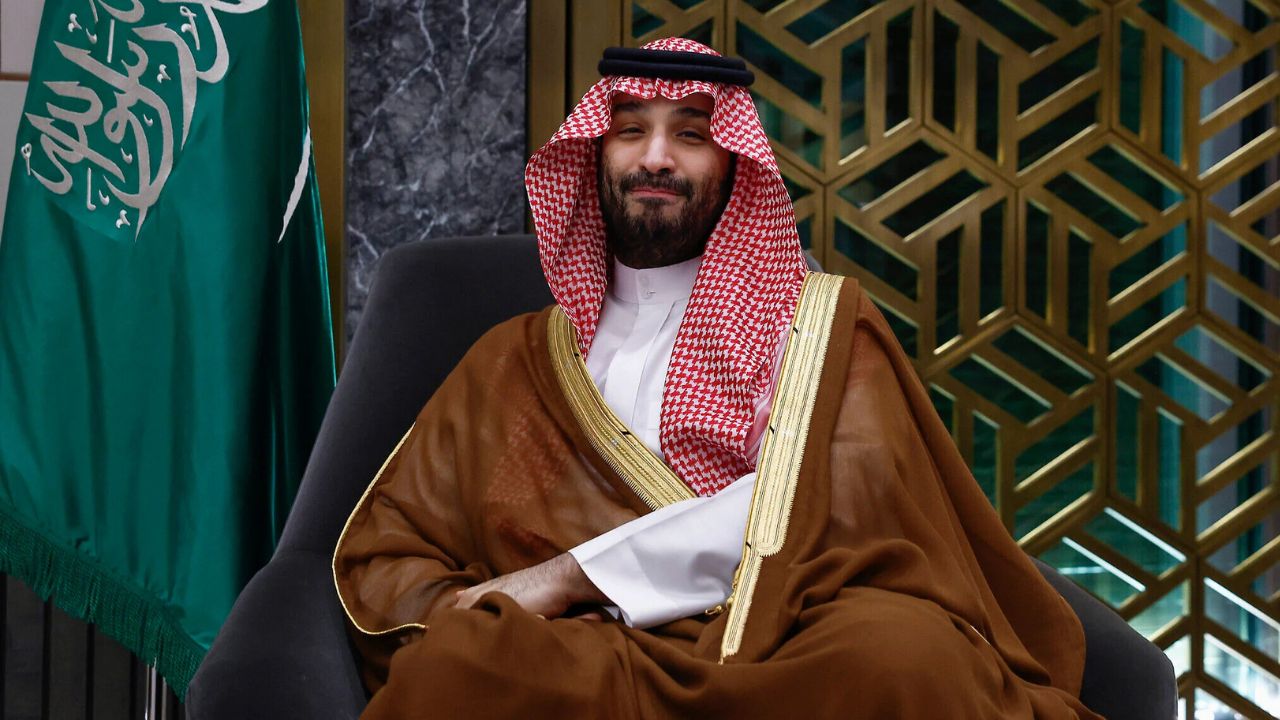



Saudi Crown Prince Mohammed bin Salman’s interest in visiting Dhaka has opened a diplomatic window for Bangladesh, with experts saying the visit could reset bilateral ties and revive long-stalled investment and strategic cooperation initiatives.
The proposed visit could generate both political goodwill and substantial economic dividends for Bangladesh at a time when the country is navigating an increasingly complex geopolitical environment and seeking to diversify its international partnerships.
With Riyadh now renewing its engagement with the BNP government, experts believe Bangladesh should move quickly to prepare a package of concrete deliverables before the Crown Prince’s visit to ensure that the opportunity does not go the way of previous missed prospects.
Former Bangladesh ambassador to Saudi Arabia Golam Moshi told TIMES of Bangladesh that Dhaka should approach the proposed visit with meticulous preparation rather than symbolism.
MBS’s visit
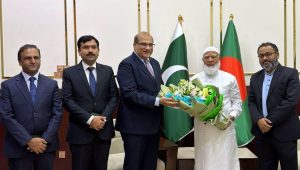
The development came during a meeting between Saudi Ambassador Dr Abdullah Zafer H. bin Abiyah and Prime Minister Tarique Rahman at the Prime Minister’s Office last week.
According to a Foreign Ministry, Saudi ambassador handed over a letter from Crown Prince and Prime Minister Mohammed bin Salman bin Abdulaziz Al Saud, accepting Prime Minister Tarique Rahman’s invitation to visit Bangladesh.
The ambassador further informed the prime minister that Saudi Foreign Minister Prince Faisal bin Farhan Al Saud intends to visit Dhaka in the near future. He also said that a Saudi business delegation would travel to Bangladesh soon to explore investment opportunities.
A relationship with untapped potential
Millions of Bangladeshi workers have contributed significantly to the Saudi economy over the past four and half decades, while their remittances have remained a vital source of foreign exchange for Bangladesh. Despite these strong people-to-people ties, economic cooperation lagged behind expectations.
Over the last decade, Riyadh repeatedly expressed interest in investing in Bangladesh’s energy, infrastructure, aviation and industrial sectors. Several proposals, however, failed to move beyond the discussion or MOU stage.

Bangladesh also successfully re-opened labour exports to Saudi Arabia in 2016 after long closure of nine years, but was unable to transform the relationship into a broader strategic economic partnership.
From misunderstanding to closer engagement
Relations between Dhaka and Riyadh went through a period of misunderstanding and stagnation until 2014 under the previous Awami League government.
Saudi Arabia became increasingly interested in investing in Bangladesh, while Dhaka sought greater political engagement with one of the most influential countries in the Muslim world. Several memorandum of understandings (MoU) and agreements were signed, including one on defence cooperation that envisaged non-combat support by Bangladesh for Saudi Arabia.
However, much of the cooperation remained on paper and produced few tangible outcomes.
Missed investment opportunities
One of the most frequently cited examples involves Saudi state-owned energy giant Aramco.
Speaking at a public programme in Dhaka in 2025, then Saudi Ambassador Essa Youssef Essa Al Duhailan revealed that Aramco had attempted to make a major investment in Bangladesh but could not proceed.
According to him, high-level Aramco delegations visited Bangladesh three times between 2017 and 2019 to explore investment opportunities, including establishing a large oil refinery, LNG Terminal and Petro-Chemical complex at Matherbari.



“They moved from the Prime Minister’s Office to ministries, secretaries and civil servants, but repeatedly became stuck in the system,” the ambassador said at the time, attributing the failure partly to individuals who prioritised personal interests over national interests.
Several major Saudi business groups reportedly encountered similar bureaucratic hurdles while exploring investment opportunities in Bangladesh.
The first Saudi-Bangladesh joint venture with Bangladesh Steel and Engineering Corporation (BSEC) through GEMCO has reportedly remained non-operational for the past five years, largely due to a lack of institutional support and administrative cooperation from the Bangladeshi side.
Defence cooperation failed to take off
Defence cooperation represented another area where both countries initially showed considerable enthusiasm.
Following the signing of a defence cooperation memorandum in 2019, Saudi Arabia expressed interest in recruiting thousands of Bangladeshi defence professionals—including engineers, technicians, and logistics specialists—for non-combat roles. However, it failed to gain momentum, as Bangladesh did not pursue the initiative or respond with the necessary institutional engagement to advance the arrangement.
As negotiations stalled, Saudi Arabia eventually signed a defence cooperation agreement with Pakistan in 2025. That partnership has since expanded significantly, reportedly bringing Pakistan billions of dollars in investment, defence collaboration and broader political support from Riyadh.
Aviation project never materialised
Saudi Arabia proposed investing about $1.0 billion to establish a large aircraft maintenance, repair and overhaul (MRO) facility at the abandoned Lalmonirhat airbase.
The project was led by Saudi aerospace company Al Salam Aerospace, a Boeing joint-venture, which envisioned transforming the historic airfield into a regional aviation maintenance hub and manufacturer of aircraft spare-parts.
The proposal promised substantial employment generation, technology transfer and enhanced regional connectivity. However, it failed to progress because of delays and lack of interests in Bangladesh.
According to diplomatic sources, the investment opportunity was eventually redirected elsewhere, with India emerging as a major beneficiary.
Bureaucratic bottlenecks
Diplomats and investment experts say Bangladesh’s biggest challenge is not attracting investor interest but translating that interest into actual projects.
They point to persistent problems, including delays in land allocation, inadequate infrastructure, lengthy approval procedures, overlapping institutional responsibilities and weak accountability.
Many foreign investors also complain about inconsistent policy implementation and prolonged decision-making.
Geopolitical realities create new opportunities
Analysts believe current geopolitical developments have created favourable conditions for stronger Bangladesh-Saudi cooperation.
The rapidly changing security landscape in the Middle East, ongoing regional tensions and evolving global power competition have encouraged Saudi Arabia to diversify its international partnerships.
At the same time, Bangladesh is seeking to broaden its diplomatic engagement beyond traditional partners while attracting greater foreign investment to sustain economic growth.
Saudi Arabia’s Vision 2030 programme also presents significant opportunities for Bangladesh. It is also preparing to host Expo 2030 and the FIFA World Cup in 2034, requiring extensive international cooperation and support, creating further opportunities.
Rohingya Refugees
Saudi Arabia has the potential to play a significant role in efforts to resolve the Rohingya refugee crisis, given its influence in the Muslim world and its longstanding relations with Myanmar and Bangladesh.
According to diplomatic sources, a Saudi-backed initiative showed signs of progress towards a peaceful resolution in 2018. However, the effort did not advance further after Bangladesh shifted its primary focus towards pursuing legal action through international courts rather than continuing diplomatic engagement on that track.
Time for careful preparation
“The Saudi administration is extremely professional and result-oriented. The Crown Prince will be interested in visiting Bangladesh only if he believes there will be substantial outcomes and a win-win partnership for both brotherly countries,” said Former Bangladesh ambassador to Saudi Arabia Golam Moshi.
Moshi recalled that, under the direction of the Royal Court and the Crown Prince, a 32-member Saudi investment delegation led by two senior ministers had previously visited Bangladesh but failed to make meaningful progress because proposed projects did not receive adequate follow-up.
He argued that the Bangladesh Investment Development Authority (BIDA) must adopt a far more proactive role. Instead of limiting itself to issuing approvals and licences, it should facilitate the entire investment process—from project identification and regulatory clearances to implementation support and aftercare services.
He also stressed that all ministries and government agencies must align their actions with Bangladesh’s investment policy and recognise the critical role of FDI in driving economic growth, creating employment and strengthening long-term economic resilience.
“Both countries need to identify areas where cooperation will produce mutual benefits,” he said.
Moshi suggested that BIDA prepare a comprehensive portfolio of investment-ready projects before the Crown Prince’s visit, supported by detailed project profiles, realistic commercial data and bankable proposals. The portfolio should focus on industrial zones, energy, logistics, aviation, infrastructure and technology partnerships.