Some films begin with a script. Others begin with a moment.
For architect and filmmaker Mohammad Nuruzzaman, Mastul arrived when he least expected it.
He had just spent a year developing another feature. The actors had been groomed, preparations were complete and the project was ready to move forward. Then, without warning, the lead actor withdrew. The setback left him frustrated and creatively exhausted.
Instead of searching for another script, Nuruzzaman walked to a riverbank. He sat quietly, watching the water and wondering what story he could possibly tell next. Then a fuel tanker slowly docked at the jetty before him. What seemed like an ordinary scene became the beginning of a new film.
That unexpected moment eventually grew into Mastul, a story that would go on to receive a Special Mention at the 47th Moscow International Film Festival.
The film follows Makbul, an ageing cook aboard a fuel tanker, and Noora, a street child from the port area. Through their unlikely bond, Mastul explores the lives of people who drift along Bangladesh’s rivers and ports, capturing loneliness, affection, survival and the constant struggle against power and circumstance.

Looking back, Nuruzzaman says the story chose him rather than the other way around.
Casting the film demanded the same instinct.
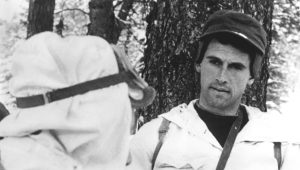
Although he usually prefers working with non-professional performers, he believed the role of Makbul required an experienced actor. Fazlur Rahman Babu became his first choice.
“Babu was the only actor I allowed to read the script before saying yes,” Nuruzzaman said. “I told him to read it and let me know honestly whether he liked it or not. Even if he didn’t, I wanted him to tell me. Three days later, he called and agreed.”




The film also features a child actor from Am Kathaler Chhuti.
Finding the rest of the cast proved more difficult. Nuruzzaman met several professional actors but felt none truly belonged in the world he wanted to create.
“When I meet an actor, I don’t only think about performance,” he said. “I observe how they speak, how they walk and how they carry themselves. From those conversations, I can usually understand whether they can become the character I have imagined and whether we can work together.”
His involvement extended far beyond directing. Nuruzzaman also wrote the screenplay, edited the film and designed its sound.
For him, that decision was less about control than clarity.
“If I have to explain my vision to someone else, it may take longer than doing the work myself,” he said. “That’s why I handled those departments.”
Despite earning recognition as a filmmaker, Nuruzzaman still introduces himself first as an architect.
Architecture remains his profession. Cinema remains his passion.
“I have never treated filmmaking as my profession,” he said. “I still work as an architect. The kind of films I want to make cannot become a profession unless I compromise. I don’t want to make those compromises.”
His commitment to independent cinema goes beyond directing films.
Nuruzzaman also operates Cinescope, a 35-seat mini theatre in Narayanganj. He believes Bangladesh does not need giant multiplexes to support independent cinema. Instead, he argues that 50-seat mini theatres across district towns would give filmmakers and audiences a sustainable space to connect.
He also places greater value on finding the right audience than securing the widest release.
“Most single-screen cinemas only want Eid releases,” he said. “But we have built an audience that waits for films like ours. That is why we deliberately chose a limited release.”
Even before Mastul reached audiences, Nuruzzaman had already completed two more feature films. Their titles are yet to be announced.
Mastul opened in five cinemas across Bangladesh on Friday, 17 July.