Liquefied petroleum gas (LPG) traders have called a two-day nationwide strike on Thursday and Friday, describing administrative drives and fines amidst cylinder sales at up to Tk700 above the government-fixed rate as “harassment.”
LPG shops across the country will remain closed on these two days. The traders warned that if their seven-point demand – including an end to trader harassment, ensuring regular gas supply, and increasing commission – is not met within two days, shops will be shut indefinitely.
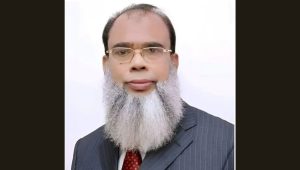
Md Selim Khan, president of LPG Gas Merchants Cooperative Association Limited, announced the programme at a press conference in Dhaka on Monday.
The strike call comes at a time when the Bangladesh Energy Regulatory Commission (BERC) has fixed the price of a 12 kg LPG cylinder at Tk 1,837, but consumers in the market have to pay Tk2,000 to Tk2,500.
However, Selim Khan provided no explanation at the press conference regarding charging such high prices above the government-fixed rate. Instead, he raised allegations of unjust cases and fines against traffic police, the Directorate of National Consumers’ Right Protection, and mobile courts.
Demands for commission hike and supply fixes
Selim Khan said LPG-carrying pickups and trucks must have railings for security reasons, and companies do not supply cylinders without railings. Yet, traffic police file cases because of those railings.

He alleged that traders are being unjustly fined during drives by the Directorate of National Consumers’ Right Protection and mobile courts, and cited an instance where cylinders were allegedly taken from a distributor’s warehouse in Bagerhat.
One of the key demands of the traders is to increase the commission per cylinder from the current Tk50 to Tk150, or fix it at 7 per cent of the retail price.
According to the association, since BERC fixed the commission five years ago, expenses for transport, fuel, loading and unloading cylinders, warehouse rent, and licence fees have risen significantly.




In a letter to BERC, traders informed that bringing a cylinder from a company to a warehouse costs Tk50, whilst loading, unloading, and reaching retail sellers cost an additional Tk35.
Moreover, employee salaries, warehouse rent, electricity bills, and other overheads account for Tk25. Adding a profit of Tk40 to these expenses, they demanded the commission be fixed accordingly.
The association president also alleged a supply crisis, claiming that apart from six to seven companies, most institutions are unable to supply LPG regularly. As several companies cannot open letters of credit (LCs), hundreds of thousands of cylinders lie unused across the country.
The association demanded that the government take initiatives or arrange through other companies to fill these cylinders with gas and supply them to the market.
Additionally, Selim Khan complained that although BERC determines LPG prices every month, some companies alter prices again after five to seven days, causing market instability.
He noted that if price adjustments are required multiple times a month, it must be executed through BERC announcements.
Persistent price gap and past protests
Earlier, traders had suspended LPG supply and sales in protest against administrative drives and fines. On 8 January, they began a nationwide strike but withdrew the programme that very afternoon after meeting with BERC and receiving assurances that their demands would be met.
BERC has been adjusting private LPG prices monthly since introducing a new pricing method in April 2021. However, consumers have never been able to purchase LPG regularly at government-fixed rates.
Initially, an extra Tk 100 to Tk 150 was charged above the set price for a 12 kg cylinder, but that gap has now widened to between Tk 500 and Tk 700.
Questions over market control
As extra charges have persisted for a long time, questions have been raised regarding effective measures taken by BERC and the government to control the market.
Whilst drives are occasionally conducted against retail sellers, there are hardly any instances of bringing major distributors or companies under similar accountability, failing to ensure LPG sales at fixed prices.
On the other hand, the LPG Operators Association of Bangladesh (LOAB), an organisation of LPG importers, claimed that LPG import and supply in the country are adequate.
Claiming that importers or bottlers sell at government-fixed prices, the organisation expressed support for taking action against selling cylinders at higher prices.