Tangail has seen visible changes in both urban and rural areas as the Local Government Engineering Department (LGED) continues to implement a wide range of infrastructure development schemes across the district.
From paving rural roads and constructing bridges and culverts to improving government primary school buildings and managing small-scale water resources, LGED’s activities are gradually transforming the economic landscape of remote communities.
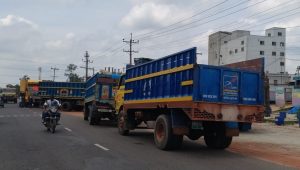
According to district LGED sources, the total length of roads under its network in Tangail stood at 9,826.70 kilometres as of 31 May this year. Of this, 2,946.50 kilometres have already been paved with bituminous carpeting to support the rural economy.
LGED is now working on a major plan to gradually bring the remaining 6,881.20 kilometres of earthen roads under paved road coverage. The existing road network includes 814.50 kilometres of upazila roads, 1,075.40 kilometres of union roads and 7,936.80 kilometres of village roads.
In addition, 286.70 kilometres of roads are being maintained regularly to ensure uninterrupted communication.

Sources said LGED has constructed around 2,500 metres of bridges and culverts on these roads to make travel and goods transportation easier for marginal communities.
In the current fiscal year, work is also progressing on the development of 94.917 kilometres of upazila roads, 71.179 kilometres of union roads and 39.091 kilometres of village roads.
Under different projects, LGED has so far constructed 16 modern rural markets and several ghats, helping farmers and small producers in remote areas send their agricultural products directly to markets.
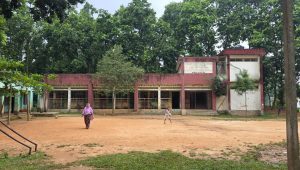
The department has also built a large number of government primary school buildings to expand access to education. These modern and visually improved school buildings, constructed under LGED’s primary education infrastructure management unit, are playing an important role in improving the learning environment for children in marginal communities.


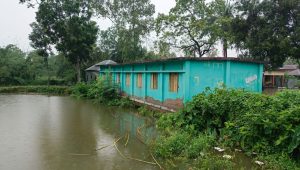
LGED sources further said the department has also worked to create and manage water sources to boost agriculture and fisheries production. Under small water resources infrastructure development and nationwide pond re-excavation projects, 12 kilometres of canals and five government ponds and dighis have already been excavated.
Two major infrastructures, including sluice gates and irrigation sub-projects, have been completed, while work on another irrigation sub-project is progressing rapidly.
Residents of Tangail town, including Nazimuddin, Sagar Ahmed and Shamimul Islam, said the DC Office-LGED intersection road in the district headquarters had remained neglected for a long time and had become almost unfit for use.
“People and vehicles using the road had to suffer immensely. There was also confusion over whether LGED or the Roads and Highways Department would repair it. As LGED has reconstructed the road, ordinary people are now benefiting greatly,” they said.
Azgar Ali, owner of a poultry farm in Dhanbari, said the construction of a bridge on the Mushuddi-Jhopna road had made transport much easier.
“Earlier, we had to travel an additional three to four kilometres. Now agricultural products, poultry, feed and daily essentials can be transported easily. It has brought great relief to us,” he said.
Teachers Abul Kashem and Hasan Ali Reza of Basail Upazila said the construction of a bridge over the Jhenai River had improved access to the Water Garden and Spa in Dapnajor area. It has also made travel easier for students, office-goers and those transporting daily goods and agricultural products.
Tangail LGED Executive Engineer Mohammad Kamruzzaman said sustainable rural infrastructure development was improving the living standards of marginal people.
“Once the ongoing projects are completed, the district’s economic growth will accelerate further,” he said.
He said development work in Tangail was being implemented properly and successfully with administrative guidance from LGED officials, support from stakeholders and cooperation from field-level colleagues.
As a result, people involved in agriculture, non-agricultural production, small and medium farms and other productive activities are now benefiting from improved rural road communication.
“They can transport their products to Dhaka and other districts quickly and at lower cost, helping them secure fair prices and earn higher profits,” he added.