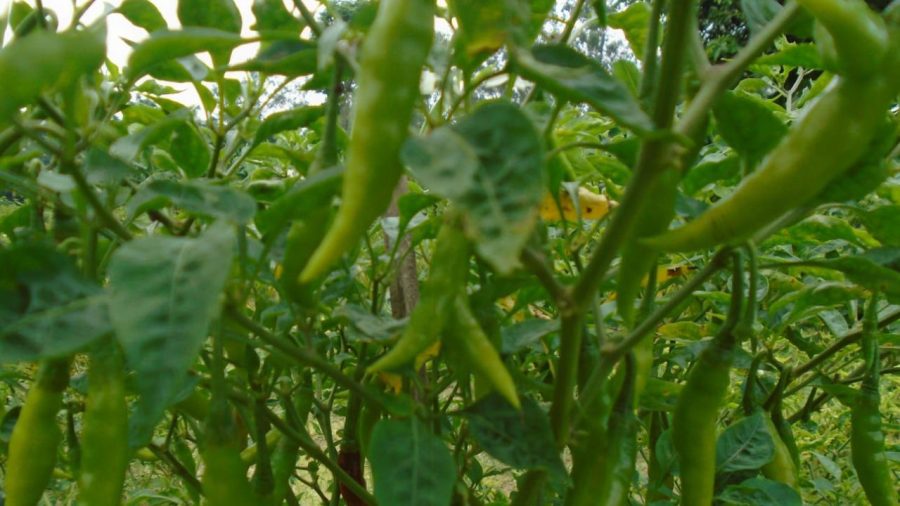

Farmers in Sirajganj’s char areas and other parts of the district are busy cultivating chilli as the monsoon season ends, hoping for better returns from the increasingly popular cash crop.
The fertile silt deposited by the Jamuna River has helped expand chilli cultivation in the area, with farmers attracted by quick harvests, multiple picking opportunities and year-round market demand.
However, excessive rainfall and high humidity have created challenges, including waterlogging, root rot, anthracnose, dieback, leaf curling and attacks by thrips, aphids, mites, whiteflies and fruit borers. Farmers are focusing on drainage, disease control and balanced fertiliser use following advice from agricultural officials.
According to the agriculture department, chilli has been cultivated on around 1,600 hectares across nine upazilas of Sirajganj, with higher cultivation in Chauhali, Belkuchi, Kamarkhand, Kazipur and Sadar upazilas.
For the Kharif-1 season of the 2026-27 fiscal year, the district has set a chilli production target of 2,869 tonnes from 251 hectares. Of this, hybrid chilli production is targeted at 1,431 tonnes from 125 hectares, while high-yielding varieties are expected to produce 1,438 tonnes from 126 hectares. So far, chilli has been harvested from 175 hectares, producing 1,945 tonnes.

Sirajganj Sadar Upazila alone has a cultivation target of 700 hectares with an expected output of 1,750 tonnes. Chilli is grown throughout the year in almost all unions of the upazila.
Farmer Dia Alam of Dhitpur Alal village in Bahuli Union said he cultivated chilli on two bighas this year but faced losses due to heavy rainfall and waterlogging. “I removed excess water by making drainage channels. If market prices remain favourable, chilli cultivation can bring good profits,” he said.
Farmer Shahadat Hossain of the same village said he planted chilli on 20 decimals of land and was getting good prices. “I have planted new seedlings hoping for better production during winter,” he said.



Malek of Mashuakandi village said he cultivated chilli on more than 10 decimals and was satisfied with the current prices. “We are receiving regular advice from the agriculture office and following their recommendations,” he said.
He added that cultivation costs, including land preparation, seeds, fertiliser, irrigation, labour and care, were high, but he had already harvested chilli several times. “I am selling chilli at Tk80-100 per kg. Despite damage to other crops due to heavy rain, chilli has performed well,” he said.
Farmers said chilli offers higher profit potential than rice and they plan to expand cultivation if prices remain favourable.
Agriculture officials said chilli is one of Bangladesh’s important spice and cash crops, with strong demand in fresh, ripe and dried forms. They advised farmers to select elevated land with good drainage after the monsoon, as waterlogging can increase disease risks.
Sirajganj Department of Agricultural Extension Additional Deputy Director (Crops) Mohammad Rezaul Haque said the district’s char areas have suitable silt soil for chilli cultivation, which has led to an increase in acreage.
“Some farmers faced problems due to waterlogging caused by excessive rainfall this season. They need to ensure quick drainage and take measures against diseases and pests following agricultural advice,” he said.
He added that chilli cultivation had increased significantly compared with last year due to its profitability. Farmers are being provided with guidance on reducing production costs, controlling pests and improving marketing.
Sirajganj Sadar Upazila Agriculture Officer SM Nasim Hossain said farmers across almost all unions of the upazila were cultivating chilli. “Some fields were affected by waterlogging due to heavy rainfall, but farmers are taking steps to drain water. We are providing regular field-level support,” he said.
The agriculture department said improved varieties including Bari Chilli-1, Bari Chilli-2 and BINA Chilli-2, along with locally suitable varieties, are being cultivated. Healthy 25-35-day-old seedlings are generally planted, with harvesting beginning around 70-75 days after planting for many varieties.
Farmers and officials believe that planned cultivation, quality seeds, proper drainage and timely pest management can further expand chilli production in Sirajganj and increase farmers’ incomes.