
Interest is important. Alongside that, opportunities are essential. Perhaps I was fortunate enough to have both, which is why I began working on robotics as a student and now, as a teacher, mentor the next generation.
At one point, building artificial intelligence-powered robots seemed like a distant dream for us. Having crossed that stage, we are now trying to inspire young people to dream of becoming technology creators.
As I write this article at the request of TIMES of Bangladesh, I am in California, United States. After completing a competition in South Korea with a team from United International University (UIU), I came directly here.
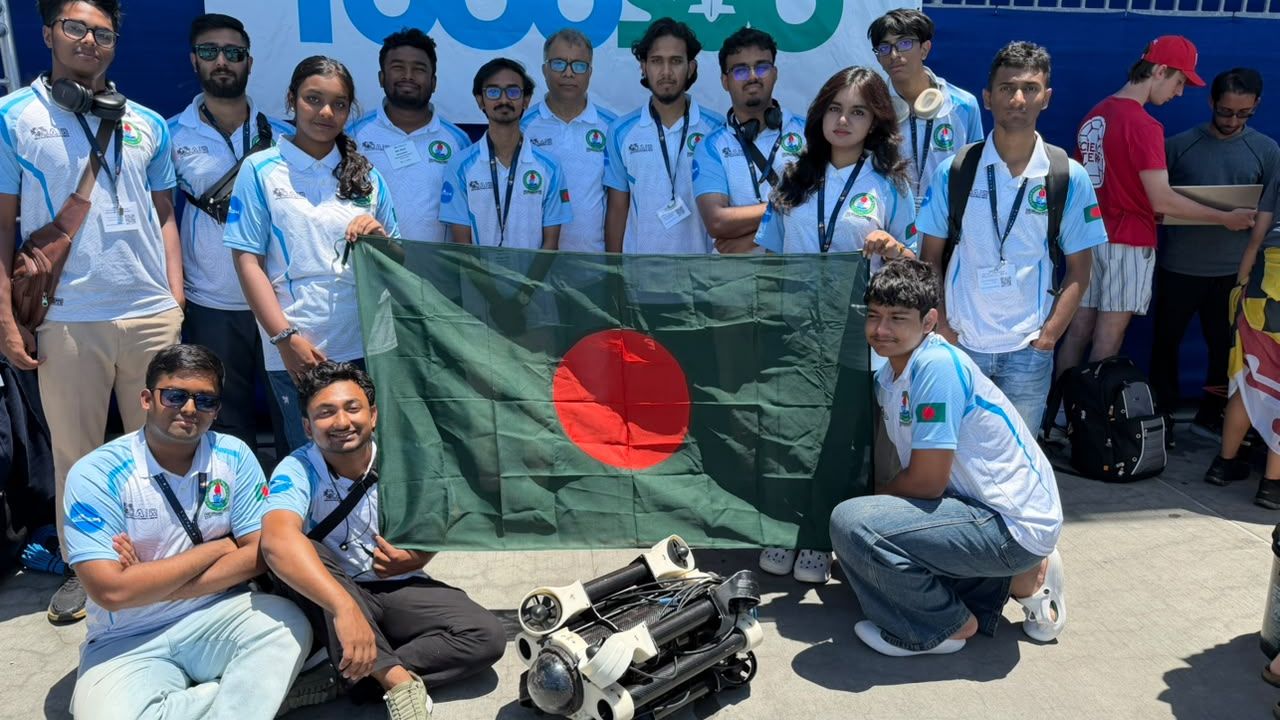
This time, however, we are not participating with a university student team. Instead, we are taking a unique team of school and college students from Bangladesh to the international ‘RoboSub 2026’ competition, one of the most prestigious global competitions in underwater robotics.
The new team, named ‘Project Poseidons Code’, has already advanced to the semi-final stage of the competition. Most members of the team are students of Dhaka Residential Model College, while several students from schools in different districts are also part of the team.
I was once a student at UIU and now teach there. At the same time, I am involved in training students at UIU’s Centre for Artificial Intelligence and Robotics. Many may wonder how I became involved with these school and college students.
The answer lies in UIU’s continued success in international robotics competitions. Last June, the ‘UIU Mars Rover Team’ secured third place globally at the University Rover Challenge 2026. The team also became Asia’s best team for the fifth consecutive year from 2022 to 2026.
Due to UIU’s long-standing achievements, many students from schools and colleges across the country began contacting us. At one stage, UIU authorities decided to provide these young learners with opportunities to receive training at our laboratory.

Through this initiative, teams from schools, colleges and universities across Bangladesh have been receiving mentorship from us. This team also approached us in the same way. After considering their enthusiasm, willingness to learn and long-term goals, we decided to work with them.
Building a national robotics ecosystem
One of the key objectives behind establishing UIU’s Centre for AI and Robotics (CAIR) was to create opportunities for young Bangladeshis to conduct international-standard robotics research and participate in global competitions.
Advanced robotics research is expensive, and such opportunities are not accessible to everyone. Therefore, we are trying to share our knowledge, research facilities, laboratory resources and experience with promising teams across the country.
For nearly three years, we have regularly provided mentorship to multiple teams from different educational institutions in Bangladesh. As part of this continued effort, we have been working closely with this school and college student team for nearly a year.
Our initiative is not a short-term project. We want to continue this mentorship programme for young people in Bangladesh for as long as possible. Our goal is not simply to create one successful team, but to build a strong national robotics ecosystem.
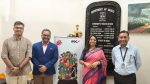
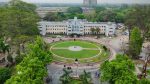


Rather than participating in only a single competition, we want this teenage team to become a long-term platform for international-standard research and technology development.
In the coming years, we plan to work on advanced technologies, including artificial intelligence, autonomous navigation, advanced sensing and robotic systems capable of solving real-world problems. At the same time, more students will be brought into this field to create a continuous pipeline of skilled human resources.
Funding remains the biggest challenge
Participating in international robotics competitions is not simply about building a robot. It involves research, design, software, hardware, documentation, testing, compliance with international standards, visa processing, logistics and months of preparation.
The biggest challenge in taking this school and college student team to the competition stage was funding. Most expenses had to be covered through the team’s own resources and personal contributions.
Our Centre for AI and Robotics (CAIR Lab) supported the team by providing research facilities, laboratory space, tools, equipment and necessary components.
We have received encouragement and goodwill from different levels of government, but in practical terms, we have not yet received financial support for such international participation.
I believe that if institutional support for this sector increases in the future, many more young Bangladeshis will be able to represent the country on the global stage.
Participation in international competitions provides opportunities to work with some of the world’s leading researchers, engineers and students, compare technologies against international standards and create valuable learning experiences. These experiences will contribute to the future development of research, industry and technology in Bangladesh.
A milestone for school and college students
The underwater robot built by Bangladeshi school and college students for the ‘RoboSub 2026’ competition has been designed to solve complex problems in real-world environments.
The robot features advanced sensors, an artificial intelligence-based decision-making system, autonomous navigation, real-time environmental analysis and a modular design. As a result, it can operate reliably even in challenging conditions and has potential for future real-world applications.
The achievements of Bangladeshi students at the international level have already demonstrated that they can compete, innovate and succeed globally.
My message to young people in Bangladesh is simple: they should not only dream of becoming technology users but also technology creators. International success requires patience, long-term planning, teamwork and continuous research.
I urge policymakers to give greater importance to international robotics, AI and engineering competitions. If research laboratories, prototype development facilities, financial support for global participation and long-term policy backing are ensured, Bangladesh can establish a strong position in this sector.
The hope of achieving dreams
Bangladesh has no shortage of talent. What we need are the right opportunities, the right environment and sustained investment.
I believe that if such opportunities are created, world-class robotics technology and research can emerge from Bangladesh in the coming decade.
I have always believed that no achievement belongs to a single person. It is the result of the collective efforts of the entire team, students, colleagues and institutions.
If my experience and guidance help even a few students reach the international stage, that will be my greatest achievement. As a teacher, my students’ success is my identity.
In the future, I want to contribute to building a strong ecosystem in Bangladesh for international-standard robotics research, competitions and technology development.
Md Abid Hossain is a Lecturer at Department of Computer Science and Engineering, United International University (UIU).