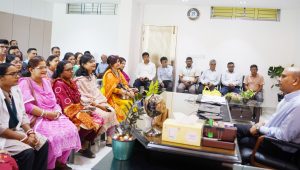



It was 1995 in Kachua Bazar village of Saghata Upazila in Gaibandha. Neighbours and relatives were stunned when they saw a baby girl born without both hands, with some even suggesting that she should be killed.
Although she survived that ordeal, another devastating blow came when she was 11 years old. By then, she had just been promoted to Class V. Her father wanted to sell her to a circus troupe. But time and again, the little girl, Ayesha Akter, was saved by her mother’s love.
After Ayesha herself, most of the credit for her upbringing and development goes to her mother, Shajeda Begum. Through her own hard work, she ensured that her daughter continued her education.
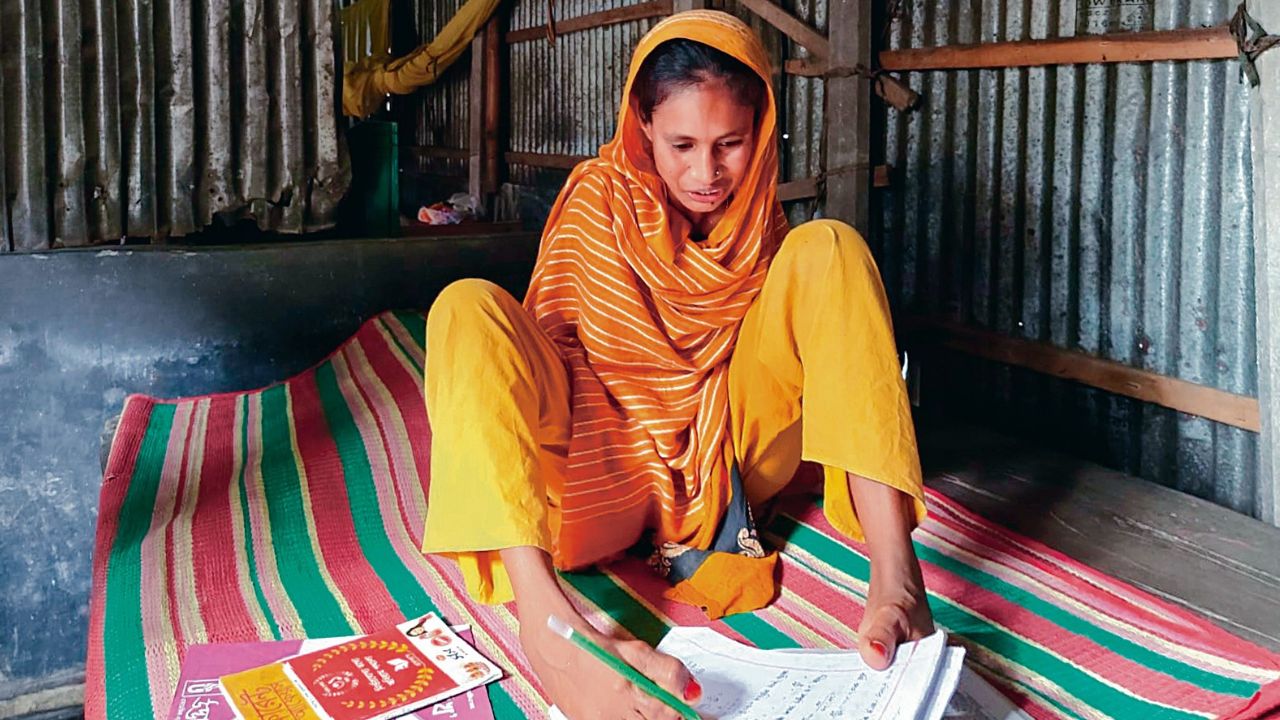
Inspired by her mother, Ayesha learned to write with her feet and eventually secured GPA-5 in both the Secondary School Certificate (SSC) and Higher Secondary Certificate (HSC) examinations. She later obtained a bachelor’s degree and a first-class master’s degree from Gaibandha Government College.

However, despite her academic qualifications, she could not secure a job solely because of her physical disability. Later, documentaries based on her life struggle were screened at home and abroad. Today, she has become a symbol of inspiration for people in her locality. Yet her own life remains marked by extreme poverty and uncertainty.
Speaking to TIMES of Bangladesh, Ayesha Akter said, “Some days I survive on two meals, and some days on just one. No one but Allah knows the hardship I endure. At this stage of my life, I sometimes feel it would have been better if I had died immediately after birth. I would not have had to carry this burden.”



Speaking about the highly competitive job market, Ayesha said, “Even people who have hands are failing to pass recruitment examinations. It is even harder for me to compete. If the prime minister would kindly arrange a government job for me on special consideration, I could stand on my own feet and spend the rest of my life with my mother.”
“My mother has grown old. We have no property or financial support. If I cannot do something now, I do not know how the two of us will survive for the rest of our lives. Worrying about that has robbed me of peaceful sleep.”
Ayesha’s father, Abdul Latif, died one and a half years ago. Her three sisters are all married. She now lives with her elderly mother, Shajeda Begum. Using the toes of her feet, she grips a traditional cutting blade to chop vegetables, winnows rice with a bamboo tray, cooks meals, bathes herself and carries out every household chore on her own.
With tears in her eyes, Ayesha’s mother, Shajeda, said, “I have never considered her a curse. I only want my daughter to get a job that matches her qualifications.”
Mosharraf Hossain Sweet, chairman of Saghata Union Parishad, praised Ayesha’s determination and said society as a whole should stand beside her.
Saghata Upazila Nirbahi Officer (UNO) Ashraful Kabir said, “The matter has come to the attention of the administration. We will discuss Ayesha’s employment opportunities and government assistance with the relevant authorities.”
However, Ayesha says she has been hearing such assurances for a long time, but nothing has materialised. With each passing day, the burden of her long struggle grows heavier. Whether the government will finally extend its support to this helpless mother and daughter remains to be seen.