


Gayatri Chakravorty Spivak’s essay Can the Subaltern Speak? argued that the subaltern, the most marginalised, those structurally excluded from power, cannot truly speak in their own voice. Their words are filtered through elite institutions, interpreted by others, and often erased altogether. For Spivak, the subaltern is not simply the poor or oppressed; it is the person so far outside power that even their resistance cannot be recognised as political speech.
The recent political shifts in Bangladesh pose a different and somewhat alarming question: what occurs when the subaltern rules and reigns through mob justice?
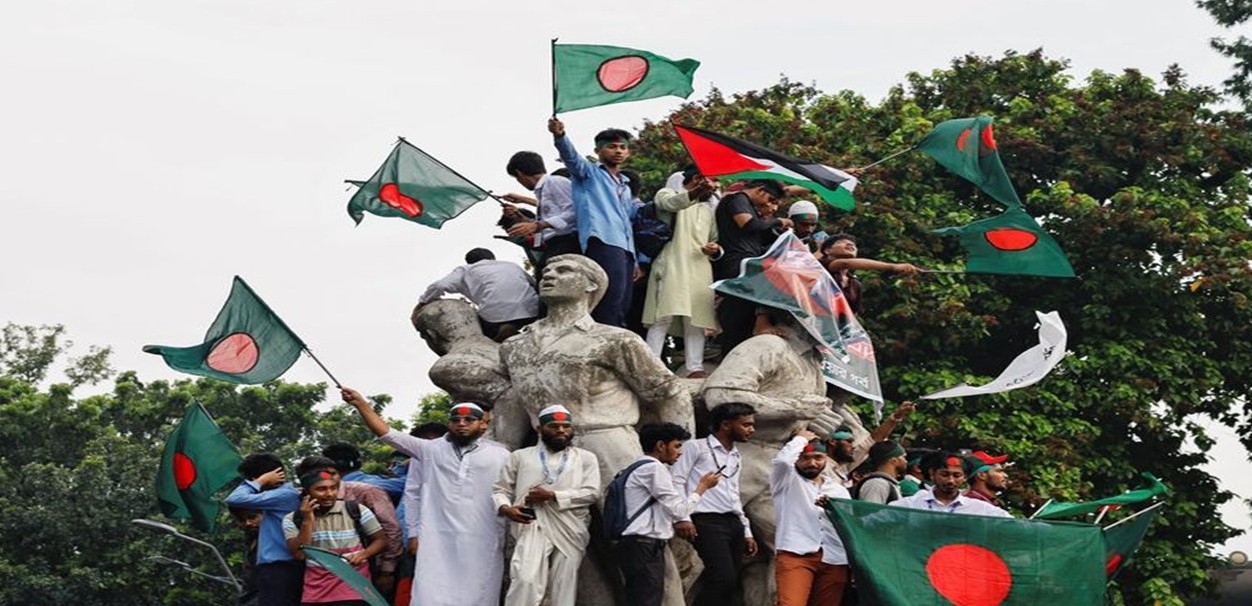
Youth from peripheral districts confined to the national politics’ periphery have, ever since August 2024, set the pace and agenda for the nation’s democratic transition; their background noise, which was never attended to, had become its soundtrack. Their experience was one of collective joy because the unheard have been heard at last, the subaltern spoke.

The turn took an uglier shade. Over time, as the group grew strong, they found themselves mirroring the systems of control and oppression that they initially tried to counter. Public shaming, street violence, and intimidating minorities grew quite commonplace. Images spread showing them wielding sticks and giving orders about who should be punished. The stark irony: the former victim was quickly becoming an instrument of violence and control.
This reality exposes a blind spot in Spivak’s essay, which interrogates silence, but not the consequences of empowerment. Bangladesh’s experience shows that subalternity is not a moral identity; it is a structural position. Once individuals gain the ability to dominate others, whether through formal authority or informal coercion, they cease to be subaltern. Their legitimacy shifts. Their moral ground becomes unstable. And their politics can quickly resemble the hegemonic practices they once opposed.




This is why it is crucial to distinguish between ‘subaltern’ and ‘mob.’ Subalterns exist outside power; mobs enforce it. Subalterns seek recognition; mobs demand obedience. When marginalised groups adopt mob tactics, they abandon the very ground of subalternity. In Bangladesh, mob justice has disproportionately harmed minorities, dissenters, and vulnerable communities – often the very people who remain structurally marginalised. Empowerment of one segment of the subaltern has produced new forms of silence.
This is the uncomfortable truth: the subaltern can speak, but they can also silence. Bangladesh forces us to expand Spivak’s question. It is no longer enough to ask, “Can the subaltern speak?” We must now ask, “What happens when the subaltern rules?”
The answer is sobering. Empowerment does not guarantee justice. Marginality does not guarantee virtue. Power once acquired can corrupt even those who once suffered under its weight. The transformation of marginalised students into political actors demonstrates that subalternity evaporates the moment one gains the capacity to dominate others.
The challenge is not only to amplify marginalised voices but to ensure that those voices do not drown out others once they gain power. Empowerment must be accompanied by accountability, institutional checks, and a culture of democratic restraint. Without these, liberation risks collapsing into domination.
The writer is a Protection Specialist and CEO at Favor Consultancy. E-mail: [email protected]