The prevailing law and order situation has put the smooth conduct of the upcoming 13th parliamentary election and referendum to a serious test, field-level administrators and law enforcement officials have said.
They warned that the flow of illegal arms and money, control by criminal groups, rumours and digital disinformation, intra-party rivalries, the security of minorities, and the overall law and order situation have emerged as multidimensional challenges to holding the election.
To address these risks, the Election Commission, the government and law enforcement agencies have emphasised a tough stance and coordinated action.
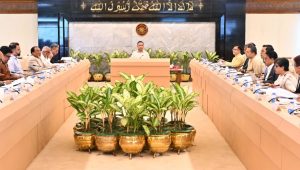
On Tuesday, the commission held an exchange of views with more than 200 officials at the Election Bhaban in Agargaon, bringing together divisional commissioners, police commissioners, returning officers, deputy commissioners, deputy inspectors general of police, superintendents of police and regional election officers.
The challenges were discussed in detail during the meeting. The Election Commission is also scheduled to hold a separate meeting with intelligence agencies on Wednesday.
At Tuesday’s meeting, Inspector General of Police Baharul Alam said the police were witnessing various attempts to destabilise society, including demands-driven agitation, road blockades and highway blockades.

He said the time had come to put an end to such activities, warning that “unless order is restored, it will not be possible to provide full support to the Election Commission during the polls.”
The IGP said the police would make all-out efforts to ensure the election is held smoothly and successfully, adding that the force has the full capacity to do so and deserves public trust.
Election Commissioner Abul Fazal Md Sanaullah said weapons, narcotics, cross-border militants, Rohingya issues and juvenile gangs pose serious threats to a credible election and must remain under close surveillance.


He noted that the use of illegal firearms has already created major challenges in maintaining law and order in different parts of the country during the pre-election period.
In this context, the Chattogram Range Deputy Inspector General (DIG) of Police Md Ahsan Habib Palash said law enforcers were receiving little cooperation in recovering weapons.
He alleged that when suspected criminals are arrested, pressure mounts from different political groups to secure their release, adding that while leaders make strong public statements during the day, some later lobby at night to have detainees freed.
During the meeting with the Election Commission, field-level administrative officials said the activities of the National Telecommunication Monitoring Center (NTMC) had been curtailed to some extent after 5 August 2024.
They proposed restoring NTMC access to its previous level to support the recovery of illegal arms, the arrest of criminals, and the identification of those obstructing law enforcement operations.
The officials also stressed the need to ensure punishment following violations of the electoral code of conduct, impose caps on digital money transfers, and coordinate with the judiciary to stop the practice of granting blanket bail to offenders.
The Sylhet divisional commissioner Khan Md Reza-un-Nabi called for stricter surveillance by the Border Guard Bangladesh along border areas to prevent the smuggling of arms and narcotics and to stop criminals from fleeing after committing offences.
Emphasising better coordination of intelligence, he said close monitoring is required for criminals operating inside the country, abroad and even from prisons, noting that some continue to orchestrate crimes from behind bars.
Cumilla District Superintendent of Police Md Anisuzzaman said a large number of complaints are received during elections and law enforcers are required to address them.
To ensure effective disposal of such complaints, he suggested increasing the number of magistrates and, if necessary, granting magisterial powers to district election officers and police officials.
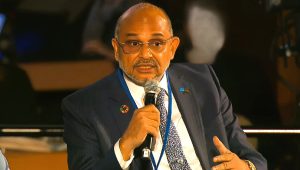
In his concluding remarks at the meeting, Chief Election Commissioner AMM Nasir Uddin said communal harmony must be maintained and treated as a top priority.
He stressed the need to ensure the highest level of protection for minorities during the polls.
“Listening to you has strengthened my resolve immensely,” the chief election commissioner said.
“We have no agenda of our own. There is only one agenda — to hold a credible election.”