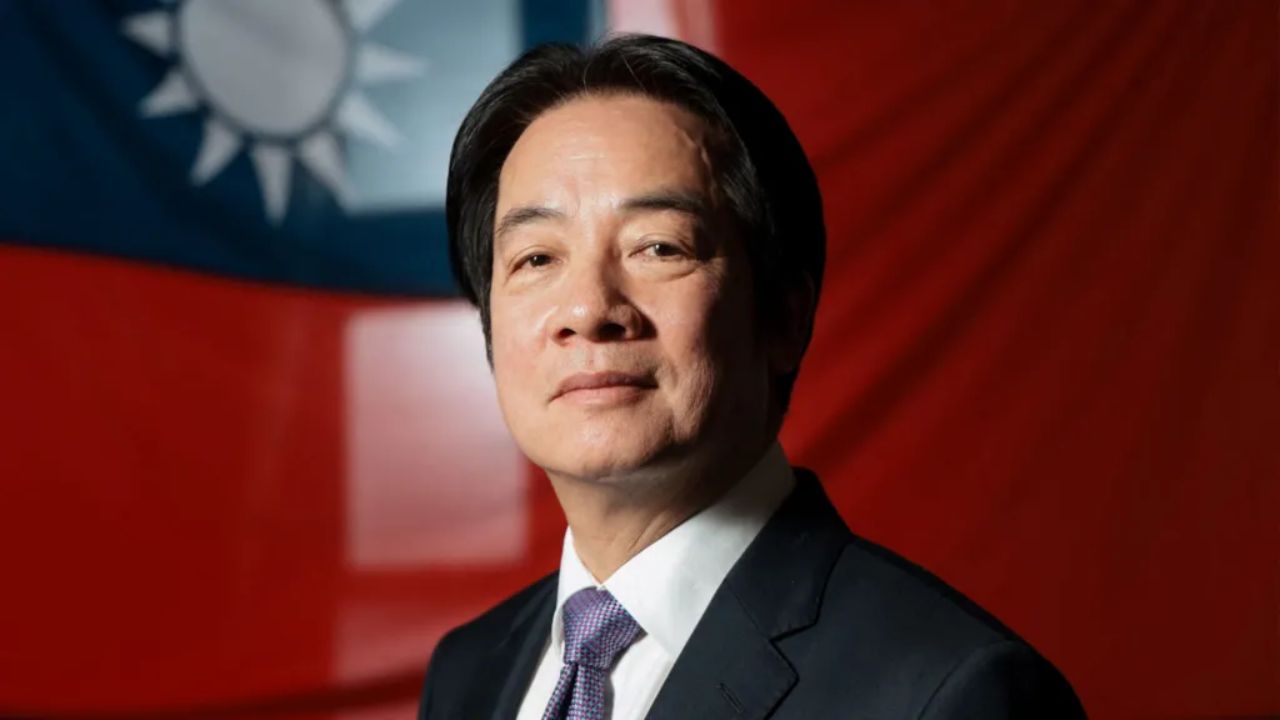



President Lai Ching-te has declared that Taiwan will neither provoke conflict nor relinquish its sovereignty following a high-stakes summit between US President Donald Trump and Chinese leader Xi Jinping.
In his first direct response to the meeting, Lai used a social media post to reaffirm that the island, officially known as the Republic of China, is already a sovereign and independent democratic nation.
He stated that there is “no ‘Taiwan independence’ issue” and emphasised that any decision regarding Taiwan’s future must reside with its people.
Lai’s remarks follow a summit in which President Xi reportedly described Taiwan as the “most important issue” in US-China bilateral relations, warning that any mismanagement of the situation could lead to conflict.

Beijing, which has frequently labelled Lai a “troublemaker” and a “destroyer of cross-strait peace,” continues to pursue “peaceful reunification” while refusing to rule out the use of force.
Following his discussions in Beijing, Trump told reporters he was “not looking to have somebody go independent” and clarified that he sought no conflict with China, though he maintained that US policy remains unchanged.


He further noted that while Xi feels “very strongly” about the island, he had “made no commitment either way” during their talks.
A central point of tension remains an $11 billion (£8 billion) arms sale to Taipei, which was approved by the Trump administration in December.
On his return flight from Beijing, Trump stated he would decide the fate of the sale personally, noting he had discussed the matter “in great detail” with the Chinese leader. When questioned on 1982 assurances that the US would not consult Beijing regarding arms sales to Taiwan, Trump remarked that the 1980s was a “long way”.
Despite the uncertainty regarding the arms package, Lai expressed gratitude for Trump’s “continued support” for peace in the Taiwan Strait.
He argued that because China has never renounced the use of force and continues to expand its military presence, the continuation of US security cooperation is a “key factor in maintaining regional peace and stability”.
The Taiwanese government maintains it is a “firm defender of the status quo” and expressed a willingness to engage in “healthy and orderly” dialogue with Beijing on the basis of equality. However, Mr Lai rejected any attempt by China to use “unification” as a pretext to coerce the island into negotiations.
While most citizens in Taiwan reportedly favour maintaining the “status quo” – neither formal independence nor unification – the region remains under significant pressure.
Beijing has recently intensified military activity, including regular drills and blockade simulations, in response to deepened security ties between Taipei and Washington.