The tranquil paddy fields of Rakhine State, once the lifeline of the Rohingya Muslim community in Buthidaung, have been transformed into a sprawling graveyard, concealing the grisly remains of a massacre that the world is only now beginning to comprehend.
A landmark report released by Human Rights Watch early Tuesday has brought to light the harrowing details of the Hoyyar Siri massacre, where the Arakan Army (AA) is alleged to have systematically gunned down hundreds of unarmed civilians on 2 May 2024.
As survivors emerge from the shadows of conflict to tell their stories in the refugee camps of Cox’s Bazar, the evidence – comprising witness testimonies, forensic analysis, and satellite imagery – points to a calculated campaign of violence that amounts to egregious war crimes.
For months, the site of the carnage remained inaccessible, a silent witness to the brutality that unfolded as the Arakan Army advanced against the Myanmar military junta. It was only when villagers like Omar Ahmod risked their lives to sneak back into the desolate remains of Hoyyar Siri that the scale of the atrocity became visible.
He described a landscape littered with heaps of skeletons and skulls, where the flesh had long decayed, but the tattered clothes of the victims remained as a haunting reminder of their identity. Forensic experts, tasked with analysing the images brought back by survivors, have confirmed gunshot injuries to the skulls of the victims, providing chilling scientific corroboration to the accounts of summary executions.
A community caught in deadly pincers
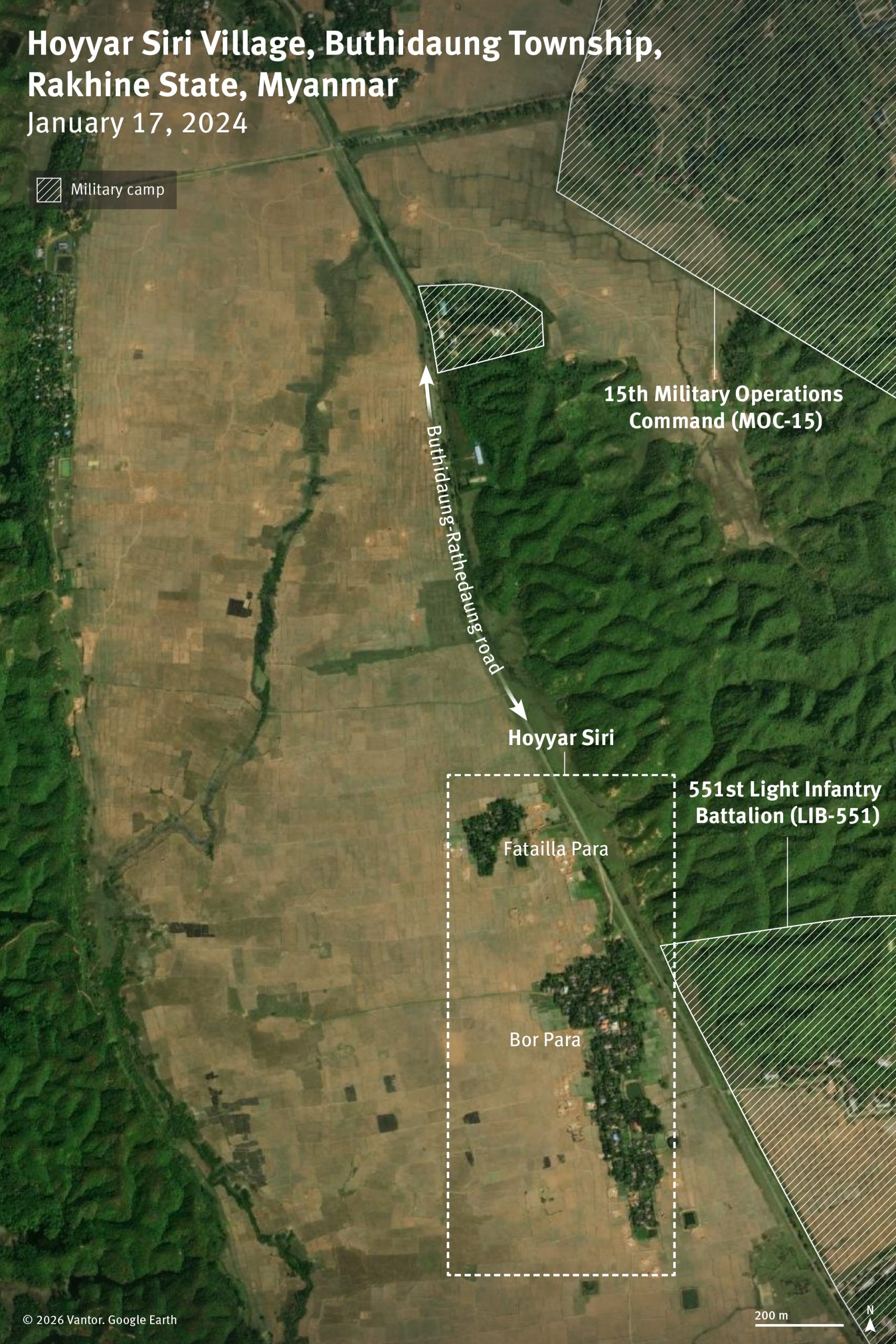
The tragedy of Hoyyar Siri, known in Burmese as Htan Shauk Khan, was rooted in its precarious geography. Situated along the Buthidaung-Rathedaung road, the village was flanked by two major Myanmar military installations: the 15th Military Operations Command (MOC-15) to the north and the 551st Light Infantry Battalion (LIB-551) to the southeast.

Historically, this proximity had provided a perverse sense of safety, as the village had been spared during the 2017 ethnic cleansing campaign by Myanmar security forces that saw hundreds of thousands of Rohingya flee to Bangladesh. Consequently, by April 2024, Hoyyar Siri had become a sanctuary for hundreds of displaced people seeking refuge from the intensifying clashes between the junta and the ethnic Rakhine armed group.
However, this sanctuary quickly became a trap. In mid-April, the Myanmar military, facing a desperate shortage of manpower, began a campaign of forced recruitment within the village. A captain named Bo Gyi Kyaw Moe Taw reportedly demanded “volunteers” to fight the Arakan Army, threatening to raze the village if the residents refused to comply.
Under duress, the village elders provided a dozen young men, a move that would later be used by the Arakan Army to label the entire community as collaborators. The villagers found themselves in an impossible quandary: the military ordered them to remain in their homes and dig bunkers, promising protection, while the Arakan Army issued conflicting warnings to evacuate or face being caught in the crossfire.
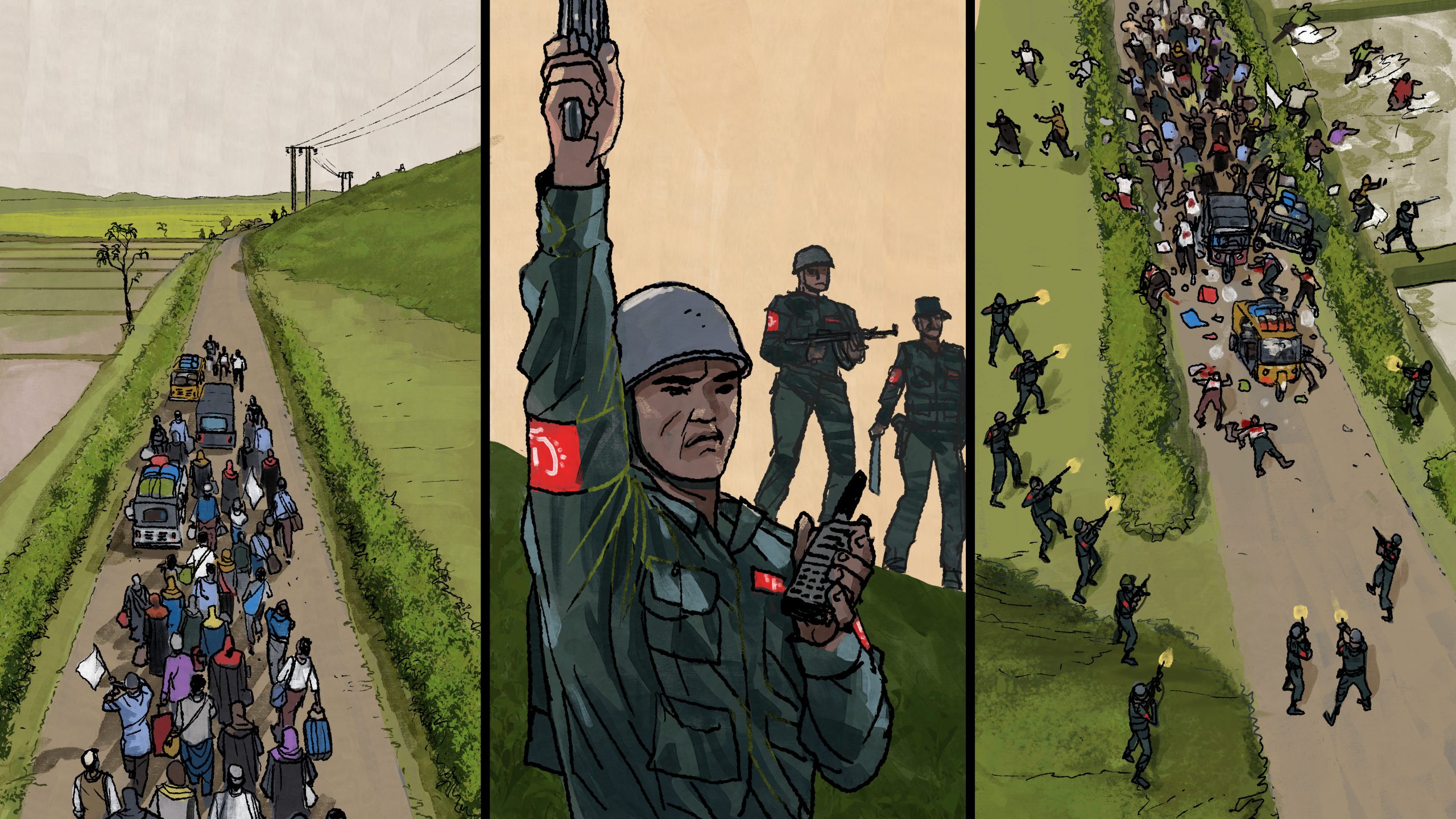
As the Arakan Army overran the MOC-15 camp in the early hours of 2 May, the retreating junta soldiers flooded into the village, triggering immediate panic. Realising that their home was about to become a battlefield, a massive procession of villagers, many waving white flags to signal their civilian status, began to move northwest toward Buthidaung town around 7 a.m. They hoped that by moving together on the main road, they would be recognised as non-combatants; instead, they walked directly into a lethal ambush.




The morning of systematic carnage
The first wave of killings occurred at a small hill known as Toinna Mura. Witnesses describe an Arakan Army commander speaking on a walkie-talkie before opening fire with a revolver, which served as a signal for his fighters to unleash a barrage of gunfire from three sides.
The scene was one of absolute chaos as bullets tore through the dense crowd of men, women, and children. Kobir Ahmed, who was walking with his family, recounted the agonising loss of his entire household. His son was shot four times, followed by his wife and two young daughters, all of whom were shot in the chest from a distance of barely five feet. In her final moments, his wife whispered to him, handing him a small sum of money and urging him to flee.
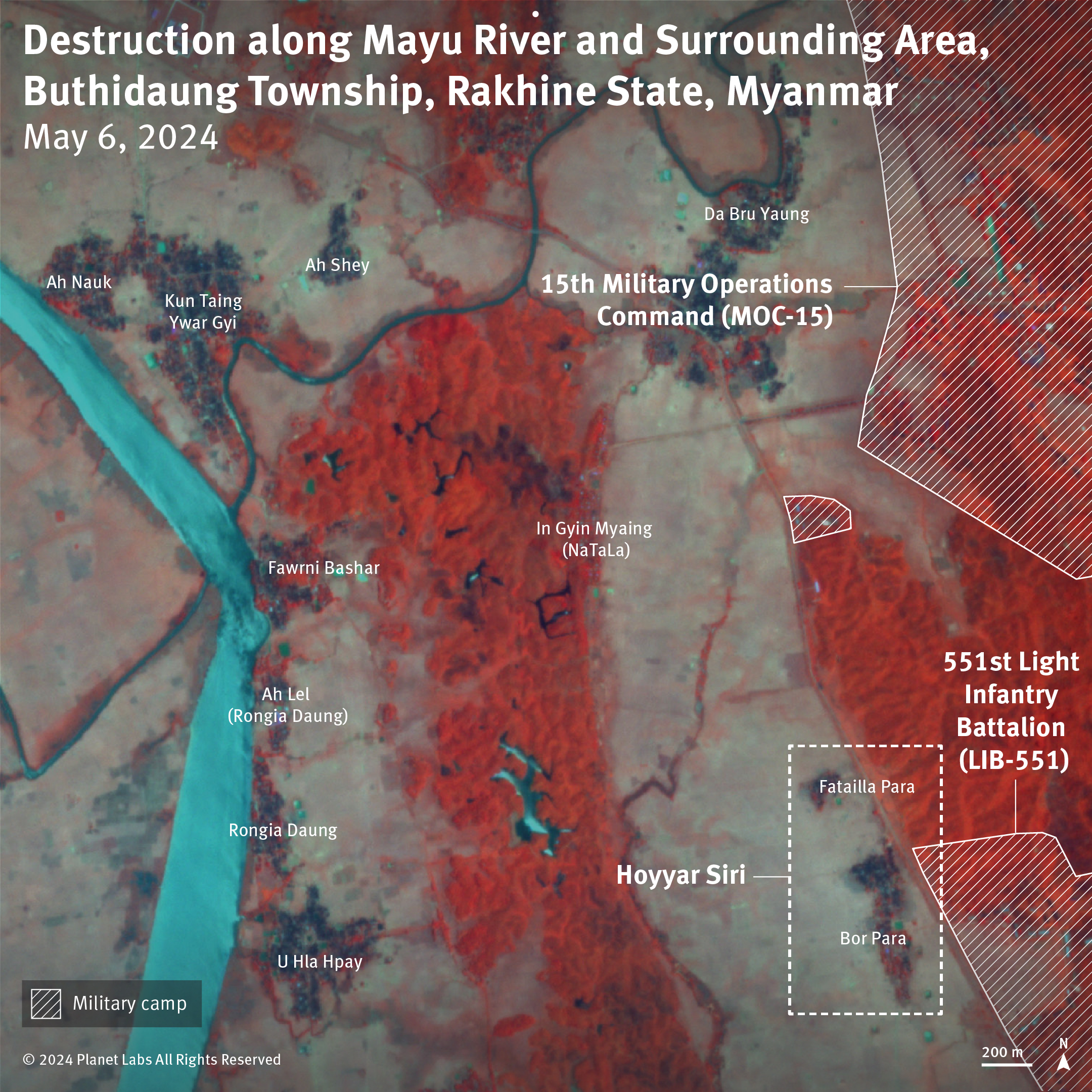
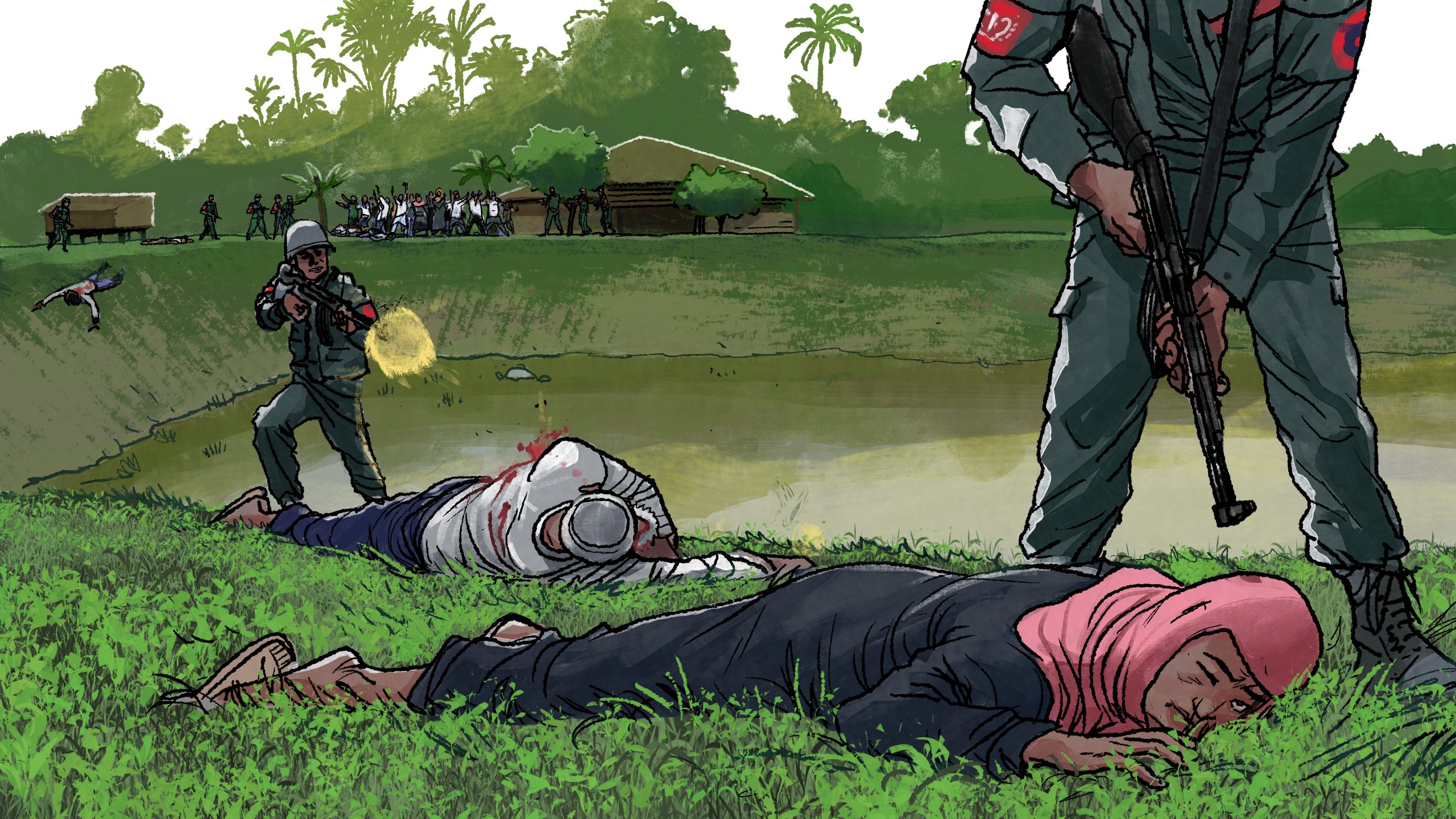
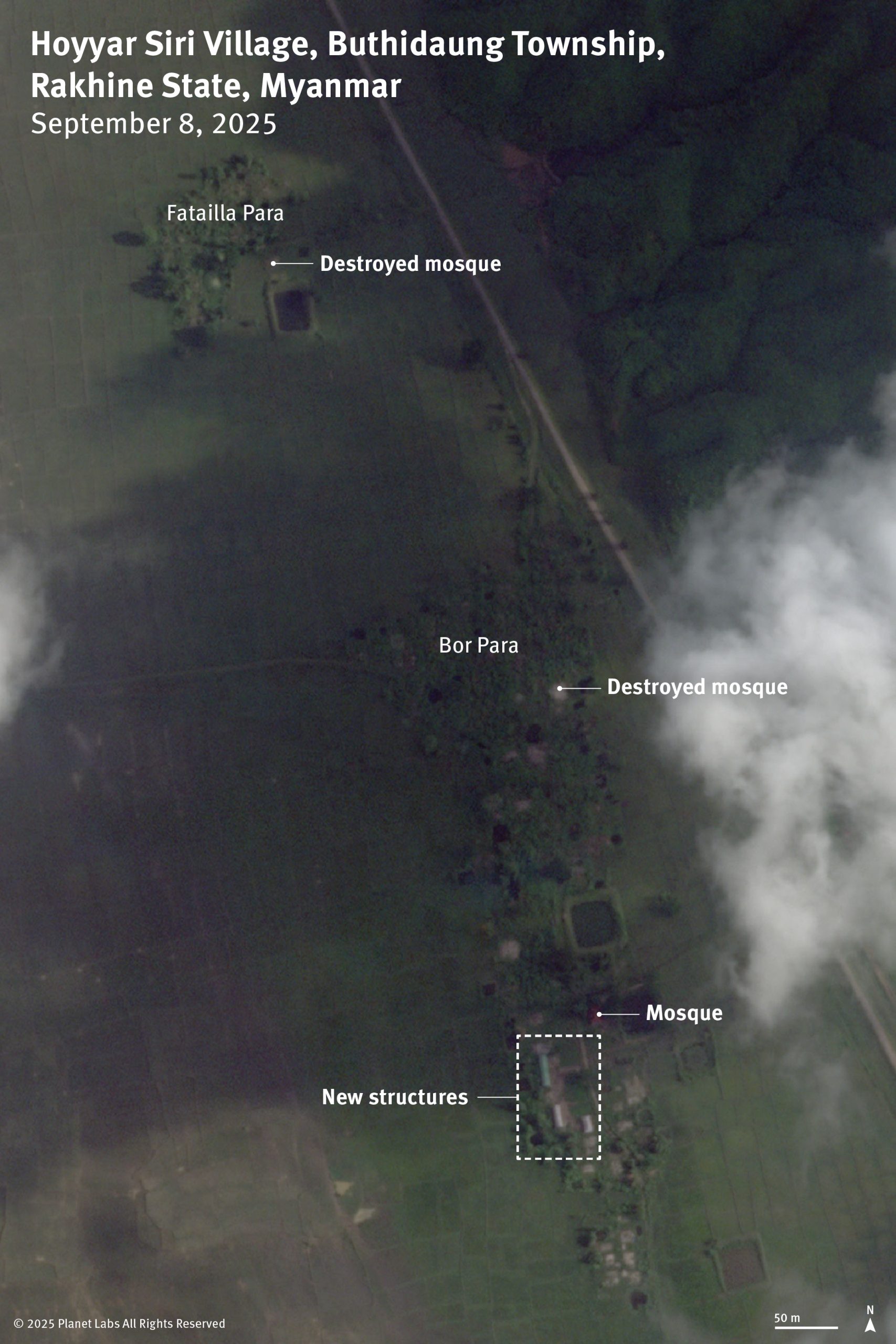
Those who survived the initial onslaught at Toinna Mura attempted to retreat into the village or the surrounding paddy fields, only to find that the Arakan Army had already surrounded the hamlets of Bor Para and Fatailla Para. Near a mosque in Fatailla Para, fighters rounded up groups of fleeing villagers and forced them to kneel or bow their heads before executing them.
Rashida Hatu, a survivor who was shot four times, managed to escape by pretending to be dead amidst a pile of corpses for thirty minutes. She watched as an Arakan Army fighter used the barrel of his gun to check for life among the bodies, even striking her on the head. Later, she would find the remains of her children near a bunker, identifying them only by the clothes that still clung to their bones.
While the Arakan Army has officially denied the massacre, claiming they only killed military personnel and armed recruits, the evidence gathered by Human Rights Watch tells a different story. Satellite imagery confirms that following the capture of the village, Hoyyar Siri was almost entirely reduced to ashes, with the destruction continuing even after the Arakan Army had established total control.
The death toll is estimated at a minimum of 170 people, including at least 90 children, though Rohingya activists fear the final count could exceed 500.
A calculated strategy of coercion and denial
In the aftermath of the bloodletting, survivors have been subjected to what can only be described as a systematic effort to erase the truth. Many were intercepted by Arakan Army fighters as they fled, robbed of their valuables, and taken into custody.
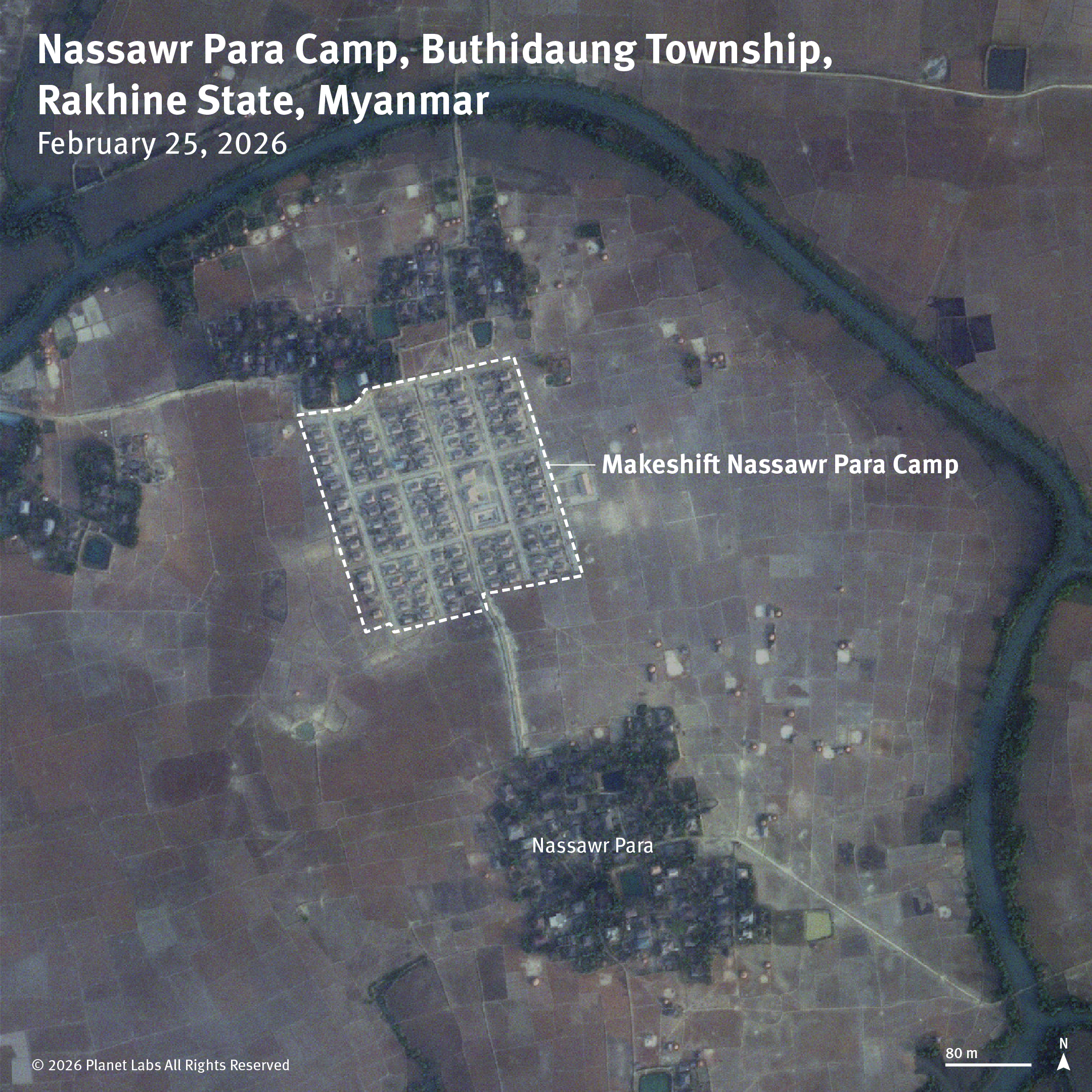
The Arakan Army subsequently established a makeshift camp at Nassawr Para, where approximately 700 survivors are currently held under constant armed surveillance. Residents describe the camp as a “death trap,” where they are forced to perform unpaid labour, such as caring for looted cattle, and are denied adequate food, water, or medical attention.
To counter growing international scrutiny, the Arakan Army has reportedly staged elaborate media visits. Survivors allege they were coached and threatened with death if they did not provide false testimonies exonerating the group. In one instance, a village administrator who had survived the massacre was forced to appear on camera, repeating a scripted narrative that the Arakan Army had actually assisted the villagers.
This campaign of misinformation is bolstered by the Arakan Army’s political wing, the United League of Arakan, which continues to insist that its forces have strictly adhered to the Geneva Conventions.
However, the legal analysis presented in the Human Rights Watch report is uncompromising. The deliberate targeting of civilians, the execution of persons in custody, and the forced relocation of populations into inhumane conditions are defined as clear violations of international humanitarian law.
Both the Myanmar military junta and the Arakan Army are accused of failing in their obligations to protect civilians, with the former accused of using the village as a human shield and the latter of committing cold-blooded murder.
As the International Criminal Court and the International Court of Justice continue their investigations into the broader crisis in Myanmar, the ghosts of Hoyyar Siri serve as a stark reminder of the ongoing peril facing Rohingyas. For those who reached the safety of Bangladesh, the quest for justice is tempered by the grim reality of life in overcrowded camps and the constant threat of repatriation to a land where they are still hunted.
The report concludes with an urgent plea to the international community to hold the perpetrators accountable and to ensure that the “safe, sustainable, and dignified” return of the Rohingya remains a priority rather than a diplomatic afterthought.