Khaleda Zia, one of the most dominant figures in Bangladesh’s political history, spent a significant portion of her later life behind bars—an experience that came to symbolise both her political downfall and the enduring polarisation of the country she once led.
When Khaleda Zia died at the age of 80, she left behind a career that spanned nearly four decades in politics and almost four years in formal confinement. A three-time prime minister, twice leader of the opposition, and the country’s first woman head of government, she remained politically active for 43 years, 11 months, and 27 days.
Over that long journey, she was imprisoned five times, accumulating 2,747 days—more than seven and a half years—either in jail or under house arrest. This figure does not include the periods during the 1980s when she was placed under house arrest three times under the military regime of HM Ershad, which adds further time to her years of confinement.
Her supporters describe those incarcerations as the price she paid for what they see as an uncompromising stand for democracy, sovereignty and political pluralism. Her critics argue they were the inevitable outcome of corruption cases pursued through the courts. Either way, prison became an inescapable part of Khaleda Zia’s political story.
The last imprisonment
Khaleda Zia entered prison for the fifth and final time on 8 February 2018, after a court sentenced her to five years in the Zia Orphanage Trust corruption case. Months later, on 29 October, she was handed a further seven-year sentence in the Zia Charitable Trust case.
She was taken to the Old Dhaka Central Jail on Nazimuddin Road, a vast colonial-era facility that once held thousands of inmates. By the time Khaleda Zia arrived, however, it stood almost empty. In 2016, authorities had transferred its prisoners to a newly built jail complex, leaving the former prime minister as its sole inmate.

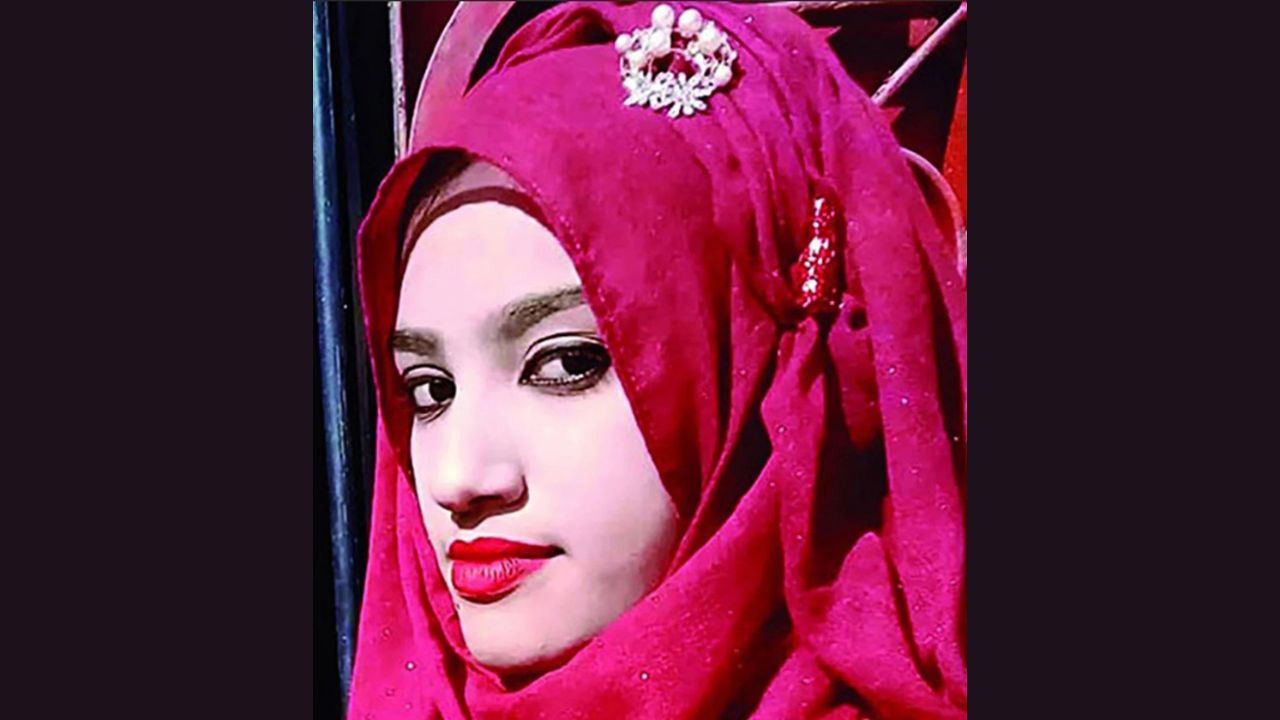
No photographs of Khaleda Zia were released after her imprisonment began. Authorities barred her from giving interviews, and she was largely cut off from public view. Her health deteriorated, and she was intermittently hospitalised during her imprisonment.
Life inside an empty jail
Khaleda Zia lived in a 10-foot by 8-foot room on the first floor of the jail’s administrative building—formerly an office for prison officials. As a prisoner entitled to certain privileges, she was provided with basic furniture, including a table and chairs, along with personal items such as toiletries, crockery and a television.
Her personal attendant, Fatema, stayed in an adjacent room. The two women moved into the jail together in February 2018.

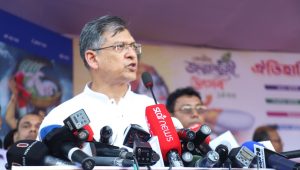
Despite the special arrangements, opposition figures painted a grim picture of her living conditions. At a news conference in June 2018, BNP Secretary General Mirza Fakhrul Islam Alamgir alleged that Khaleda Zia was being kept in unhygienic surroundings.
“The Dhaka Central Jail is the worst,” he told reporters. “It houses such large rats. You’ll be surprised to know that a cat caught a mouse in the room where madam resides.”
Other opposition leaders claimed her room was infested with bed bugs. The government rejected these allegations.
Khaleda Zia was allowed to read only one newspaper of her choice and could watch state-run television channels. Inside the jail compound, a special court was set up not far from her cell to hear other cases filed against her. The makeshift courtroom measured just 20 feet by 12 feet.
When summoned, two female police officers escorted her to court in a wheelchair. She often declined to attend hearings, citing ill health. When she did appear, she was described as wearing clean, neatly pressed clothes. Her lawyers and senior BNP leaders were present at the sessions.
Health, release and restricted freedom
On 1 April 2019, Khaleda Zia was admitted to Bangladesh Medical University, formerly Bangabandhu Sheikh Mujib Medical University, as her condition worsened. She suffered from multiple chronic ailments, and concerns over her health became a central issue in political debates.
On 25 March 2020, the government granted her conditional release, suspending her sentence to allow treatment at home. Though described as a release, it came with strict legal conditions. She could not travel abroad and remained, in effect, under home confinement.
It was not until 6 August 2024, following the fall of the Hasina regime, that Khaleda Zia was fully freed without restrictions.
By then, more than six and a half years—2,372 days—had passed since her final imprisonment began.
Earlier arrests and detention
Khaleda Zia’s experience with imprisonment predated the 2018 cases. During the military-backed caretaker government, she was jailed from 3 September 2007 to 11 September 2008, spending 375 days in custody before securing bail.
Earlier still, during the anti-Ershad movement, she was detained three times—in 1983, 1984 and 1987—though these periods were spent under house arrest at her residence inside Dhaka Cantonment. Precise records of those detention periods are unavailable.
A life reduced to a cell
For a leader who once governed and commanded the loyalty of millions, Khaleda Zia’s years in confinement marked a stark reversal of fortune. From the apex of power to the solitude of an empty jail, her imprisonment became both a political symbol and a deeply personal ordeal.
In death, as in life, Khaleda Zia remains a figure of intense debate—viewed by supporters as a persecuted democratic leader, and by critics as a former prime minister held accountable by the courts. What is beyond dispute is that prison shaped the final chapter of her political life, leaving an indelible mark on the country’s history.