Kashmir’s centuries-old saffron industry, known for producing one of the world’s most expensive spices, is facing a severe crisis due to changing climate patterns, rapid urbanisation and widespread food fraud.
In spice markets from Srinagar to Delhi, imported saffron is frequently repackaged and sold as authentic Kashmiri produce, concealing a sharp decline in local harvests, reports BBC.
Official Indian government data show that saffron production across Kashmir and neighbouring Jammu fell from eight tonnes in the 2010–11 season to just 2.6 tonnes in 2023–24.
Cultivation in the Pampore uplands, India’s main saffron-producing region, depends heavily on precise seasonal conditions. Rainfall during August and September is essential for the development of corms, the plant’s underground stem bases, and subsequent autumn flowering.
Rabia Khan, an independent climate researcher and advocate based in Kashmir, said prolonged dry spells during autumn and changing snowfall patterns in the western Himalayas had severely affected groundwater recharge and soil moisture levels.
Local grower Abdul Rashid Wani said winters were no longer as cold or prolonged as before, forcing farmers to depend heavily on artificial water pumps as snowmelt streams weakened earlier in the year.

Saffron grower Mohammad Asif warned that any shortage of moisture during the short two-to-four-week autumn flowering period could quickly damage yields.
Infrastructure problems, encroachment and pest attacks
The Indian government launched the National Saffron Mission in 2010 to construct borewells, install sprinkler systems and rejuvenate corms.
However, growers say damaged pipelines, irregular water supplies and delayed repairs during critical flowering periods continue to undermine the programme. India’s Department of Agriculture and Farmers Welfare did not respond to requests for comment on these operational concerns.
Meanwhile, commercial construction, housing expansion and road development have steadily reduced the farmland where saffron flowers once bloomed.




Habib Khan, an elderly resident of Konibal village, said every household had previously depended on saffron cultivation, but younger generations increasingly saw little economic future in the crop.
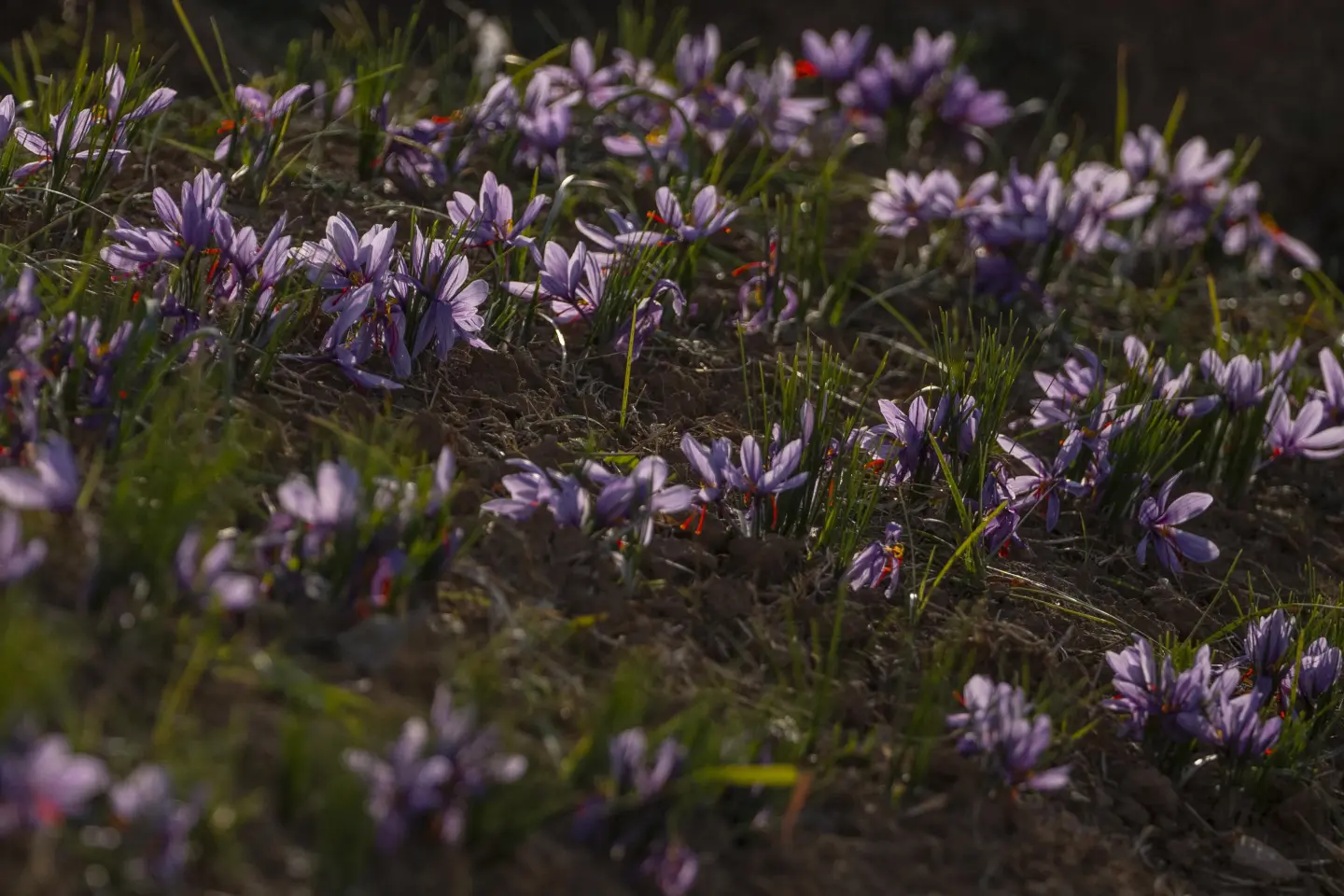
Farmers in villages such as Dussu are also struggling with growing crop damage caused by nocturnal porcupine attacks on underground corms. Growers have been forced to put up makeshift barriers and keep watch at night.
Rats attracted by nearby landfills have also destroyed large numbers of corms, according to reports by the New Delhi-based publication Down To Earth.
Market fraud and global supply pressures
The domestic crisis has been compounded by international market pressures and widespread adulteration.
Iran accounts for roughly 90 per cent of global saffron production, but its growers are also struggling with severe drought. The US-Israel conflict with Iran has recently disrupted global supply chains and price stability for both Iranian and Kashmiri saffron.
In Delhi’s wholesale spice markets, imported Iranian saffron is routinely purchased in bulk, repackaged and sold under Kashmiri labels.
Other fraudulent practices include replacing saffron with safflower or turmeric and adding hazardous chemical dyes.
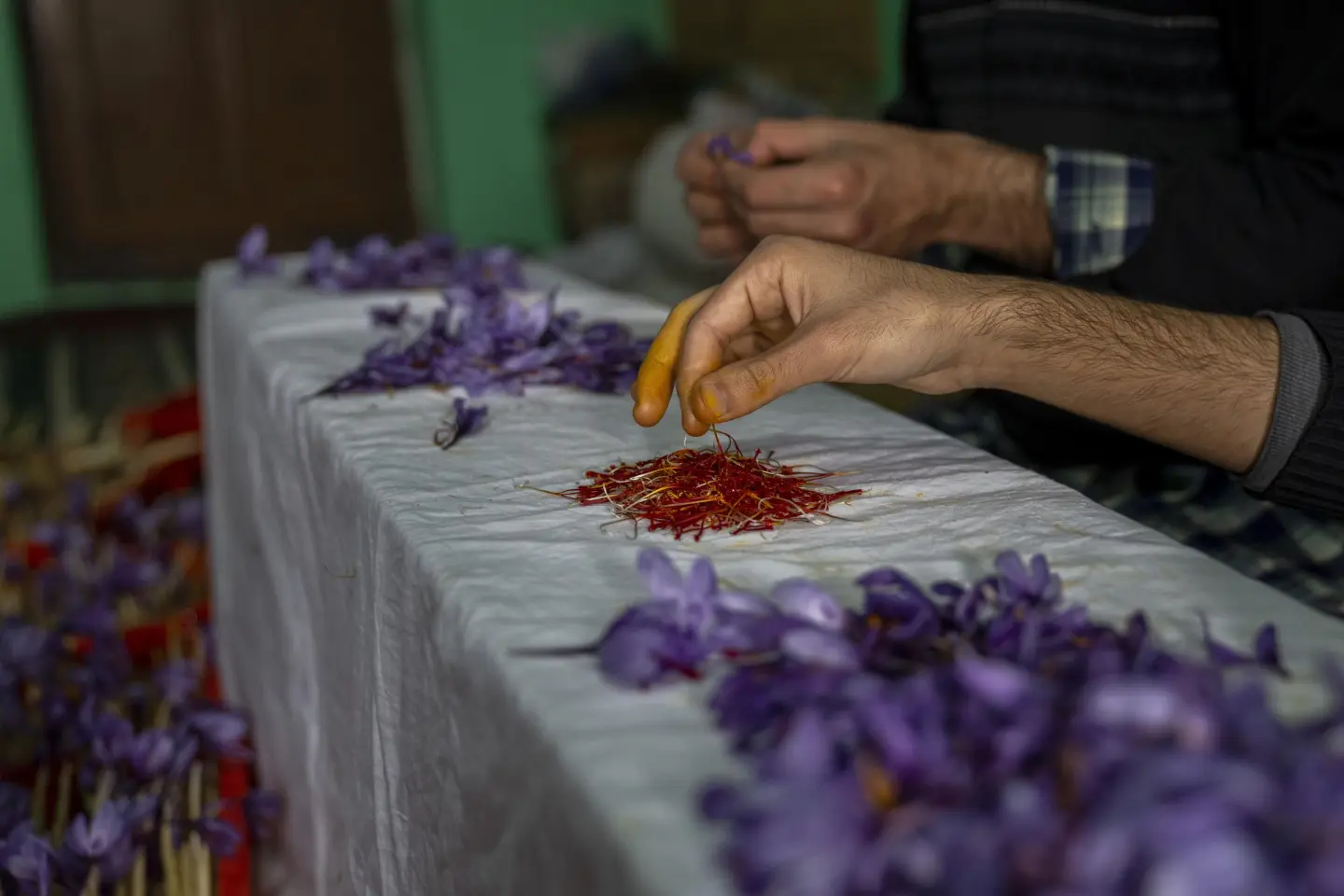
Shazia Malik, a food scientist studying spice authentication at the J&K Food and Drugs Department, said such adulteration severely undermined consumer confidence and reduced farmers’ incomes.
Although electronic traceability systems and certification schemes have been introduced, with a government official telling the BBC that oversight had improved, growers maintain that enforcement at the field level remains inconsistent.

Scientific research and cultural preservation
Saffron (Crocus sativus) was introduced to Kashmir centuries ago through Persian trade networks.
Kashmiri saffron is particularly valued for its dark crimson colour, thick stigmas, intense aroma and high concentration of crocin, the carotenoid compound responsible for its deep colour.
It can fetch more than $4 (£3) per gramme, or $110 (£82) per ounce. Producing a single ounce (28 grammes) of dried saffron requires the hand-harvesting of approximately 4,000 flowers before sunrise.
To reduce the risks posed by changing weather conditions, governmental horticulture scientist Neyaz Ahmad Dar is conducting research into indoor cultivation near Srinagar. The research uses controlled environments to regulate temperature, humidity and light exposure to stabilise flowering and maintain crocin levels.
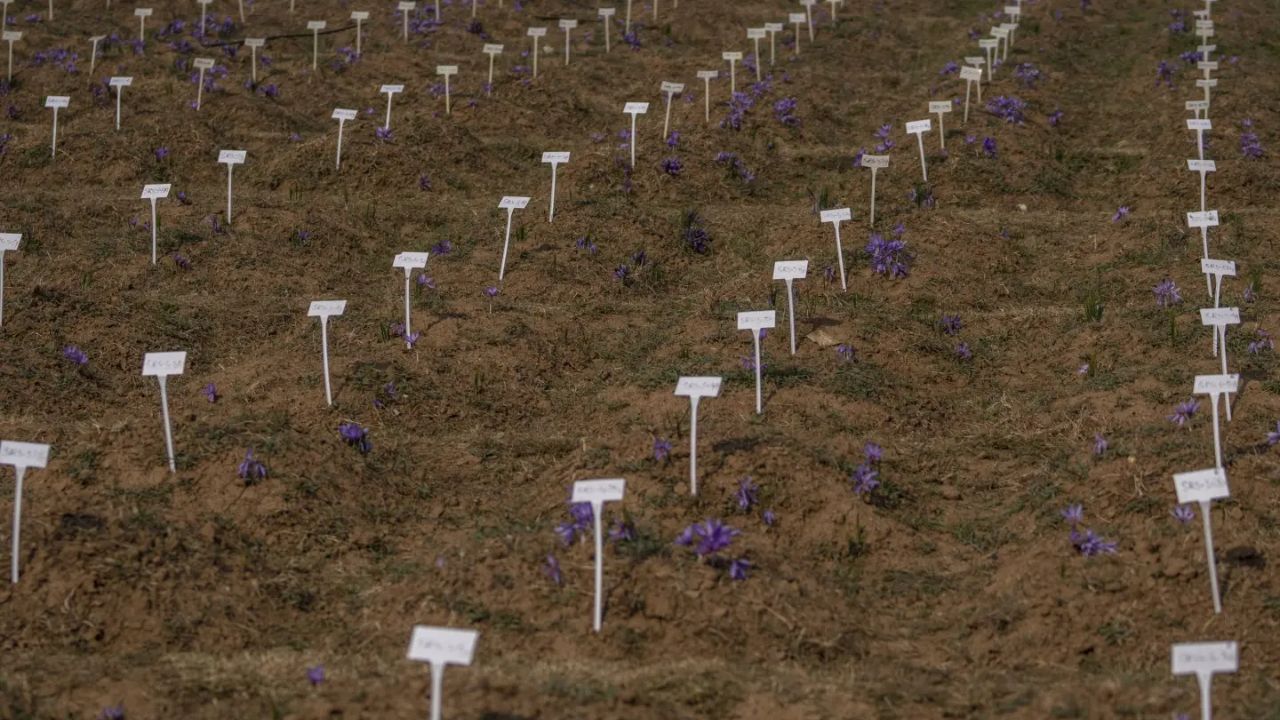
Researchers are also focusing on groundwater management, corm preservation and policies to protect saffron-growing land.
Despite the challenges, growers such as Mohammad Asif and his wife Zeba continue the traditional autumn harvest in Dussu, separating crimson stigmas by hand over salted tea, even as their yields have fallen far below those of previous decades.
Asif said the crisis threatened more than their livelihoods, with local families fearing the permanent loss of a centuries-old cultural identity closely tied to the land of Kashmir.