The river gives, and the river takes away. Along the banks of the Kangsha River in Netrokona, that truth is not poetic; it is daily life.
In the dry months, the river appears calm, almost generous. Boats drift slowly, and fishermen cast their nets. Narrow roads hug the banks, connecting villages to markets and schools. But when the monsoon arrives, the Kangsha changes its mood entirely.
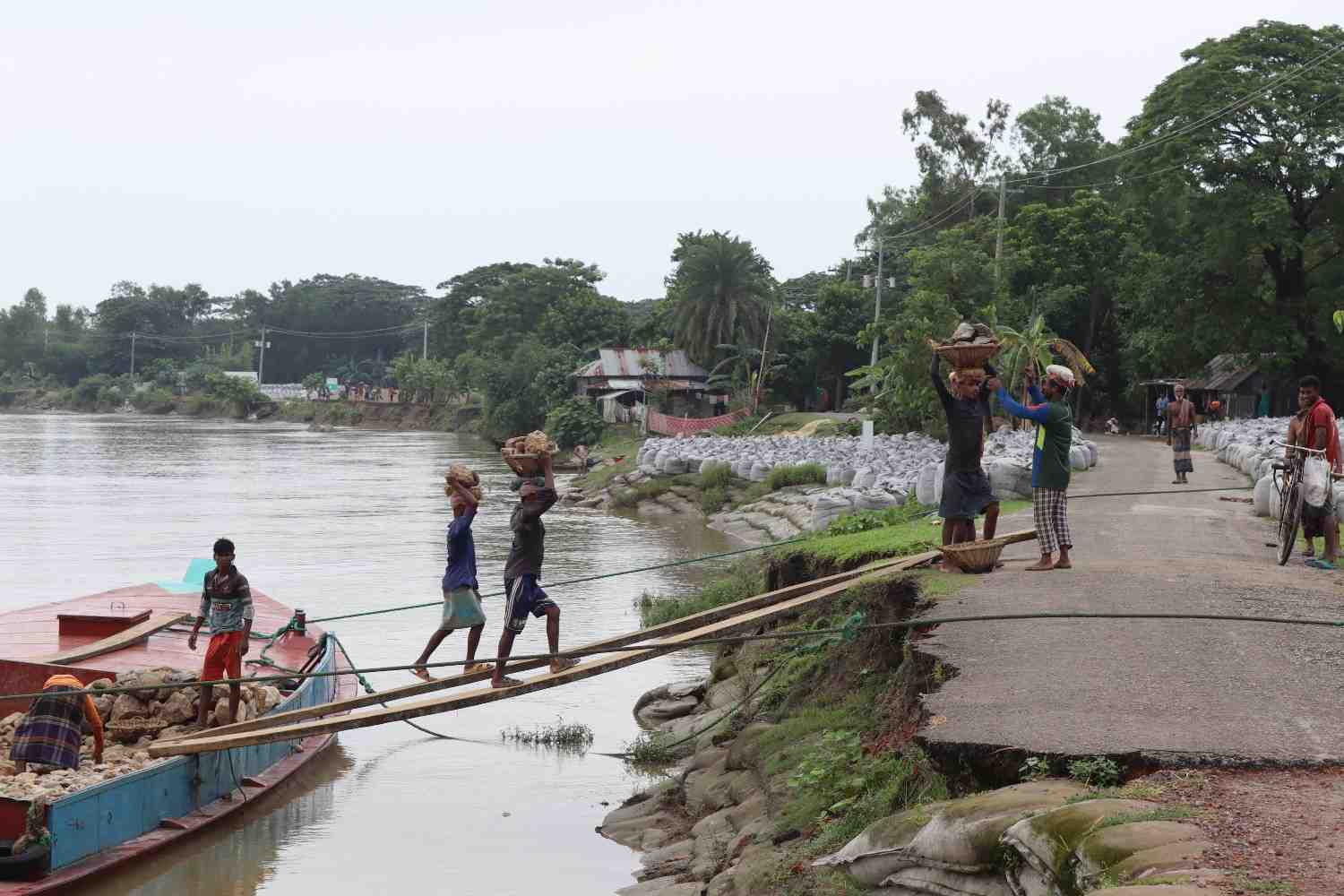
The water rises without warning. What was once a steady current becomes a force that eats up the land. Chunks of road collapse into the river, leaving behind broken edges. People walk carefully. In some places, more than half the road has already disappeared.

For those who live here, erosion is not an abstract threat. It is a slow, relentless loss. Homes vanish overnight. Families wake up to find the ground beneath them gone. There are no exact numbers, no records to measure how much has been taken, only stories, repeated each year.




Movement becomes another challenge. With roads damaged or submerged, small boats turn into lifelines. People cross the river balancing on makeshift planks or crowding onto narrow vessels, carrying goods, bicycles, even children on their shoulders. For school-going children, the journey becomes uncertain, often dangerous. Many simply cannot go.
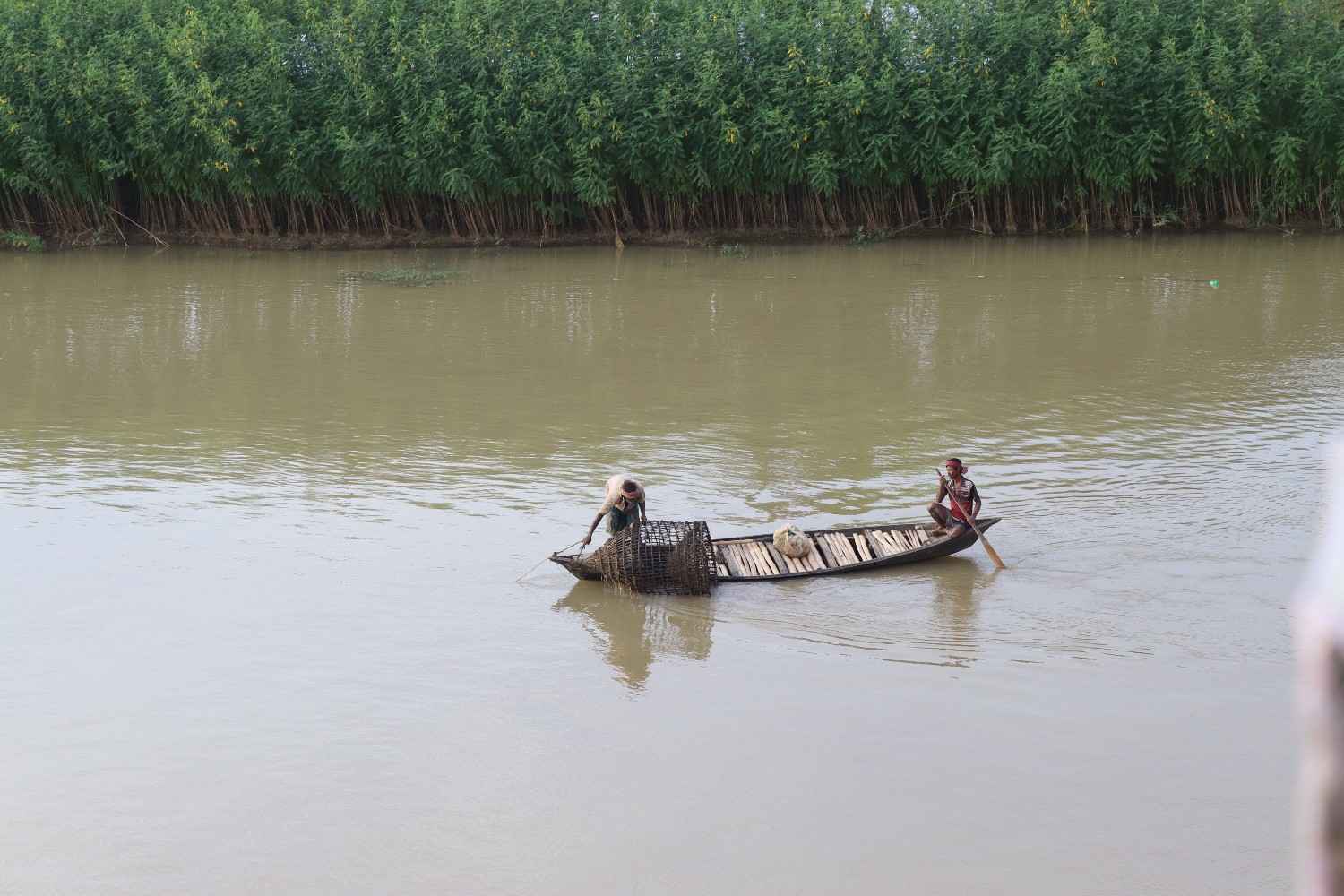
Fishing, once the backbone of survival here, is no longer reliable. Fishermen say the river does not provide as it used to. Nets come up lighter, and each trip feels more like a gamble than a livelihood.
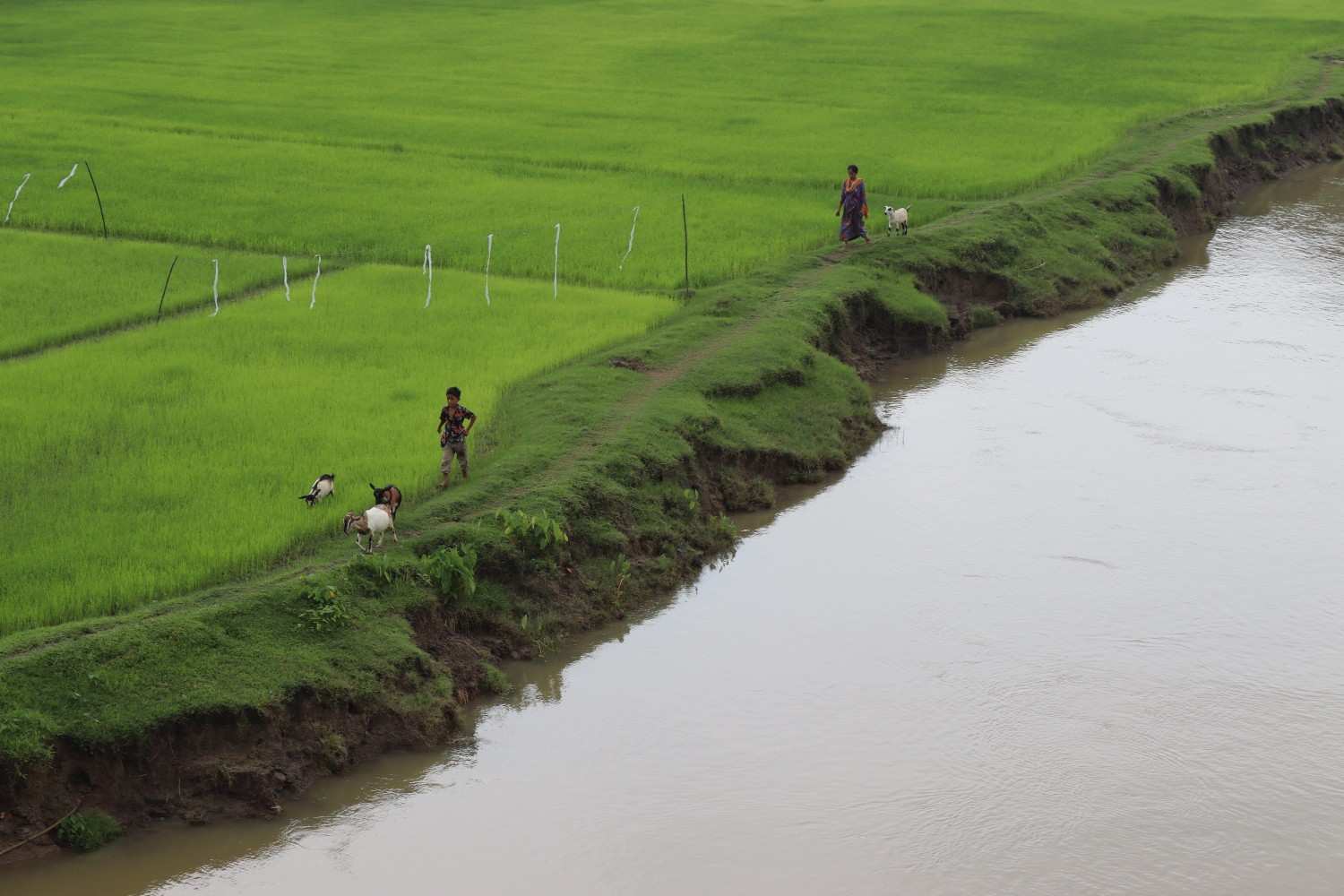
Yet life continues. Men still row out at dawn. Women walk along fragile paths with quiet determination. Children watch the river, learning early what it means to live beside something so powerful and unpredictable.
Along the Kangsha, survival is not a choice. It is a daily act of resilience; one that repeats with every rising tide.