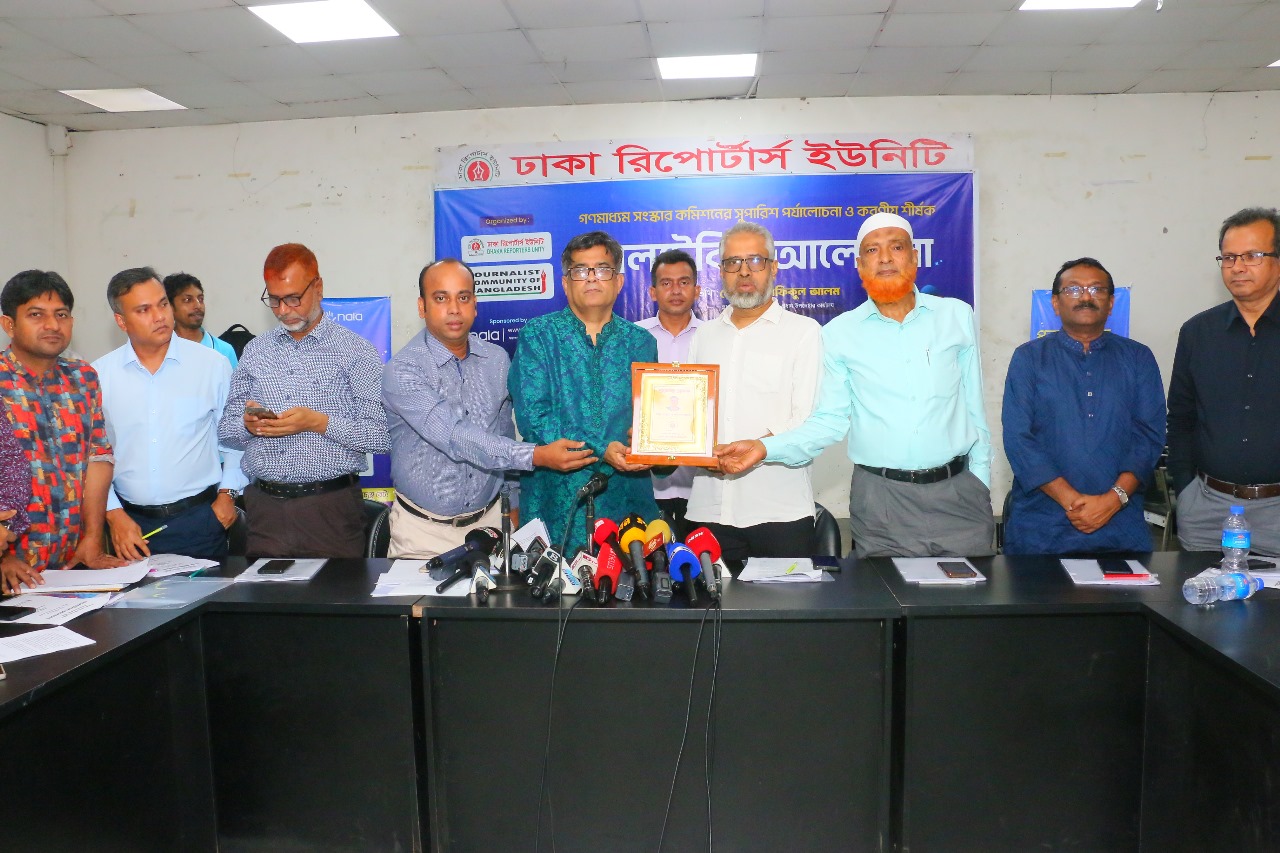



Journalists have called for a review of the recommendations of the Media Reform Commission, advocating for implementation of a “No Wage Board, No Media” policy.
They have also suggested a minimum salary of Tk 35,000 for a media professional, and implementation of a wage board for print, electronic, and online media.
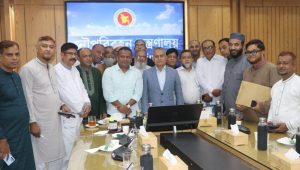
The demand was made at a roundtable discussion titled “Review and Actions on Media Reform Commission’s Recommendations”, jointly organised by Dhaka Reporters Unity (DRU) and the Journalist Community of Bangladesh at DRU on Saturday.
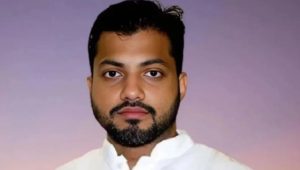
Mohammad Shafiqul Alam, press secretary to Chief Adviser Prof Muhammad Yunus, addressed the event as the chief guest.
In his speech, he acknowledged the valuable recommendations in the Media Reform Commission’s report, but also pointed out areas of inconsistency that require criticism.

Shafiqul stressed the need for provisions to address religious violence by removing the clause related to the harm of religious sentiments.
He also expressed his consent with the “No Wage Board, No Media” policy, underlining the importance of its implementation.




He further recommended that editors and publishers should resign from unions, as holding such positions is contradictory to media policies.
The press secretary also called for certification for journalists to curb the damage caused by unethical journalism, emphasising that journalists’ salaries should be at least Tk35,000.
“Media owners must take responsibility of journalists’ security in workplaces, with legal actions against owners in case of violations,” he added.
The event featured several other distinguished speakers, including M Abdullah, managing director of Bangladesh Journalist Welfare Trust, Obaidur Rahman Shaheen, president of BFUJ, and Shakhawat Hossain Badsha, former president of DRU.
They emphasised the need for media reform and the establishment of a proper framework for journalists’ safety and welfare.
Abu Saleh Akon, president of DRU, pointed out that journalists must claim their rights. He lamented that no structural changes have been made to the media post-revolution, and journalists are still facing mob-like harassment.
He criticised the irregularities in the Directorate of Film and Publications (DFP) and called for the government to take action.
The roundtable concluded with a call for a unified wage structure across all media sectors and stricter regulations for online and electronic platforms.
The discussions also highlighted the necessity of creating a separate hospital for journalists and the implementation of the Supreme Court’s ruling on journalists’ taxes.
The comprehensive report on the reform has recommended that all journalists should be registered with ID cards, with uniform salary structures introduced across all media sectors.