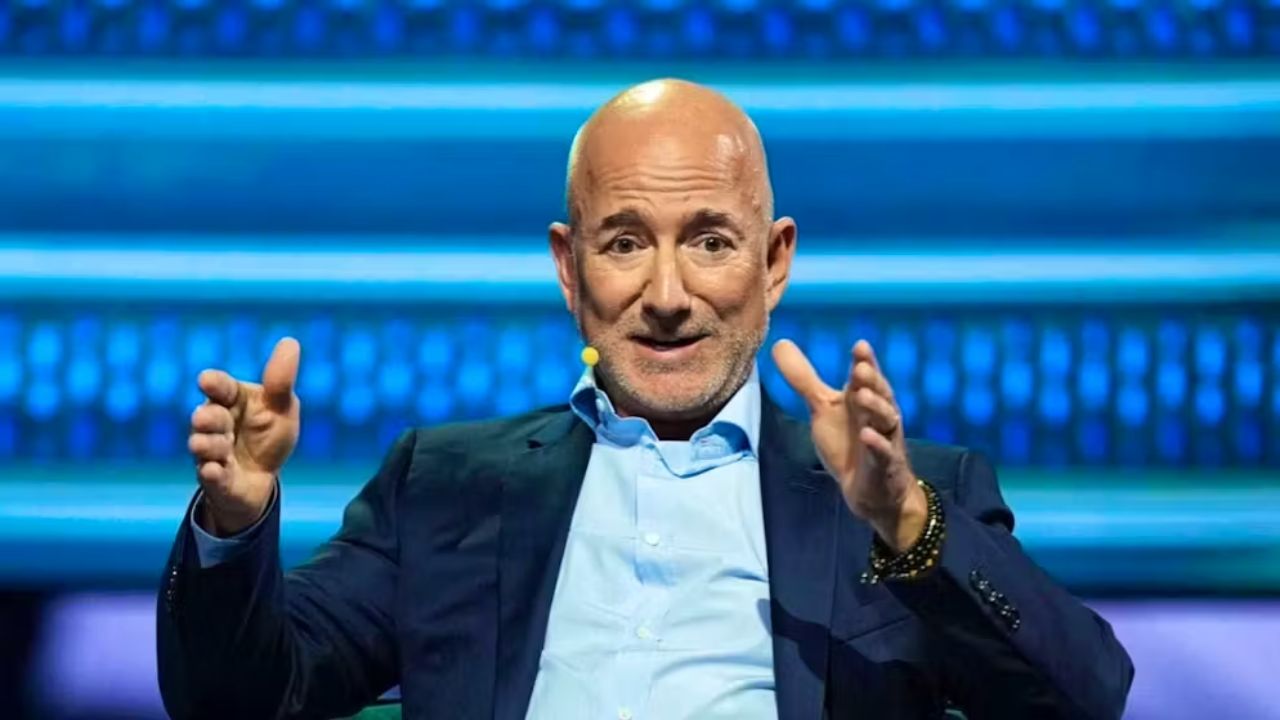

Amazon founder Jeff Bezos is intensifying competition with Elon Musk’s Starlink. Bezos’ aerospace venture, Blue Origin, has unveiled plans for a new high-speed corporate internet network named “TeraWave”.
The first of the constellation’s proposed over 5,400 satellites is scheduled for launch by the close of 2027. Such systems bypass terrestrial infrastructure by enabling direct communication between ground-based technology and orbiting satellites.
While they present an alternative to conventional telecom networks, current limitations include constrained capacity, marginally slower response times, and a requirement for specialised antenna-equipped receiving stations.
While Bezos relinquished his role as Amazon’s CEO in 2021, he remains its principal shareholder. The e-commerce giant is concurrently developing its own rival to Starlink, named “Amazon Leo”.

This project aims to deploy over 3,200 satellites, promising download speeds ranging from 100 megabits to one gigabit per second – comparable to high-end residential broadband.
Starlink, operated by Musk’s SpaceX, is also poised for enhancement, with its next generation targeting gigabit-per-second speeds. Blue Origin’s TeraWave, however, pledges superior performance.




Its proposed fleet of 5,280 low-orbit satellites is forecast to achieve speeds up to 144 gigabits per second. An additional 128 satellites in medium orbit could reportedly reach a staggering 6 terabits per second, a figure 6,000 times faster than a standard gigabit connection.
SpaceX established early dominance in the space-based internet arena with Starlink, yet Amazon anticipated market demand for an alternative. This launch marks the latest chapter in the long-standing competition between Musk and Bezos, who have vied for supremacy in rocketry for years.
The strategic use of Starlink was notably demonstrated by the Ukrainian military following Russia’s invasion, where it proved vital after traditional communications infrastructure was destroyed.
Initially providing terminals directly, SpaceX now operates under a formal contract with the US Pentagon to supply services to Ukraine.
Prior to this agreement, Musk retained significant control over Starlink’s application in the conflict.
The tech entrepreneur informed his biographer, Walter Isaacson, that he declined a Ukrainian request to activate Starlink services near the Russian-occupied Crimean peninsula, an action he stated thwarted a planned offensive against Russian forces there.
Concurrently, Musk faces a separate dispute with Ryanair CEO Michael O’Leary, who has resisted equipping the budget airline’s fleet with Starlink technology. O’Leary contends the modifications would increase fuel consumption without corresponding customer willingness to pay for onboard internet.
This stance contrasts with other carriers, such as Lufthansa, which are currently adapting portions of their aircraft for Starlink connectivity.