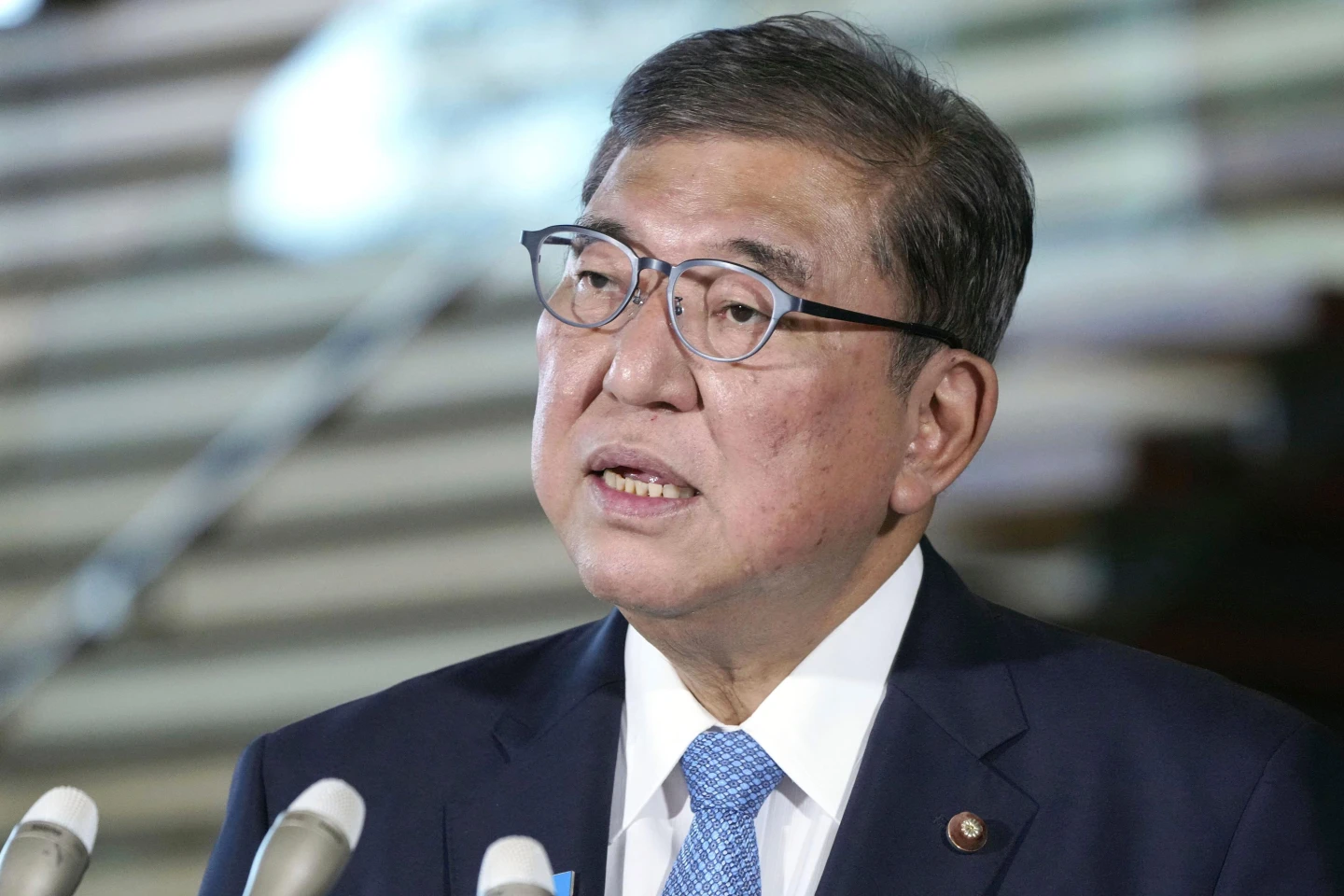

Japanese Prime Minister Shigeru Ishiba has decided to resign, NHK public television reported on Sunday, after intensifying pressure from within his party to accept blame for July’s parliamentary election defeat.
Ishiba, who assumed office in October, had for weeks resisted demands, mainly from conservative rivals inside the Liberal Democratic Party (LDP). His decision comes just before the party is scheduled to vote on whether to hold an early leadership contest, a virtual no-confidence motion against him if approved, reports AP/UNB.
Ishiba is stepping aside in hopes of preventing deeper rifts within the party, reports NHK. He is expected to address the nation in a press conference later on Sunday at 6pm local time (GMT +9).

The LDP-led coalition lost its majority in the 248-seat upper house in the July vote, a major political setback that further undermined Ishiba’s authority.




His choice to step down followed discussions on Saturday with Agriculture Minister Shinjiro Koizumi and his perceived mentor, former Prime Minister Yoshihide Suga, both of whom encouraged him to resign before Monday’s internal party ballot.
Until now, Ishiba had insisted that he should remain in office to avoid instability during a critical period, citing challenges such as US tariffs and their economic fallout, inflation, reforms in rice policy, and regional tensions.
But after the LDP last week formally endorsed a review of its election loss, which urged “a complete overhaul” of the party, calls for his resignation or an expedited leadership vote gained significant momentum.