


Japan’s government on Monday defended its position on wartime sexual slavery and claimed South Korean court orders demanding compensation for victims as violations of international law.
This follows criticism from UN investigators who accused Tokyo of failing to ensure justice and reparations for the survivors.
In response, South Korea urged Japan to confront its “painful history” and cited the refusal of Tokyo to comply with court orders, which have denied victims the compensation they are entitled to. The two nations, despite shared concerns over regional security, continue to be divided over historical issues, particularly regarding wartime sexual slavery.

UN human rights rapporteurs in July sent letters to several countries, including Japan, South Korea, as well as China, the Philippines, Indonesia, the Netherlands and East Timor, about their failure to provide access to justice and reparations for survivors. Japan and South Korea were the only countries to respond, with their statements now posted on the UN website, reports AP/UNB.
Japan’s response reaffirmed its longstanding view that all compensation matters related to wartime sexual slavery were settled through previous agreements, including the 1965 treaty normalizing relations with South Korea and a 2015 deal aimed at resolving the issue.



Japan’s statement, issued by its permanent mission in Geneva, argued that South Korean court rulings violated state immunity in such cases and urged Seoul to correct its actions in line with international law.
South Korean courts have previously ruled that Japan must compensate victims of both sexual slavery and forced labor, a legacy of Japan’s colonial rule over Korea. Japan maintains that these rulings violate its sovereign immunity, referencing the 1965 treaty, while South Korean courts argue that crimes against humanity are not covered by sovereign immunity.
Some South Korean experts and survivors have suggested referring the dispute to the International Court of Justice, but no action has been taken so far.
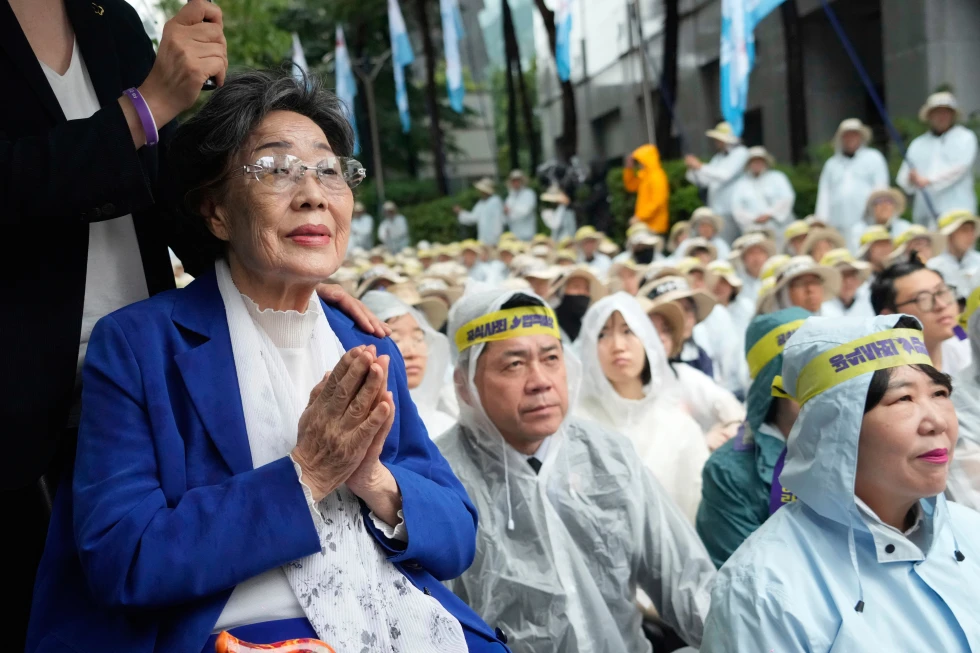
Historians estimate that tens of thousands of women, many from Korea, were forced into military brothels to provide sexual services to Japanese soldiers. At the time of the 2015 deal, 46 of the 239 women who registered with the Seoul government as victims were still alive in South Korea, but there are now only 6.
While Japan has expressed regret over the wartime practice, many in South Korea feel that Japan’s previous actions have been insincere, with many political leaders questioning the country’s wartime history.
Although relations between Japan and South Korea have been strained due to historical disputes, both countries have recently taken steps to improve ties and bolster trilateral cooperation with the US in addressing regional challenges, including the North Korean nuclear threat. In August, South Korean President Lee Jae Myung visited Tokyo for talks with Japanese Prime Minister Shigeru Ishiba, highlighting efforts to repair diplomatic relations.