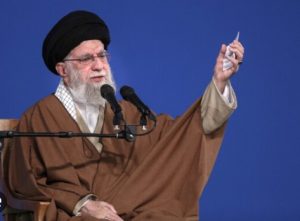



Israeli Defence Minister Israel Katz revealed on Thursday that Iran’s Supreme Leader, Ayatollah Ali Khamenei, was a primary target during the intense 12‑day air war between Israel and Iran. Though Israeli forces were prepared and “would have taken him out” if the opportunity arose, Khamenei evaded the strike by going into deep hiding, reports Al Arabiya and agencies.
In a high-stakes interview on Kan public television, Katz stated, “I estimate that if Khamenei had been in our sights, we would have taken him out,” emphasizing Israel’s determination. He further explained that the supreme leader severed communications with his military commanders and “went very deep underground,” effectively severing any operational path for an assassination
The hostilities began on June 13, when Israeli airstrikes targeted several high-level Iranian commanders and nuclear scientists. Multiple commanders—including senior IRGC figures like Maj. Gen. Mohammad Bagheri and Hossein Salami—were killed, along with prominent nuclear scientists
timesofindia.indiatimes.com
In retaliation, Iran launched a fierce missile barrage against Israel, striking a hospital in Beersheba that injured roughly 80 civilians
The intensity of the exchange escalated national rhetoric. Katz condemned the Iranian strikes on civilian sites, saying Tehran “crossed red lines” and the supreme leader “cannot continue to exist,” invoking comparisons to Hitler after a hospital was hit

Israeli PM Benjamin Netanyahu, meanwhile, signaled that even Khamenei was not beyond reach, affirming that “nobody is immune”
Operational Constraints and Strategic Calculations
Katz emphasized that locating Khamenei proved impossible: “He broke off contacts with commanders who replaced those eliminated… so it wasn’t realistic in the end”




He also asserted that no U.S. approval was required for an Israeli strike, contradicting prior media suggestions of American reticence
In another interview with Channel 13, Katz reiterated the distinction between wartime and peace conditions: “There is a difference between before and after the cease‑fire. During the operation, we would have taken him down”
He confirmed Israeli forces conducted extensive efforts to track the Ayatollah throughout the conflict
The dramatic exchange concluded with a U.S.–brokered cease‑fire on June 25, supported by President Donald Trump and Qatar
Khamenei reappeared shortly thereafter, delivering a defiant speech in which he claimed both Iran and the US had “been slapped in the face” and downplayed the damage to Iranian nuclear sites
The White House echoed this tone, describing the US bombing of Iran’s nuclear infrastructure—carried out with bunker-buster bombs—as a big turning point. However, European intelligence raised doubts, asserting much of Iran’s enriched uranium stockpile remains intact.
Israel’s assertiveness echoed past operations targeting Iranian-linked figures. In July 2024, an Israeli strike in Tehran killed Hamas leader Ismail Haniyeh. Katz even referenced Nasrallah during interviews, suggesting Khamenei should take lessons from the Lebanese leader’s fate
Russia and other global powers warned that targeting Iran’s leader could unleash “Pandora’s box,” potentially hardening extremism across the region . Meanwhile, European diplomats are urging restraint and pushing for renewed nuclear negotiations in Geneva, leaving Iran’s global positioning — and Israel’s strategic posture — in a precarious state.