Shakib Al Hasan has never really left the headlines. For nearly two decades, his name has defined Bangladesh cricket, sometimes through match-winning performances, sometimes through controversies beyond the boundary. Even now, when Bangladesh’s latest crisis had little to do with him directly, Shakib once again found himself at the centre of the conversation.
After Bangladesh were excluded from the 2026 T20 World Cup and replaced by Scotland, attention quickly moved from diplomatic failure to selection debates. The Bangladesh Cricket Board came under heavy criticism for its handling of the situation, while others praised it for standing firm on security concerns. Amid that noise, the board made a sudden announcement: Shakib Al Hasan was available for selection again.
The timing raised eyebrows. Following an emergency meeting on January 24, BCB media committee chairman Amjad Hussain confirmed the decision.
“The board has unanimously agreed that Shakib Al Hasan will be considered for future selection,” Amjad said. “That will depend on his availability, fitness, and whether he can be physically present at match venues. If he is able to play in global tournaments, the board will issue the necessary NOCs.”
Shakib himself has also made his intentions clear. Speaking on the Beard Before Wicket podcast, he said he wants one final chapter with the national team.

“The plan is to play a full series in Bangladesh and then retire,” he said.
Yet the key question remains: is Bangladesh actually in need of Shakib the cricketer right now?




Since his last international appearance, a Test against India in Kanpur in October 2024, Shakib has played 30 T20 matches across franchise leagues. In those games, he scored 427 runs in 25 innings at an average of 19.4 and a strike rate of 127.84. With the ball, he took 16 wickets in 29 innings, with a bowling average of 34.81 and an economy rate of 7.42.
The numbers are serviceable but far from dominant. They do not strongly suggest that Bangladesh desperately need him at this moment.
There are also questions about his physical condition. The image of Shakib biting his helmet strap while batting to stabilise his vision has become increasingly common, adding to doubts about whether his body can still cope with the demands of international cricket. Not everyone, however, believes the door should remain closed.
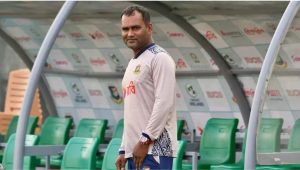
Former Bangladesh captain and current batting coach Mohammad Ashraful feels Shakib can still add value to the team.
“He has played for the national team for 19 years,” Ashraful told Daily Times of Bangladesh. “Right now he is playing in franchise leagues around the world. In almost every league, he contributes in some way. Most of those matches are played at an international standard.”
Ashraful also dismissed age as a major concern. “He is 37 or 38. There is still a year left before the 2027 World Cup. From what I have seen in the franchise leagues, his fitness is not too bad. If he wants to, he can manage it,” he said.
Politics, however, remains an unavoidable layer in any discussion about Shakib’s return. His role as a former Awami League Member of Parliament during the 2024 July Uprising has made his comeback sensitive. Ashraful acknowledged that reality.
“After the election on February 12, if he can sort out the political issues and come back, I think he can still contribute a lot to Bangladesh cricket,” he said.
The recommendation, though, is clear: limit the scope. “Instead of trying to play all three formats, he should focus on one,” Ashraful added. “If he focuses on a single format, especially ODIs, then a proper comeback is possible.”
Shakib Al Hasan’s potential return is no longer just a selection call. It is a balancing act between legacy and necessity, emotion and form. But whether Bangladesh still need him in this phase remains a question.