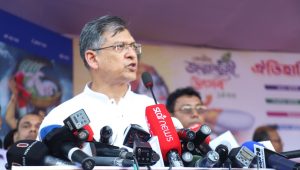
Bangladesh will not travel to co-host India for the upcoming ICC T20 World Cup, following a government directive citing security concerns. Speaking at a press conference on Thursday, Youth and Sports Adviser Asif Nazrul said, “The decision not to play the World Cup in India, considering the security risk, is a decision of our government.”
International Cricket Council (ICC) has insisted that Bangladesh must play in India to participate in the tournament, rejecting Bangladesh Cricket Board’s (BCB) requests to relocate matches despite multiple rounds of meetings and correspondence. Bangladesh has, for now, chosen to skip the World Cup.
ICC has not yet issued an official comment on the matter.
While the decision prioritises player safety, it comes at a significant cost. Bangladesh risks setbacks in cricketing development, finances, international standing, and cricket diplomacy. The standoff underscores the trade-off between immediate security concerns and long-term ambition, with consequences likely to be felt for years.

Financial consequences
BCB earns revenue from ticket sales, broadcast rights, advertising, and sponsorships, with the largest portion coming from ICC. According to BCB President Aminul Islam Bulbul, 55–60% of the board’s annual income comes from ICC revenue.
Indian news agency PTI reported that by skipping this year’s T20 World Cup, Bangladesh could forfeit approximately USD 27 million (around BDT 330 crore). This includes annual revenue sharing, broadcasting and sponsorship rights, event participation fees, and performance-based prize money. Missing the tournament threatens nearly 60% of the board’s projected annual revenue.




Participation fees have increased by 20% since the last edition of T20 World Cup. In 2024 ICC Men’s T20 World Cup, ICC announced a record prize pool of USD 11.25 million, the highest in the tournament’s history. A top BCB official told TIMES of Bangladesh that Bangladesh would have earned USD 300,000 simply for participating, with additional earnings from progressing through tournament stages. Players will also lose personal earnings, including match fees, performance bonuses, and prize money.
Under the current ICC revenue-sharing policy, BCB was set to receive BDT 327 crore annually for 2024–2027. Skipping the tournament could reduce allocations for 2028–2030. Failure to satisfy ICC regarding Bangladesh’s absence could result in fines of up to USD 2 million (BDT 24.4 crore), according to ESPN.
Broadcasting and sponsorship losses
A source from T Sports, BCB’s official broadcaster, told TIMES that the channel could face losses of around BDT 300 crore if Bangladesh does not participate. Sponsors may also withdraw or reduce support, further compounding the financial impact.
Cricketing setbacks
Missing an ICC event will deliver a major blow to Bangladesh cricket. The team’s absence will affect ICC T20I rankings, giving other nations a competitive advantage and potentially jeopardising automatic qualification for future ICC tournaments.
Bangladesh was also scheduled to play three ODIs and three T20 matches at home against India in September. Cancellation of the series due to strained relations would result in significant revenue loss, as matches against India attract maximum broadcaster and advertiser interest. Repeated refusals to play in India may reduce BCB’s earning potential in future bilateral series compared to other nations.
Bangladeshi representatives in ICC committees could also face repercussions, including limited voting rights or exclusion from key positions, further diminishing the country’s influence in global cricket governance.