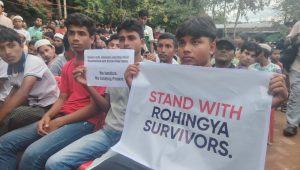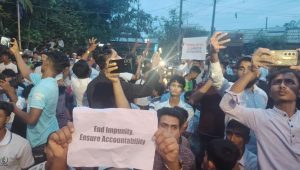



The International Court of Justice (ICJ) has found Myanmar responsible for committing genocide against the Rohingya in northern Rakhine State, marking the first time the world court has ruled that a state itself committed genocide.
After nine years of legal proceedings, the court, in a landmark judgment delivered on Thursday, found by a 9–6 vote that Myanmar had committed genocide against the Rohingya and violated its obligations under the 1948 Convention on the Prevention and Punishment of the Crime of Genocide.
The court also ordered Myanmar to investigate suspected perpetrators, prosecute and punish them if warranted, provide restitution and compensation to victims, and take measures to prevent similar violations in the future.
“The court is fully convinced that Myanmar committed acts falling under Article II (a), (b) and (d) of the Genocide Convention with an intent to destroy a substantial part of the Rohingya population of Myanmar,” ICJ President Yuji Iwasawa said while delivering the judgment.
The court concluded that Myanmar had breached its obligations under Article I and Article III (a) of the convention.

In the operative clause, the court formally found that Myanmar had committed genocide against the Rohingya group in northern Rakhine State, in violation of the Genocide Convention.
It also found, by a 9–6 vote, that Myanmar had violated its obligation to prevent genocide committed by individuals alongside its security forces.

The court, however, found by a 14–1 vote that Myanmar had not directly and publicly incited private individuals to commit genocide against the Rohingya.
Investigation and prosecution
The ICJ directed Myanmar to take immediate and effective steps to investigate all persons reasonably suspected of committing acts contrary to the Genocide Convention in connection with the 2017 clearance operations.
It said Myanmar must prosecute and punish those responsible if warranted.
The court also ordered Myanmar to provide assurances and guarantees that violations of its obligations under the convention would not recur and that similar violations would be prevented in the future.



By a 10–5 vote, the court decided that Myanmar must adopt restitution measures for the Rohingya, while also ordering compensation for damage caused by the violations to the extent that restitution does not fully remedy the harm.
Reparations and safe return
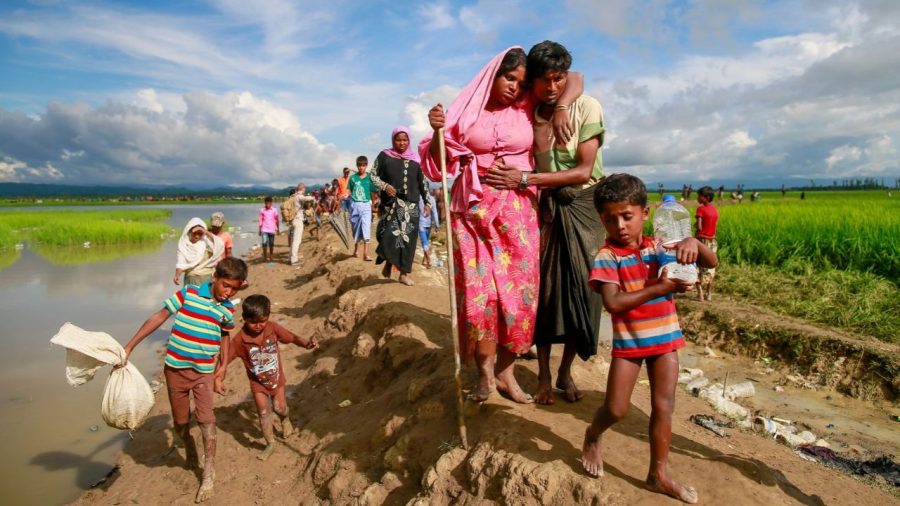
The judgment requires Myanmar to take measures to facilitate the safe and dignified return of displaced Rohingya to their places of residence, whether they are currently displaced within Myanmar or abroad.
The court also called for the restoration of individual and collective property, including land, houses, places of worship, fields, livestock and crops, or the replacement of such property where appropriate.
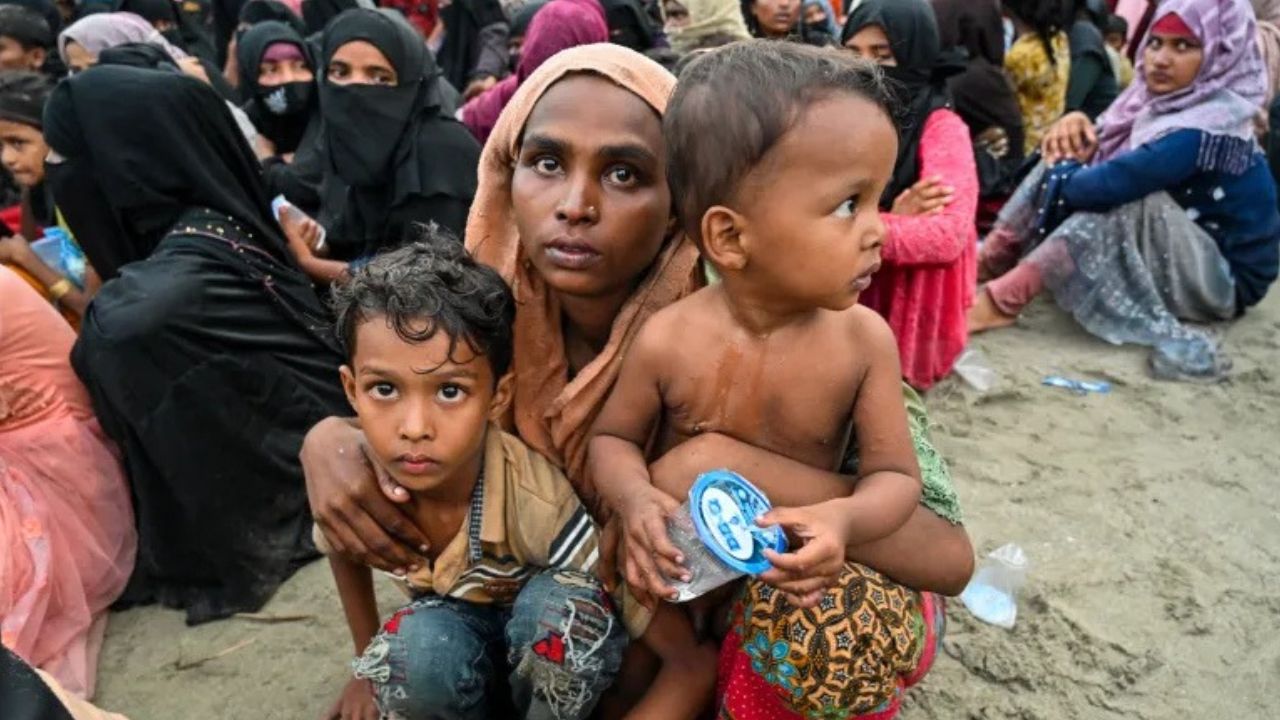
Other restitution measures include facilitating family reunification, rehabilitating physically and mentally injured victims, searching for the disappeared, and recovering, identifying and reburying bodies in accordance with the victims’ cultural and religious practices.
Myanmar must also protect the Rohingya from discrimination and persecution, ensure their right to identify as Rohingya, guarantee freedom of movement and remove restrictions on residence, employment and access to livelihoods.
The court ruled that Myanmar is obligated to compensate the Rohingya group and its members for damage caused by violations of the Genocide Convention, insofar as such damage is not addressed through restitution.
The amount and modalities of compensation and other reparations will be determined by the court in a subsequent phase of the proceedings.
Myanmar has been directed to submit a report to the court within two years, detailing the measures taken in relation to reparations, after which further proceedings will take place.

Bangladesh’s diplomatic role
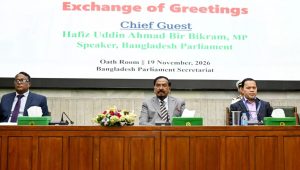
Bangladesh played a significant diplomatic role in laying the groundwork for the genocide case, although it did not directly file the case against Myanmar.
Through successive policy reviews, early assessments of persecution in Rakhine State and efforts to identify an international accountability mechanism, Dhaka gradually developed a strategy to pursue justice for the Rohingya.

A major diplomatic initiative came at the Organisation of Islamic Cooperation (OIC) foreign ministers’ meeting in Dhaka in May 2018, where Bangladesh helped mobilise member states behind an accountability process and paved the way for The Gambia to lead the legal action against Myanmar.
The Gambia filed the case on 11 November 2019, accusing Myanmar of violating the Genocide Convention and seeking to hold it accountable for atrocities committed against the Rohingya.
The ICJ subsequently ordered provisional measures in January 2020, requiring Myanmar to take steps to prevent acts of genocide, protect evidence and report to the court on measures taken to comply.
Myanmar challenged the court’s jurisdiction, but the ICJ rejected its preliminary objections in July 2022, allowing the case to proceed.
The proceedings culminated in Thursday’s judgment, which establishes Myanmar’s responsibility under the Genocide Convention and sets out obligations for accountability, restitution and compensation.
The judgment is final and binding on the parties, with the reparations process to continue before the court.