The International Court of Justice (ICJ) verdict finding Myanmar responsible for genocide against the Rohingya has far-reaching implications for the persecuted community, Bangladesh, Myanmar, and regional plus global politics.
While the Rohingya are unlikely to return to their homeland in Rakhine State anytime soon, the landmark ruling is expected to shape their future and renew international pressure on Myanmar to ensure their rights, security and citizenship.
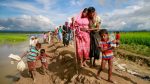
Tears flowed across Rohingya camps in Ukhiya, Cox’s Bazar, on Thursday as hundreds watched ICJ President Yuji Iwasawa deliver the verdict in the genocide case against Myanmar in The Hague, the Netherlands.
The ruling marked the first time the world’s highest court had found a state responsible for committing genocide.
For the Rohingya, the verdict raised hopes of international recognition and accountability, as well as renewed pressure on Myanmar to restore their citizenship, security and fundamental rights, paving the way for their eventual return home.
The most devastating phase of the crisis began in October 2016, when Myanmar’s military launched an operation following attacks by a Rohingya armed group, forcing another 87,000 people to flee to Bangladesh.

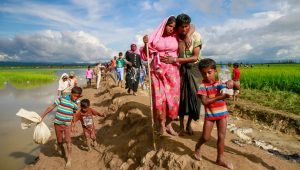
On 25 August 2017, attacks by the Arakan Rohingya Salvation Army (ARSA) prompted a massive military offensive in Rakhine State. More than 700,000 Rohingya fled to Bangladesh within months.
According to the latest available figures for 2026, Bangladesh hosts more than 1.2 million Rohingya, most of whom live in camps in Cox’s Bazar, while several thousand are accommodated on Bhasan Char in Noakhali.
Arakan Rohingya Society for Peace and Human Rights (ARSPHR) Chairman Mohammed Zobair said the community was eager to return to Myanmar if conditions allowed.
“We now want to return to Myanmar. If a safe environment is created for us to live there, we will return on our own responsibility. We are grateful to Bangladesh for giving us shelter,” he said.



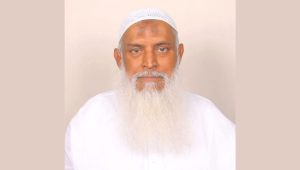
Former United Council of Rohingya (UCR) President Syed Ullah expressed hope that the favourable verdict would increase international pressure on Myanmar and help create conditions for repatriation.
Cox’s Bazar Refugee Relief and Repatriation Commissioner Mohammad Mizanur Rahman said the verdict would play an important role in establishing the identity and rights of the Rohingya.
Security was tightened across the refugee camps following the ruling.
Armed Police Battalion Commander Riaz Uddin Ahmed said law enforcement agencies were on alert to prevent any untoward incidents, with surveillance and patrols intensified to maintain security.
The Gambia filed the genocide case against Myanmar at the ICJ on 11 November 2019, with Bangladesh playing a significant diplomatic role in bringing the case before the world court.
Implications for Bangladesh
The Rohingya crisis has gradually been overshadowed by other emerging challenges over the past nine years. The verdict is expected to bring the issue back into the international spotlight and give it renewed momentum.
The ruling could also enhance Bangladesh’s international standing, as the country opened its doors to persecuted Rohingya and played a key diplomatic role in bringing the genocide case before the ICJ.
Through the process, Bangladesh helped advance international accountability mechanisms, including the legal framework under which cases such as South Africa’s case against Israel over Gaza are being pursued.
Bangladesh has also played a role in shaping international legal processes in other areas. In 2009, it initiated a maritime boundary dispute before the International Tribunal for the Law of the Sea (ITLOS).

During the Rohingya accountability process, some international actors reportedly discouraged Bangladesh’s leadership from pursuing legal action, describing it as a lengthy process with uncertain outcomes.
The verdict, however, has demonstrated the significance of pursuing accountability through international legal mechanisms.
Next course of action
The ICJ verdict is binding and cannot be appealed. However, its implementation will not happen automatically. Strong diplomatic leadership and sustained engagement with regional and global powers will be essential.
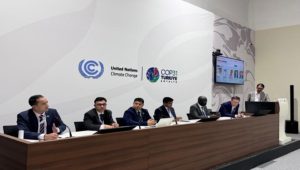
Experts believe Dhaka should take the lead at the United Nations and engage other countries in efforts to implement the judgment.
Bangladesh could also initiate negotiations with Myanmar from a stronger position following the verdict.
It could further take the lead in forming an international committee comprising interested countries and the United Nations to oversee and support implementation of the ruling.
The verdict has renewed hope that the Rohingya may eventually return to their homeland and live a dignified life without fear of persecution.