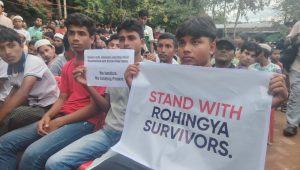
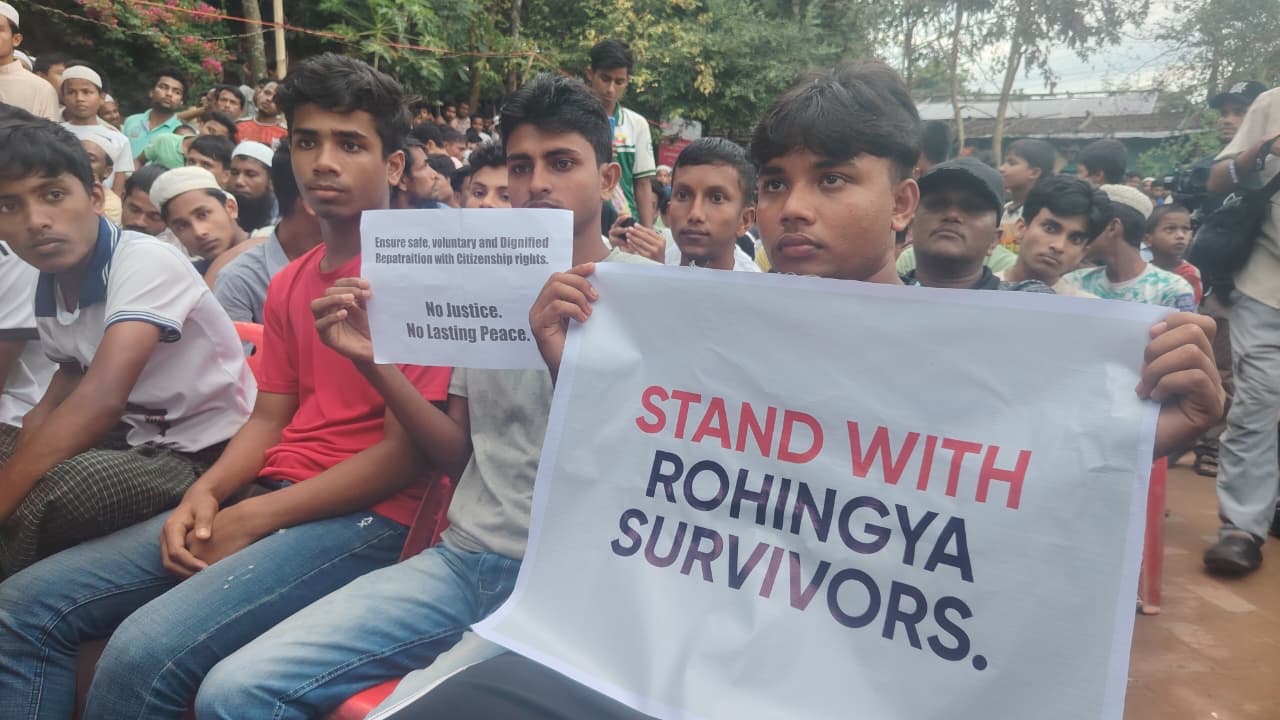
In the crowded refugee camps of Ukhiya township in Cox’s Bazar, tears flowed freely on Thursday morning as hundreds of Rohingya refugees gathered around televisions and large screens to watch live broadcasts from the International Court of Justice (ICJ).
In The Hague, the Netherlands, as judges read out the historic judgment against Myanmar, many residing in the Bangladesh camps were unable to hold back their emotions, while some raised both hands in prayers of munajat.
For a community stripped of identity and forced into exile, the verdict delivered by the world’s highest court brought a profound mixture of grief and long-awaited hope.

The court ruling established that Myanmar’s security forces killed at least 10,000 members of the Muslim minority population, committed widespread sexual violence, and inflicted extreme violence on children.
Moreover, large numbers of Rohingya were attacked while attempting to flee to Bangladesh to save their lives. Marking a momentous milestone in international law, this verdict represents the first time the world’s highest court has held a country responsible for genocide as a state.
Tears, prayers amidst historical verdict
For the displaced residents in Ukhiya, the judgment represents more than a legal declaration; they hope it will solidify judicial recognition and accountability for the genocide charges against Myanmar, intensify international pressure, and pave the way to re-establishing their citizenship, security, and fundamental rights.

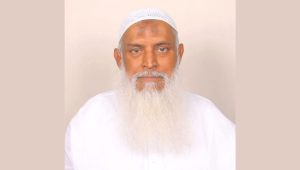
Expressing the core yearning of his people, Mohammad Jubair, chairman of the Arakan Rohingya Society for Peace and Human Rights (ARSPH), said, “Now we want to return to Myanmar. If they create a safe living environment for us there, we will return on our own responsibility.
“We are grateful to Bangladesh for giving us shelter.”

Echoing these sentiments, Syed Ullah, former president of the United Council of Rohingya (UCR), expressed hope that the favourable ruling would increase international pressure on Myanmar and help create a path toward returning to their homeland.
Local officials also highlighted the significance of the decision; Mohammed Mizanur Rahman, refugee relief and repatriation commissioner in Cox’s Bazar, said that the ICJ verdict will play an important role in establishing the identity and rights of the Rohingya.



Meanwhile, law enforcement agencies took measures to maintain order; Reaz Uddin Ahmad, armed police battalion commander in charge of security in the refugee camps, said law enforcement forces are on high alert to prevent any untoward incidents surrounding the verdict.
The armed police battalion commander added that necessary surveillance and patrolling have been intensified to ensure overall security across the camps.
Decades of systematic disenfranchisement
The legal battle that culminated in The Hague began on 11 November 2019, when Gambia filed the genocide case against Myanmar at the ICJ. Yet the roots of the Rohingya humanitarian crisis trace back decades through a painful history of gradual disenfranchisement.
Following the end of British rule and the independence of Burma (now Myanmar) on 4 January 1948, many Rohingya held citizenship recognition, official identity cards, and voting rights.

Under Prime Minister U Nu, their distinct ethnic identity received recognition in various spheres, and Rohingya actively participated in the country’s parliamentary politics.
However, the trajectory altered drastically in 1962 when General Ne Win seized power in a military coup, ushering in heightened state control over national and ethnic identities that triggered a growing crisis regarding Rohingya citizenship, identity documents, and fundamental rights.
Cycles of violence and mass exodus
Persecution intensified in 1978 when Myanmar’s military government launched Operation Nagamin under the pretext of identifying illegal immigrants, subjecting the Rohingya to widespread torture, arrests, harassment, and evictions that forced nearly 200,000 people to flee into Bangladesh.
Discrimination was codified into law in 1982 when Ne Win’s government passed a new citizenship act that excluded the Rohingya from its list of 135 recognised ethnic groups.
Despite having previously held citizenship and identity cards, many lost their legal rights due to missing documentation and discriminatory administrative systems, effectively rendering a vast population stateless.

Subsequent waves of military repression drove more refugees across the border, including approximately 250,000 Rohingya who sought shelter in Bangladesh during 1991–92 amidst military crackdowns.
The crisis reached its most horrific chapter beginning in October 2016, when army operations following attacks by a Rohingya armed group forced around 87,000 people to flee into Bangladesh.
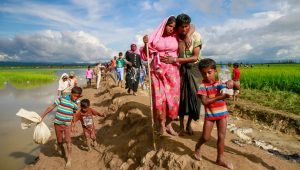
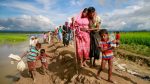
Less than a year later, on 25 August 2017, after attacks by the Rohingya armed group ARSA, the Myanmar military launched a sweeping campaign in Rakhine State, driving over 700,000 Rohingya across the border within months.
Confronted with a humanitarian catastrophe, the Bangladesh government opened its borders to grant them sanctuary. Although strict border controls were subsequently established, fresh influxes of refugees have continued periodically.
Strained sanctuary and stalled return
According to the latest data available in 2026, more than 1.2 million Rohingya currently reside in Bangladesh, with the vast majority sheltered across camps in Cox’s Bazar and several thousand living on Bhasan Char in Noakhali.

The protracted presence of such a massive displaced population has placed severe strain on Bangladesh’s economy, local security, environment, forests, and social management systems.
Over the past several years, Bangladesh and the international community have launched multiple initiatives to repatriate the Rohingya to their native land, but repatriation efforts have failed to materialise due to Myanmar’s uncooperative stance.