The outgoing interim administration led by Nobel laureate Muhammad Yunus leaves office with a divided record: praised for overseeing a largely peaceful and competitive national election, but criticised over law-and-order concerns, mob violence and uneven reform implementation during its 18-month tenure.
International election observers described the vote as broadly peaceful, noting that aside from isolated incidents there were no major outbreaks of violence on polling day. Supporters of the interim government argue that successfully organising an election after a dramatic political rupture was itself a significant achievement.
However, rights groups and analysts point to persistent security challenges, institutional fragility and limited follow-through on reform promises as factors that complicate its legacy.
Members of the interim administration reject suggestions that the government underperformed.
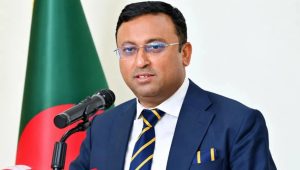
Responding to questions about whether the government considers itself successful, Adviser Fouzul Kabir Khan said its record must be judged in context.
“To assess success or failure, you have to see the circumstances in which this government assumed office,” he said. “There were predictions that the country would descend into civil war, that the economy would collapse like Sri Lanka’s. Did that happen?”
“It was said there would be no election, that trials for mass killings would not proceed. The election has been held, and the judicial process is under way,” he said.
“We have achieved success, but the success is short of people’s expectations. We did not get any organised group’s support and the government was for a short period,” added the adviser.

At a separate press conference at the Foreign Service Academy marking the advisory council’s final briefing, the chief adviser’s press secretary, Shafiqul Alam, offered a more emphatic assessment.
“Everyone has their own view. I have worked as a journalist for 30 years,” he said. “Having observed this government closely for 18 months, considering the bureaucracy we inherited, the fragile economy, the state of institutions — if you evaluate its work in that context, in my personal opinion they were 90% successful.”
The interim government took office following the departure of former prime minister Sheikh Hasina on 5 August 2024 amid a mass uprising. Bangladesh remained without a formal administration for three days before Muhammad Yunus returned from France and was sworn in on 8 August 2024.
Officials say they inherited weakened institutions, a fragile economy and demoralised law enforcement agencies. Analysts note that restoring public order and confidence presented immediate challenges.
Throughout the interim period, incidents of mob violence were widely reported. Human rights organisations estimate that at least 195 people were killed and more than 11,000 injured in political violence in the months following the July uprising.




Civil society groups documented cases of individuals — including women, members of religious minorities and other vulnerable communities — being assaulted by crowds. Reports of public humiliation and intimidation also emerged.
The government acknowledged difficulties in stabilising the security situation but has not endorsed all figures published by independent organisations.
High-profile incidents raised additional questions. The historic residence associated with Sheikh Mujibur Rahman in Dhaka’s Dhanmondi 32 area was vandalised multiple times. Later, attacks were reported at the offices of leading newspapers including Prothom Alo and The Daily Star.
Media groups expressed concern over vandalism and arson. Authorities said investigations were under way.
Public demonstrations became a frequent feature of the interim period, particularly in Shahbagh and outside the chief adviser’s residence.
In May 2025, protesters gathered near the state guest house Jamuna demanding suspension of Bangladesh Awami League pending verdicts at the International Crimes Tribunal. After the government announced a temporary suspension of the party’s activities until legal proceedings concluded, organisers ended the demonstrations.
In contrast, police used force to disperse student protesters from Bangladesh University of Engineering and Technology the previous August.
Observers say the varied responses to protests fuelled debate over consistency in enforcement.
In his first address to the nation, Muhammad Yunus pledged to prevent what he described as concentration of power and to reform key institutions including the Election Commission.
The interim government established 11 reform commissions covering sectors such as media, health, labour, women’s affairs and local government. While all the commissions submitted reports, critics argue that tangible implementation was limited before the government handed over power.
Bangladesh’s position in the corruption perception index compiled by Transparency International remained nearly unchanged as compared to the previous year, according to the organisation’s latest report, despite the government’s stated commitment to tackling corruption.
The administration also recommended withdrawing more than 23,000 cases it described as politically motivated, filed between 2009 and 2024 against members of parties including BNP, Jamaat-e-Islami, Hefazat-e-Islam Bangladesh and Gono Odhikar Parishad.
At the same time, rights organisation Ain o Salish Kendra reported increased use of the Anti-Terrorism Act against journalists in 2025. The arrest of senior journalist Anis Alamgir generated debate over press freedom.
Observers also point to what they describe as a resurgence of conservative Islamist activism during the interim period. Women’s rights advocates reported instances in rural areas where girls’ football matches were obstructed by religious leaders. Some women said they faced harassment related to dress and appearance.
The banned organisation Hizb ut-Tahrir was reported to have held public marches, prompting questions from critics about enforcement.
For its supporters, the interim government’s central achievement lies in preventing wider instability and delivering an election viewed as credible by observers.
For critics, that achievement is tempered by concerns over security, human rights and incomplete reforms.
As the country transitions to a new elected administration, the assessment of the interim government’s 18 months in office appears likely to remain a matter of perspective — shaped both by the crisis it inherited and by the expectations it sought to meet.