Traders and consumers in Barishal are facing mounting difficulties as hilsa supply dwindles despite the end of the fishing ban on the district’s rivers. Limited quantities reaching the markets have driven prices to unprecedented levels, while declining river stocks and illegal juvenile fishing have left local businesses struggling. Consumers report that buying and eating hilsa has now become almost formalised due to high costs, while the Department of Fisheries says it is working to protect the species.
At the Port Road wholesale fish market, the familiar bustle of buyers and sellers has disappeared. Where an average of 300–400 maunds of hilsa once arrived daily, now scarcely 50 maunds are available. Traders report near silence at stalls, and early-morning shouts that once signalled fresh arrivals are now replaced by frustration and despair.
Approximately 160 traders at Port Road are affected by the shortage. They attribute the decline to low river stocks caused by small-mesh fishing and reduced navigability. Many of the fish that do arrive are immediately transported by road to other regions with better logistics, leaving Barishal markets empty and prices soaring.
Trader Akhtar Hossain said, “Previously, 100–150 maunds of hilsa would arrive locally. Now, there is almost nothing. I have been in business here for 18 years, and this is the worst situation I have seen. Our 160-member owners’ association is struggling. Even with other fish available, the market does not function without hilsa. If the government enforces the ban on catching juvenile fish more strictly, the stock might recover.”

Another trader, Iyar Hossain, echoed the concerns: “The shortage is because there are no fish in the river. Traders are suffering badly. The few hilsa that do arrive are not enough to sustain us. Even when we had stock, now it’s gone. Buyers come, but there is nothing to sell.”
Port Road employs over 50 workers, who typically earn between Tk1,000 and Tk1,200 daily during the peak season. With supply shortages, daily wages have fallen dramatically. Worker Montu Mia said, “We earn far less now. When fish were plentiful, we could make 500 to 1,200 taka per day. Now it is only 100–150 taka. The river has fewer fish, and sea expeditions cannot make up the difference.”




Mokbul, another worker, added: “Half of the fish that used to arrive are now gone. Prices are beyond the reach of ordinary buyers. If this continues, people will go without hilsa.”
Current market prices at Port Road reflect the shortage: one maund of hilsa weighing 1 kg sells for Tk1.35 lakh; 800–900 g hilsa for Tk1 lakh; 500 g for Tk85,000–90,000; and 400 g for Tk70,000–75,000. Retail markets have been affected, putting fish beyond the reach of average consumers.
Buyers say the situation has made hilsa almost a luxury item. Aminul, a customer, said: “It is hilsa season, but prices are extremely high. A few days ago, I paid Tk800–850 per kg; now I have to pay 1,000–1,200. I suspect traders are forming a syndicate. Hilsa used to be for everyone; now only the wealthy can afford it.”
Another consumer, Liton Sikdar, added: “There is almost no hilsa in the market. The little available are very small juveniles, sold at exorbitant rates. Ordinary people cannot buy them.”
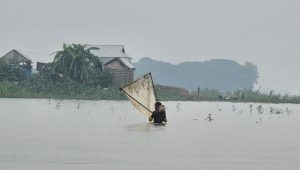
District fisheries officials say hilsa catches are down because the rivers have shifted channels and water levels have dropped. Dr Md Hadiuzzaman, Barishal’s district fisheries officer, said, “Our target in Barishal is 35,000 metric tons. We have observed fewer fish due to changes in riverbeds. There is still some stock, but peaks and troughs occur naturally. We have conducted 41 mobile inspections and 317 operations, imposing fines worth Tk5.13 lakh to enforce regulations. Nets are being destroyed, and our activities continue.”
Traders blame uncontrolled fishing and environmental disruption for the shortage, and urge the government to take stronger measures to restore hilsa populations.