Bangladeshi consumers are paying an estimated $20 billion annually due to high tariffs and para-tariffs that push domestic prices 50 to 100 per cent above global levels, according to the Policy Research Institute of Bangladesh (PRI), which said the structure is distorting prices, investment decisions and export competitiveness.
The finding was presented at a roundtable on Monday, where PRI Chairman Zaidi Sattar said Bangladesh’s tariff regime combines an average nominal rate of 28 per cent with multiple layers of para-tariffs including supplementary duties, regulatory duties, VAT and advance income tax, lifting the effective protection level to about 55 per cent, far above 7 per cent in lower-middle-income countries and 3.7 per cent in upper-middle-income economies.
He said the trade regime has evolved into a fragmented mix of export promotion and import protection, creating a dual structure where readymade garments account for 84 per cent of exports while non-RMG sectors remain largely stagnant.
Customs duties, he added, have fallen from 70.6 per cent in 1992 to around 14 per cent, but rising para-tariffs have offset liberalisation gains, producing what he described as a “hotchpotch” of overlapping instruments.
Sattar also highlighted a widening gap between input and output tariffs, terming it a “crocodile tariff” structure where output protection is more than double input tariffs, discouraging export-oriented production while making domestic sales more attractive.

He said exchange rate depreciation of around 40 per cent between FY2022 and FY2025 has further increased import costs, reinforcing inflationary pressure and effectively adding to protection.
He said PRI research covering 1,377 non-readymade garment products found that 39 per cent are globally competitive but face an average anti-export bias ratio of 1.303, meaning domestic sales are structurally more attractive than exporting under current incentives. Bangladesh, he added, attracts only about 1 per cent of gross domestic product in foreign direct investment, compared with 4 to 6 per cent in Vietnam and Thailand, as investors prefer open, predictable and trade-neutral regimes.




Sattar said tariffs and para-tariffs function as a hidden tax, raising prices across imported and locally produced goods, reducing consumer welfare and constraining export diversification beyond readymade garments.
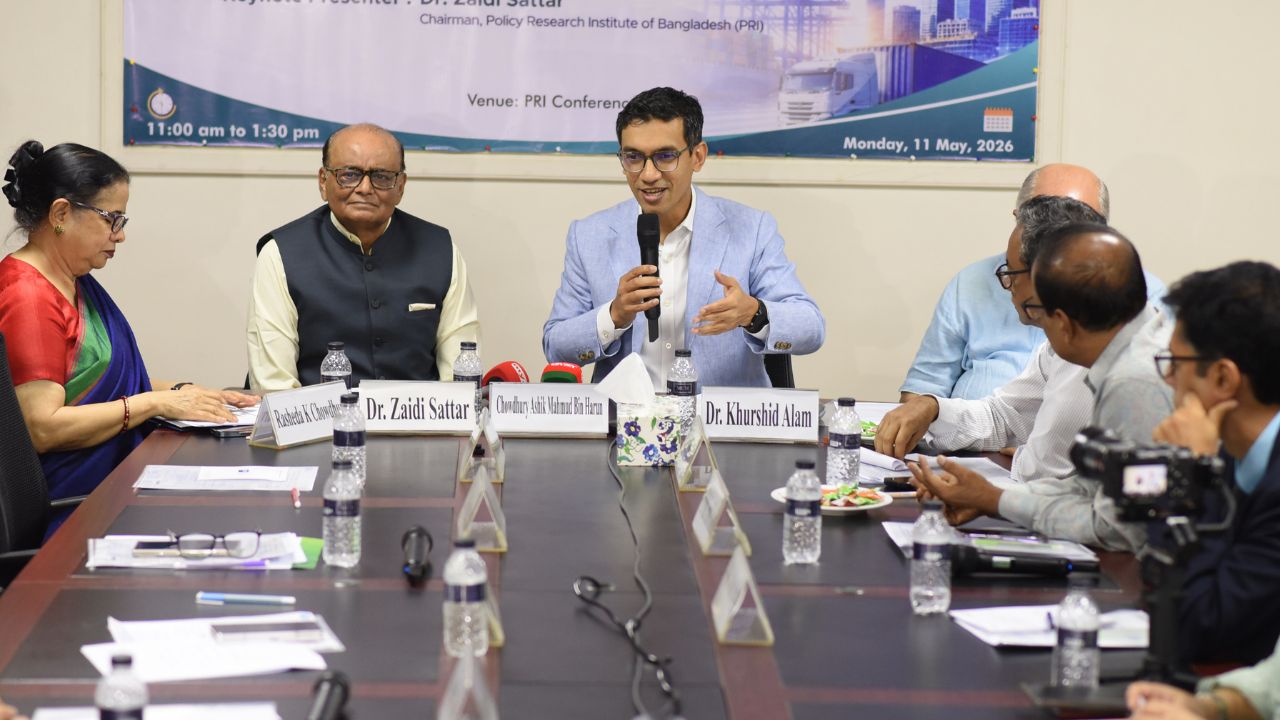
He outlined a set of policy reforms, calling for implementation of the National Tariff Policy 2023 and a structured, transparent roadmap to reduce and rationalise tariffs toward lower-middle-income and upper-middle-income benchmarks. He also called for integrating exchange rate policy into the trade framework through coordinated action between Bangladesh Bank, National Board of Revenue, Bangladesh Trade and Tariff Commission, Ministry of Commerce and Ministry of Finance.
Sattar further recommended publishing the Export Policy and Import Policy Order in English to improve accessibility for international traders and investors, making industrial protection time-bound and performance-based in line with World Trade Organization obligations, and prioritising consumer welfare as a core objective of trade policy alongside export promotion.
Bangladesh Investment Development Authority Executive Chairman Chowdhury Ashik Mahmud Bin Harun said Bangladesh must shift away from protection-heavy industrial policy as it approaches graduation from least developed country status, calling for a more open and competitive trade regime to support efficient industries without prolonged protection.
From a business perspective, Dhaka Chamber of Commerce and Industry President Taskeen Ahmed said weak coordination between the National Board of Revenue and key ministries has undermined policy effectiveness, urging preparation for a more open trade environment amid expanding free trade and preferential trade agreements.
Representing consumer interests, Consumers Association of Bangladesh President AHM Shafiquzzaman said import restrictions protecting businesses and farmers are coming at the expense of consumers, calling for tariff rationalisation on essential goods, improved energy security and stronger institutional coordination to enhance welfare and attract investment.
Former National Board of Revenue Member (VAT) Md Farid Uddin said protection is uneven across sectors, with some industries overprotected and others left unprotected, and stressed that the revenue authority should focus on implementation rather than policymaking to strengthen tax reform.
Campaign for Popular Education Executive Director Rasheda K Chowdhury said reliable energy supply and import substitution through skilled domestic industries, particularly pharmaceuticals, are necessary to improve consumer welfare.
Policy Exchange Bangladesh Chairman and Founder M Masrur Reaz called for an export-led development strategy supported by coordinated trade, industrial, investment and tax policies, warning that high tariffs undermine competitiveness and consumer welfare.
The PRI said structural reform is needed to reduce consumer costs, correct policy distortions, strengthen institutional coordination, attract investment and enable export diversification beyond readymade garments.