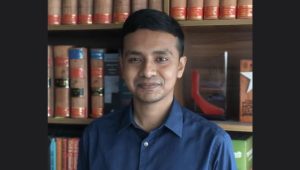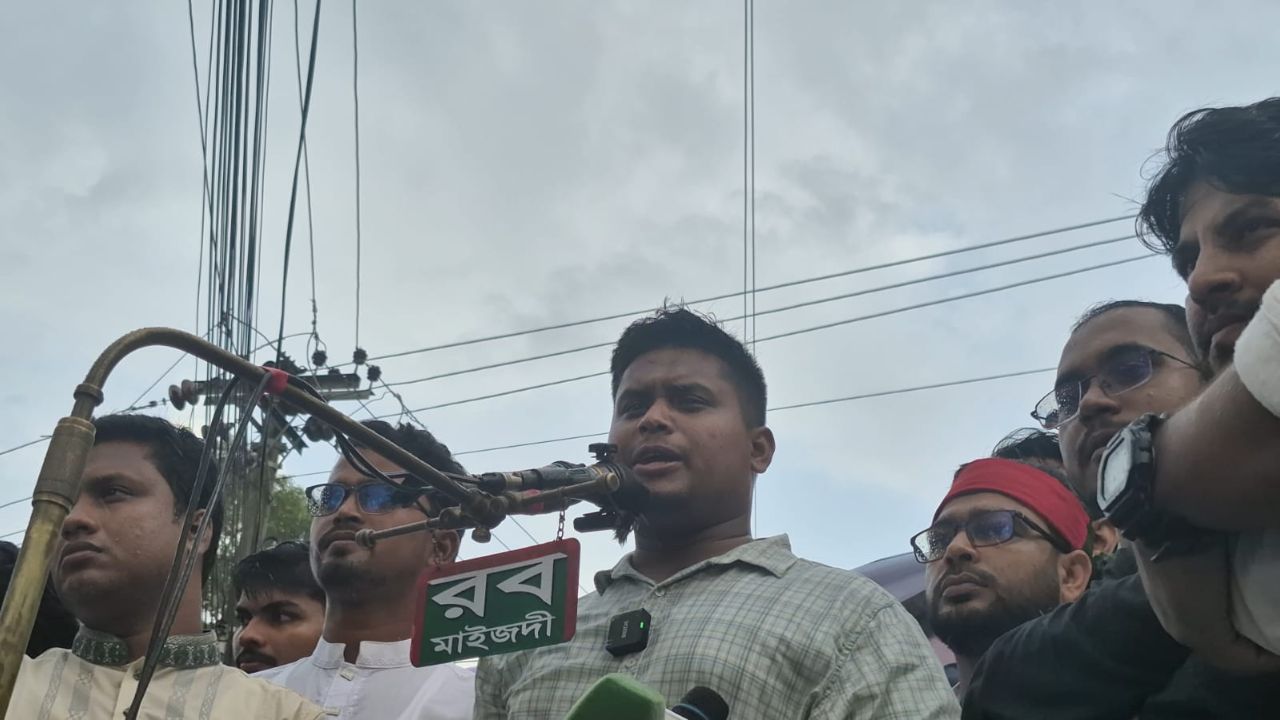



Hasnat Abdullah, Southern Region chief organiser of the NCP, has expressed regret over a misunderstanding with the people of Brahmanbaria following his remarks in Parliament.
He had sought accountability from the home minister over the country’s deteriorating law and order situation.
“I apologise for the misunderstanding created with the people of Brahmanbaria because of the statement I made in Parliament seeking the Home Minister Salahuddin Ahmed’s accountability for the worsening law and order situation,” Hasnat said.
He criticised the home minister’s recent remarks that music, songs and cinema are almost prohibited in Brahmanbaria, saying the statement had effectively shifted the responsibility for the ministry’s failure onto the people of Brahmanbaria and the local Alems (Islamic scholars).
“Through this statement, the home minister has placed the blame for his ministry’s failures on the people of Brahmanbaria and the Alems there. He has damaged their image before the world,” Hasnat said.
Referring to reports about a police concert being stopped in Brahmanbaria, Hasnat said the actual situation was different from how it was portrayed in the media.

He said the loud noise from the concert late at night disrupted the studies of madrasa students preparing for examinations. The students then requested that the sound be reduced, following which an argument took place between police and students.
“Several students were injured in a police baton-charge,” he said.
Hasnat said that although the incident was presented differently by the media, the sequence of events clearly showed that madrasa students did not stop the concert. They only requested that the sound be lowered.
“This means cultural activities are not prohibited in Brahmanbaria, as suggested by the Home Minister. Through his remarks, he conveyed a wrong message about the people of Brahmanbaria and belittled them,” he said.




Regarding the boat race issue, Hasnat acknowledged a factual error regarding the location of the event.
“I mistakenly mentioned Brahmanbaria instead of Sylhet. I am embarrassed by the unintended misunderstanding created due to this error. I apologise for the unfortunate situation,” he said.
Hasnat said he should have also explained in Parliament what actually happened and how the media framed the issue. However, he said he could not provide details due to time constraints during supplementary questions.
Reaffirming his political position, Hasnat said he and his party remain committed to the ideals of July and want all policies and decisions to be based on those principles.
He said July represents the dream of an inclusive society where the rights of all people are ensured and no one imposes their views or perspectives on others.
“There will be debates and differences in perspectives, but no one will force another person to accept their opinion as the only acceptable one. July represents the unity of this common minimum ground,” he said.
Hasnat said he remains committed to these ideals and believes that if any group or individual unjustly exerts force on others or compels people to accept their views, it is the government’s responsibility to prevent such actions and ensure equal rights for all.
“When the government hesitates or refuses to fulfil that responsibility, law and order and public safety collapse, and the government’s failure is proven,” he said.
“I wanted to make this point in Parliament. This Bangladesh belongs to everyone,” Hasnat said.
He said Bangladesh should have space for mosques, temples, music, waz (religious sermons), mazars (shrines), concerts, mahfils (religious gatherings), rath yatras, film festivals and discussions by knowledgeable Islamic scholars.
“My Bangladesh is a meeting place for people of all religions and beliefs. People will participate in what they prefer, and those who do not prefer something will choose not to participate. The government will ensure only that no one can do anything that violates another person’s rights,” he said.
Hasnat said the government is currently failing to provide that security, which is affecting efforts to build an equal Bangladesh.
He concluded that July was a movement of all people regardless of religion, race or class.
“July was a movement to restore people’s rights and build an inclusive society that respects Bangladesh’s diversity. We are working to build that Bangladesh, and we will continue our efforts,” he said.