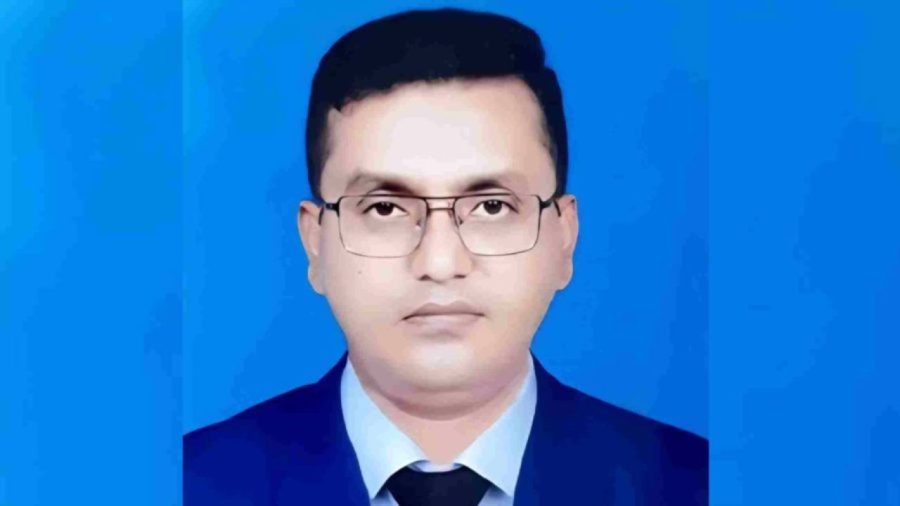



Sirajganj District Food Controller Harun Or Rashid has reportedly gone into hiding after his alleged involvement in a syndicate accused of leaking question papers for at least 11 government recruitment examinations came to light.
Harun, an officer of the 36th Bangladesh Civil Service (BCS) batch, has been absent from his workplace for four consecutive days. Colleagues said he last attended office on Wednesday and has since remained unreachable by phone and WhatsApp.
Officials at his office in Hosenpur South, Sirajganj municipal town, said on condition of anonymity that Harun disappeared after his name surfaced in the question leak investigation.
Originally from Gaibandha, Harun joined the Sirajganj office on 27 August 2024, following the mass uprising.
The investigation centres on a question paper leak during the preliminary examination for 242 assistant youth development officer posts under the Department of Youth Development on 10 October.
A total of 318,976 candidates were eligible to sit the multiple-choice examination at 10 centres across Dhaka. Authorities suspended the test after confirming a question leak within two to three minutes of its commencement.

Department of Youth Development Deputy Director (Administration) Atiqur Rahman filed a case with Motijheel Police Station on 11 October. The case was transferred to the Criminal Investigation Department (CID) on 18 October.
The Ministry of Youth and Sports also formed a five-member investigation committee headed by an additional secretary. The examination was held again last Friday.
Meanwhile, the Special Response Battalion (SRB) arrested seven suspected members of the syndicate, SRB-3 Commanding Officer Lieutenant Colonel Fayezul Arefin told a press conference on Friday.




Investigators examining the suspects’ mobile phones and WhatsApp messages found evidence suggesting that the multi-tier network was involved in question leaks across at least 11 government recruitment examinations.
The examinations included those for upazila assistant youth development officers, accounts assistants, sub-food inspectors, primary school teachers, auditors, postal operators and mail operators.
Recruitment tests under the Directorate of Primary Education, Ministry of Food, Bangladesh Agricultural Research Council (BARC), Controller General Defence Finance, Department of Environment, Election Commission and Secondary and Higher Secondary Education Board were also identified.
According to investigative sources, Bangladesh Bureau of Statistics Statistics Officer Sujit Gop coordinated the network and remains at large.
His alleged associates included Ministry of Defence Office Assistant Asadul Habib, National Board of Revenue Lower Division Assistant and Peshkar Jahangir Alam, tax firm employee Noor Mohammad and S M Emdadul Rahman.
Investigators said Emdadul operated a secret facility in Motijheel where he helped 15 candidates memorise answers to leaked questions ahead of the youth development recruitment examination.
The leaked questions allegedly passed from Emdadul to Mofizul Islam, alias Rafi, and Hasinur Rahman Sujon before reaching Department of Environment Data Entry Operator Mohammad Rubel Islam, who had been involved in online computer services since 2020.
All seven members identified in this lower tier of the network have been arrested, according to investigators.
At the upper level, BARC Assistant Director (Establishment) Sohag Fakir allegedly supplied leaked questions directly to Harun.
Investigative sources said Harun and Sohag had developed a close association during their student days at Dhaka University and jointly operated the syndicate’s most active branch.
Three others allegedly involved in this branch were Bangladesh Council of Scientific and Industrial Research Data Entry Operator Kajal Ahmed, Microcredit Regulatory Authority Assistant Director Rafiul Islam and Bharathkhali High School Senior Teacher Hari Prasad Roy.
Investigators said the syndicate prepared answer keys after obtaining leaked questions and distributed them to job seekers in exchange for money.
Candidates allegedly signed agreements involving Tk10 lakh on stamp paper and surrendered their original academic certificates as security until payments were completed.
Others provided signed blank bank cheques valued at Tk2 lakh to Tk3 lakh each, according to investigative findings.