





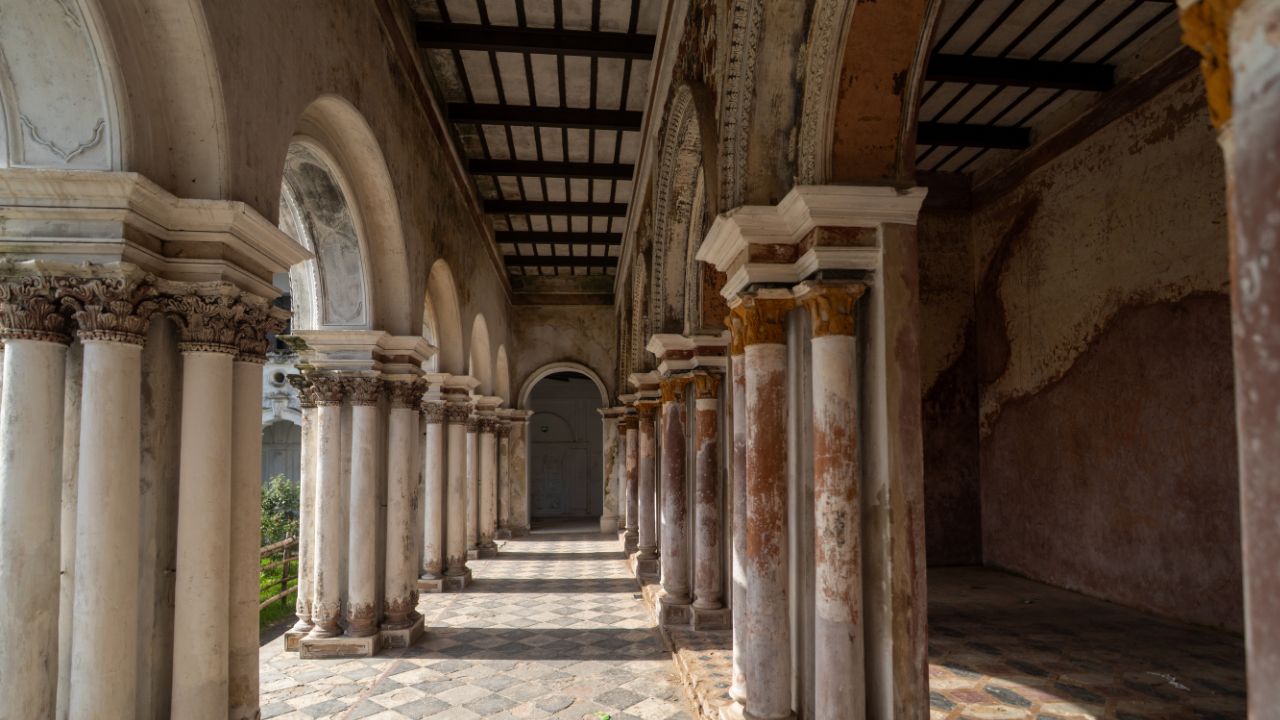
Standing quietly on the eastern bank of the Titas River in Nasirnagar upazila of Brahmanbaria, the Haripur Zamindar Bari is a silent witness to nearly two centuries of history.
Once the vibrant centre of zamindari heritage, aristocracy, and cultural events, this three-storey palace was built around the mid-19th century by zamindars Krishna Prasad Roy Chowdhury and Gauri Prasad Roy Chowdhury.
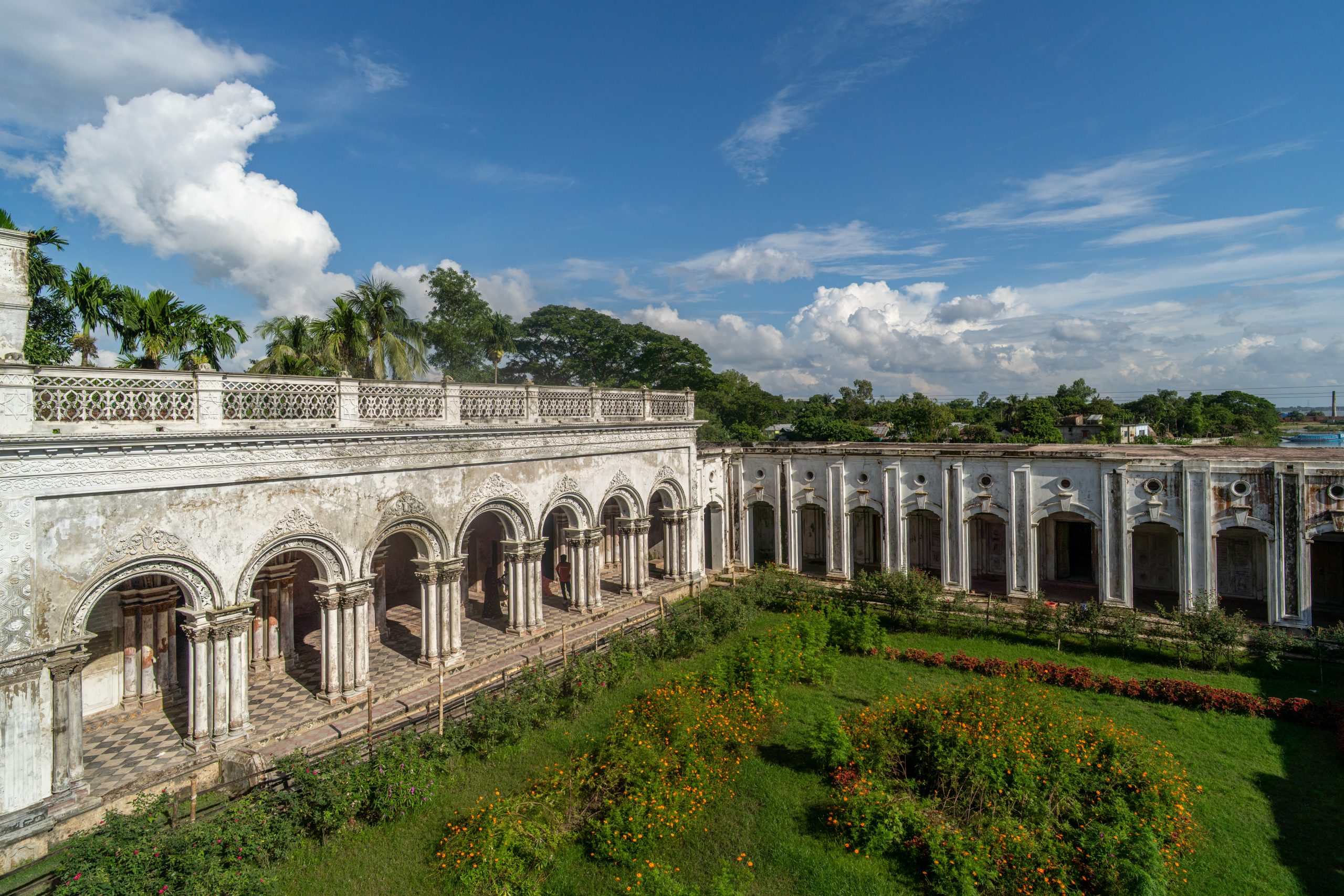
Spanning approximately five acres, the red-brick structure, built with lime and surki mortar, houses nearly 60 rooms, a durbar hall, a dance hall, a temple, and a terraced ghat.
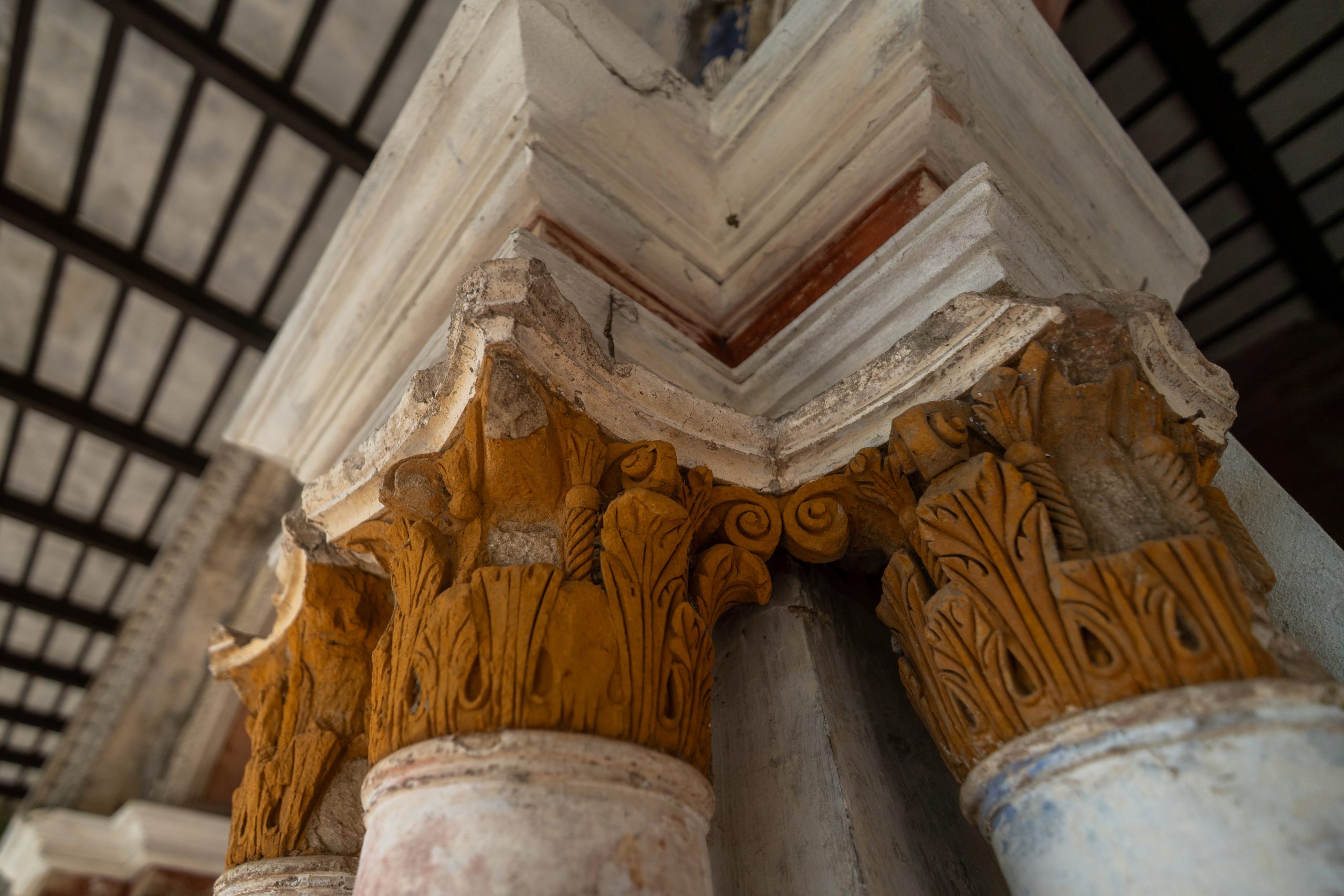
Although it was declared a protected archaeological site in 2018 due to its architectural and historical significance, prolonged neglect has damaged various parts of the building.
The passage of time, combined with a lack of regular maintenance, has left visible scars on the once-magnificent structure.
Cracks have appeared in the walls, sections of the roof have deteriorated, and the overall grandeur that once defined the palace has faded.
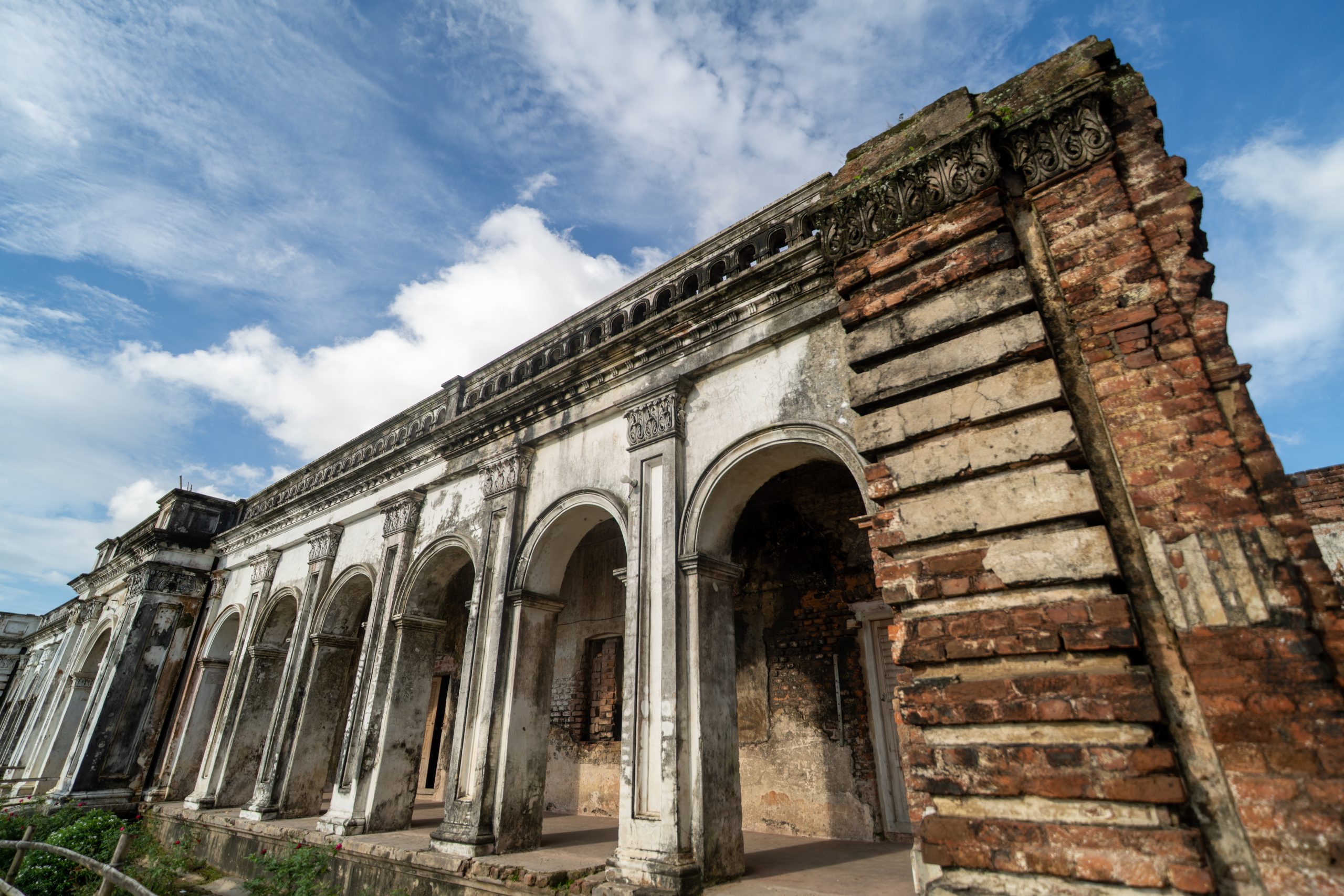
Despite these challenges, its aesthetic beauty has attracted filmmakers, drawn by the palace’s haunting beauty and historical resonance, with several movies, including Humayun Ahmed’s “Ghetuputra Komola”, having been shot here,
Currently, renovation work is underway under the supervision of the Department of Archaeology. Work on the balconies, temples, roof, and ghat is progressing.
However, locals fear that the original architectural style and heritage may be lost in the name of restoration.
There is a concern that modern construction techniques could overshadow the traditional craftsmanship that gives the palace its unique character.
The lime and surkhi mortar, which have held the structure together for nearly two centuries, could be replaced with materials that, while durable, may not reflect the original aesthetic.
Locals hope that the renovation will preserve the ancient design and construction style, along with regular maintenance and planned tourism management.
They envision a future where the Haripur Zamindar Bari is not just a protected monument but a living piece of history: A place where visitors can walk through its myriad rooms, admire its grand hall and hallways, and imagine the cultural events that its walls once surrounded.
Regular maintenance, careful restoration, and thoughtful tourism planning could not only restore the palace’s past glory but also establish it as a prominent historical and attractive tourist destination in Brahmanbaria.
For now, the Haripur Zamindar Bari stands quietly on the banks of the Titas, waiting. It has witnessed nearly two centuries of change – the rise and fall of zamindars, the passage of colonial rule, the birth of a nation, and the slow creep of neglect.
With the right care, it may yet witness a revival, perhaps a second act: A return to the glory that once made it the heart of zamindari heritage in Brahmanbaria. But that is a story for time to tell.


