For three hours on 8 March, the skies over Rakhine State bore witness to a devastating paradox – the Myanmar military systematically bombing its own captured soldiers.
In a relentless operation involving four jet fighters and four Y-12 aircraft, the regime targeted a detention facility in the Darlatchaung area of Ann Township, turning a site of captivity into a mass grave for at least 116 prisoners of war (POWs), according to an analysis by The Irrawaddy.
This was no battlefield accident, but a calculated strike that signals a grim new phase in the country’s civil war – one where surrender offers no sanctuary from one’s own side.
The assault killed senior figures including Brigadier General Myint Shwe, several majors, and military medical staff, alongside at least 32 injured survivors.
As the smoke cleared, the incident left a haunting question – what happens to the nature of a conflict when a military begins to view its own surrendered troops as targets rather than comrades to be recovered?
Evidence of calculated intent
While the military might typically attribute such casualties to the “fog of war,” the testimony of high-ranking survivors suggests a far more deliberate strategy.

Brigadier General Thaung Tun, the captured deputy commander of the Western Regional Military Command who witnessed the strike, noted that the regime had conducted prior reconnaissance flights.
He observed that the compound was clearly identifiable from the air as a detention centre, featuring organised buildings, guard posts, and prisoners wearing distinctive uniforms.
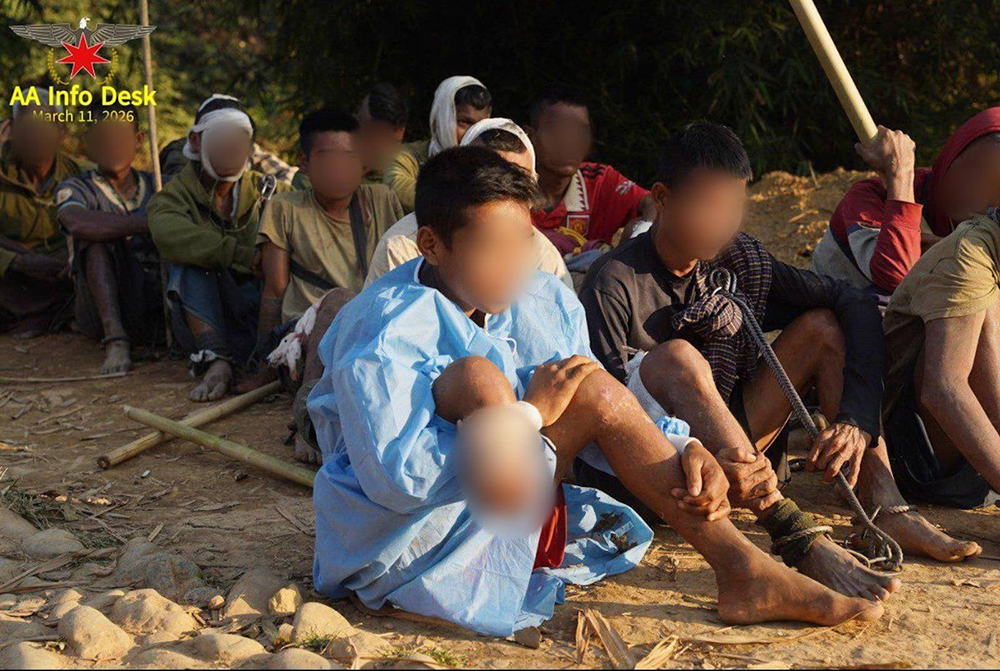
Under international humanitarian law and the Geneva Conventions, these individuals were protected persons. By targeting a non-active battlefield and a known prison site, the military high command appears to have bypassed these global norms in favour of a “grim logic.”
This logic suggests that if the military cannot reassert control over territory or its men, it chooses to exterminate them from the air to ensure they do not become assets – or sources of intelligence – for the opposition.



A growing pattern of internal attrition
The massacre at Ann is not an isolated tragedy but the latest in a documented pattern of internal attrition. Since the start of 2024, there have been at least six recorded aerial assaults on detention sites housing soldiers captured by the United League of Arakan/Arakan Army (ULA/AA).
These strikes, spanning Pauktaw, Maungdaw, Mrauk-U, and the Kyauktaw-Ponnagyun border, have resulted in a total of 226 deaths.
The frequency of these attacks coincides with the collapse of the junta’s ground presence in Rakhine State, where the AA has seized 14 of the 17 townships.
As the military loses its ability to govern or engage in direct combat, it has increasingly relied on airpower to project force, often striking civilian infrastructure such as schools and hospitals.
The shift toward bombing its own POWs indicates that the leadership now views captured personnel as expendable liabilities.
The erosion of institutional trust
This strategy carries profound implications for the institutional integrity of the Myanmar military. Military structures rely on a fundamental trust that commanders value the lives of their subordinates and that surrender does not equate to abandonment. The Ann bombing has shattered this bond for many survivors.
Sergeant Major Thein Lwin, a veteran of 34 years, described the strike as a “betrayal,” questioning why his own institution would attack unarmed prisoners.
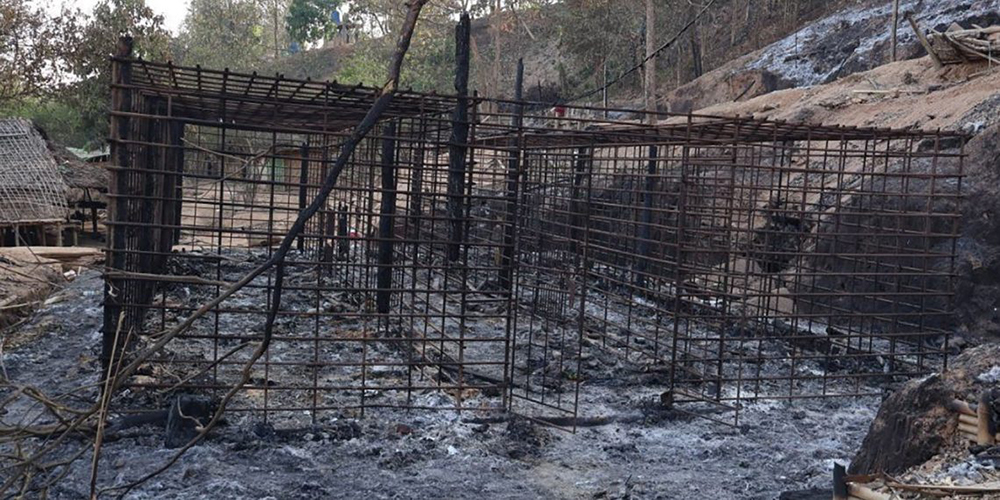
The psychological toll is evidenced by accounts from former artillery officer Aung Myo Myat, who recalled the horror of detainees trapped in burning blocks, screaming for help while their own fighter jets continued the bombardment.
Brigadier General Kyaw Kyaw Than, former chief of staff of the Western Regional Military Command, argued that such actions suggest the military leadership has effectively abandoned its men.
This creates a dangerous precedent; if soldiers believe capture makes them targets for their own side, they may fight with a lawless desperation that further escalates the brutality of the war.
Political contrast and the human cost
The political fallout is exacerbated by reports of the rescue efforts during the strike. Testimony indicates that while the bombs were falling, Arakan Army personnel attempted to break open prison doors to save the detainees.
This creates a stark and damaging narrative for the regime: a national military accused of killing its own men while the opposing force is seen attempting to rescue them.
Beyond the political implications, the human cost is harrowing. Many victims were burned beyond recognition, leaving families unable to identify their loved ones.
Daw Thida Soe, the wife of a missing prisoner, remarked that it felt as though the men were exploited for battle and then discarded once their utility had vanished.
The Ann massacre serves as a dire warning for the future of the Myanmar conflict. As the last restraints of war disappear and even captivity offers no protection, the conflict risks descending into a state of total lawlessness.
The international community must now decide whether to recognise the significance of the Ann strike before this “grim logic” becomes the new standard for the wider crisis.