There are roads in Dhaka that slow you down, and then there are roads that seem to stop time altogether. The stretch around Mohakhali Bus Terminal belongs firmly to the latter.
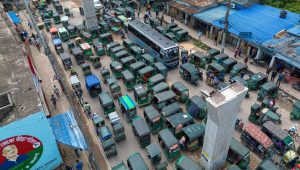
Designed as one of the capital’s key inter-district gateways, the terminal today operates under pressure it was never built to handle. Every day, buses bound for Mymensingh, Tangail, Brahmanbaria, Sherpur, Jamalpur, Sylhet, Habiganj, and Kishoreganj crowd into a space that simply cannot contain them. When the terminal fills up, the overflow spills onto the surrounding roads.

What should be moving lanes of traffic gradually transform into static rows of waiting buses. Drivers park wherever space allows, often along both sides of the road, effectively shrinking a multi-lane corridor into something far narrower. The impact ripples outward, choking nearby areas like Tejgaon and Banani, where traffic is already stretched thin.

For commuters, the experience is less about travel and more about endurance. “I have used the Mohakhali bus terminal road many times before, and I cannot remember it ever being free of traffic, even on its best days,” said Jabir Mahmud, a businessperson.
“Between tempu parking, buses loading passengers, and people crossing the road at the worst possible moments, it has always been congested. Now, to make things worse, the addition of fuel queues has turned what was once a three-lane road into a single lane.”



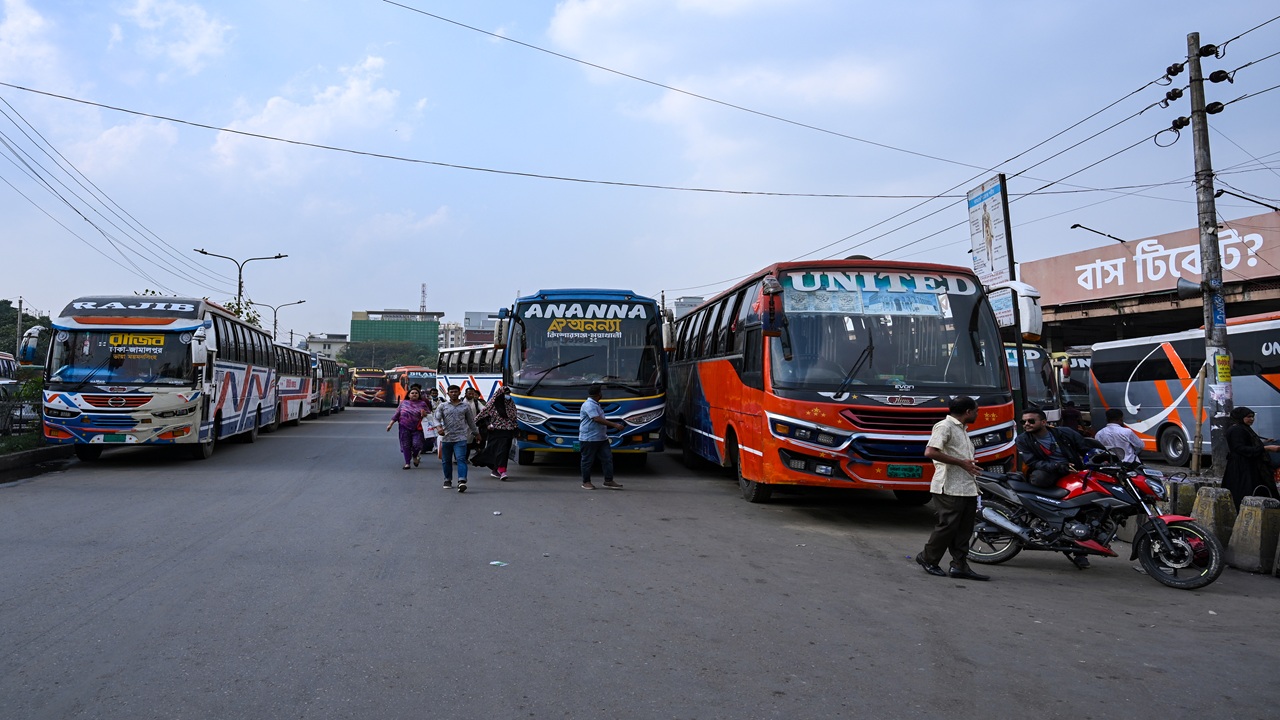
His frustration is echoed by Nazrul Hamid, a private employee, whose recent commute turned into an ordeal. “When I was coming through Mohakhali bus stand towards Karwan Bazar, I saw out of three lanes, two were already occupied. One by illegally parked long-distance buses, and another by queues at a fuel pump, including lines of cars and motorcycles.
So ultimately, everything, buses, cars, bikes were forced into a single lane. The suffering became extreme. What should have taken 15 to 20 minutes ended up taking nearly one and a half hours, and with the intense heat, it became even more unbearable.”
This is not just a story of congestion; it is a story of imbalance. Demand has surged, routes have expanded, and the city has grown outward, but the infrastructure meant to support this movement has remained largely unchanged.

The result is a daily negotiation for space. Minor accidents become almost inevitable in such tightly packed conditions. Terminals designed decades ago now carry the burden of a much larger, faster-moving city.
Until there is a serious investment in expanding terminal capacity, enforcing parking regulations, and reorganising traffic flow, Mohakhali will continue to function not as a transit hub, but as a bottleneck.