The government has warned of an “inevitable” temporary energy shortage amid the escalating Middle East war and urged citizens to use electricity and fuel sparingly.
The supply disruptions and surge in global prices may force temporary adjustments in domestic fuel distribution, potentially affecting electricity generation and fertiliser production, Power, Energy and Mineral Resources Minister Iqbal Hasan Mahmud said on Wednesday.
The warning followed an emergency review meeting chaired by the minister to assess supply risks and prepare contingency measures.
Officials said fuel shipments from international suppliers may not arrive in the expected volume or on schedule because of the global situation, raising the risk of shortfalls in meeting the country’s energy demand.
The ministry urged people to reduce unnecessary electricity use, avoid decorative lighting and rely more on public transport instead of private vehicles to conserve fuel.
Authorities were also instructed to stop open market sales of diesel and petrol, while traders and law enforcement agencies were asked to remain vigilant.
District administrations, police and Border Guard Bangladesh were requested to take steps to prevent fuel smuggling through the borders.
The ministry said it is trying to secure fuel supplies from all possible sources to minimise the impact of global disruptions and urged citizens to remain patient and cooperate with government efforts.

Global fuel shock deepens supply risks
Global energy markets have already reacted sharply to the Middle East crisis.
Furnace oil, which supports around 4,500 megawatts electricity generation in Bangladesh, became more than 30 per cent costlier in the past two weeks, while crude oil prices surged by over 22 per cent.
Liquefied natural gas (LNG), which supports around 30 per cent of the country’s gas supply, surged by 67 per cent in the European market over the same period.
The world’s largest LNG supplier Qatar, on the other hand, shut gas processing plants after Iranian missile attacks, cutting about 20 per cent of global supply.
Even if the plants reopen, almost all the Qatari LNG must pass through the Strait of Hormuz, which remains closed.



Since the closure announced earlier this week, cargo ships barely attempted to cross the 33-kilometre energy chokepoint under Iran’s control.
About 20 per cent of global oil and nearly 25 per cent of LNG trade passes through the Strait of Hormuz. Its closure created a supply gap and put Asia under pressure as around 80 per cent of the fuel goes to Asian markets.
The disruption has pushed energy-importing countries to search for alternative supplies, with Europe and Asia competing for available cargoes from the United States and Australia.
Daily charter rates for LNG carriers have risen by more than 40 per cent, reflecting strong demand for specialised vessels.
Bangladesh Petroleum Corporation Chairman Md Rezanur Rahman on Tuesday said the country currently holds fuel reserves including diesel for 14 days, octane for 28 days, petrol for 15 days, furnace oil for 93 days and jet fuel for 55 days.
There is no reason for any fuel shortage in the country if the shipments arrive as expected, he added.
The government last adjusted fuel prices on 1 March, keeping retail rates unchanged for the month, with diesel at Tk100 per litre, octane Tk120, petrol Tk116 and kerosene Tk112.
Power sector warns of summer shortage
Bangladesh Independent Power Producers Association (BIPPA) President David Hasanat said Singapore holds furnace oil stocks and Bangladeshi power generation companies usually procure supplies from there.
“If the government clears the arrears bills sufficiently, furnace oil-based plants with around 4,500 megawatts capacity can help offset shortages from gas-based plants,” he told TIMES of Bangladesh.
Private sector power producers own about 9,000 megawatts installed capacity and contribute roughly 45 to 50 per cent of the national grid supply, he said.
Gas supply appears the most uncertain at present and heavy fuel oil could act as a lifeline, he added.
However, companies lack the financial capacity to import furnace oil as they are waiting for the bills for the electricity supplied to the Bangladesh Power Development Board 7-10 months ago.
The government owes around Tk30,000 crore to the private sector power producers, including more than Tk11,000 crore to furnace oil-based plants, he said.
Clearing at least half of the dues would help companies secure urgent procurement of furnace oil, he added.
Bangladesh is currently consuming around 12,000 megawatts of electricity during the spring.
Demand may rise above 15,000 megawatts in April with the onset of summer, which could deepen the electricity crisis, he warned.
Gas supply currently stands at about 2,600 to 2,700 million cubic feet per day against demand exceeding 3,700 million cubic feet per day.
Industry leaders warned that any further disruption in gas supply could severely affect the manufacturing sector already struggling with shortages.
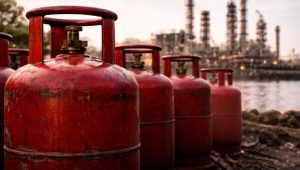
The Middle East, being Bangladesh’s key source of liquified petroleum gas (LPG), is risking the clean fuel’s supply further before the prevailing shortage eased, said Mohammed Amirul Haque, President of LPG Operators Association of Bangladesh.
The government should facilitate energy imports by all means it has, he added.