




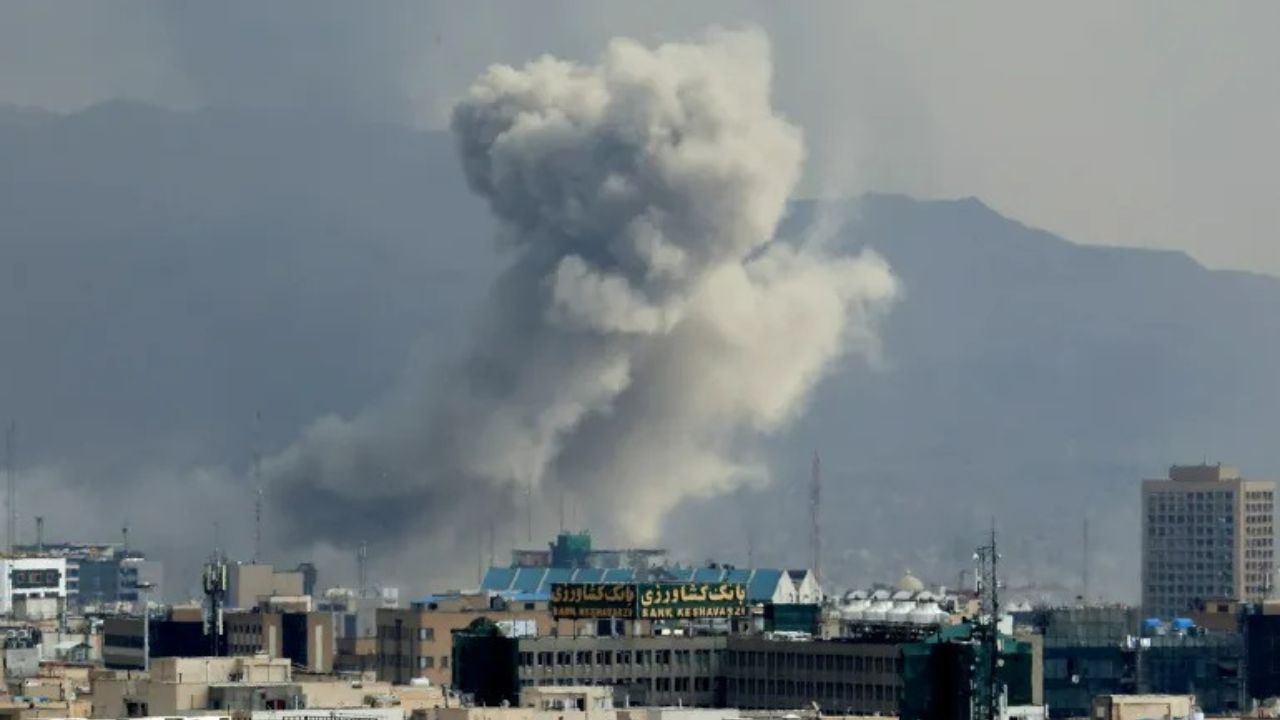
What began as a sudden escalation on Saturday is rapidly morphing into a protracted and potentially transformative war in the Middle East.
As United States–Israeli forces continue striking Iranian targets and Tehran retaliates with drones and missiles against Israel and nearby states, the conflict appears less like a limited operation and more like a struggle of endurance, pride and political survival.
For Iran, the stakes are existential. The assassination of Supreme Leader Ayatollah Ali Khamenei and the targeting of senior leadership figures have deeply shaken the Islamic Republic.
Beyond military calculations, the war has ignited powerful currents of national pride, religious sentiment and collective grievance. For many Iranians, this is no longer simply a geopolitical confrontation but a matter of sovereignty and honour.
Under such circumstances, Tehran is unlikely to back down easily, even in the face of sustained military pressure.
On the other side, the US and Israel have framed their campaign in strategic terms, including weakening or reshaping Iran’s governing structure. Yet regime change is an ambitious objective, and so far there is little indication that Iran’s political system is collapsing.
A retreat without tangible gains would carry reputational costs for both Washington and Tel Aviv, potentially weakening their deterrence posture in the region.
The outcome of the war will depend on several intertwined factors: the resilience of Iran’s decentralized military structure, the capacity of Israel to withstand sustained attacks, the tolerance of American public opinion for prolonged involvement, and the reaction of regional states caught in the crossfire.
Pressure from within and around
Regional countries including Bahrain, and Qatar face acute vulnerability due to their size and strategic exposure. Even relatively larger states like the United Arab Emirates and Saudi Arabia remain heavily dependent on concentrated economic hubs and energy infrastructure.
Should the conflict drag on, missile strikes and airspace closures could inflict disproportionate damage on these states, increasing pressure on Washington to de-escalate.
Public opinion is another critical variable. In Israel, repeated missile attacks on major cities test civilian endurance. In the US, scepticism is mounting over the scope and purpose of the conflict.
Recent polling suggests limited public approval for expanded military engagement, reflecting concerns about another open-ended Middle Eastern war.
Former US President Bill Clinton recently observed that many people “haven’t fully grasped yet what happened or what it’s going to mean … in the weeks and months ahead.” His remark underscores the fluid and uncertain nature of the crisis.
Energy, economy and global fallout
The closure or disruption of the Strait of Hormuz — through which roughly a quarter of global oil supplies transit — adds a dangerous economic dimension. Prolonged instability would reverberate far beyond the region, affecting energy markets, shipping routes and global supply chains.
A war of endurance
Ultimately, this conflict may be decided less by battlefield victories than by resilience — which side can absorb greater losses, withstand internal pressure and sustain political unity. With emotions high and objectives uncompromising, the war risks becoming one without a clear exit strategy.
Whether Tehran’s defiance or Washington and Tel Aviv’s determination prevails remains uncertain. What is clear is that the longer the war continues, the heavier the costs — for the region and for the world.


