


The government has initiated a pilot programme for an “Probashi Card” aimed at facilitating financial transactions and access to services for Bangladeshi migrant workers, State Minister for Expatriates’ Welfare and Overseas Employment Md Nurul Haque has said.
The card is being tested in several locations, including Jordan, South Korea and some Middle Eastern countries. It is expected to help expatriates access services from Bangladesh’s diplomatic missions abroad and public and private institutions at home.
“We have identified 11 sectors to address the various problems faced by expatriates and ensure special benefits for them. The government is prioritising these sectors to safeguard their honour and dignity,” Nurul Haque said.
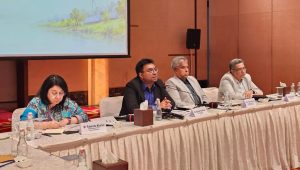
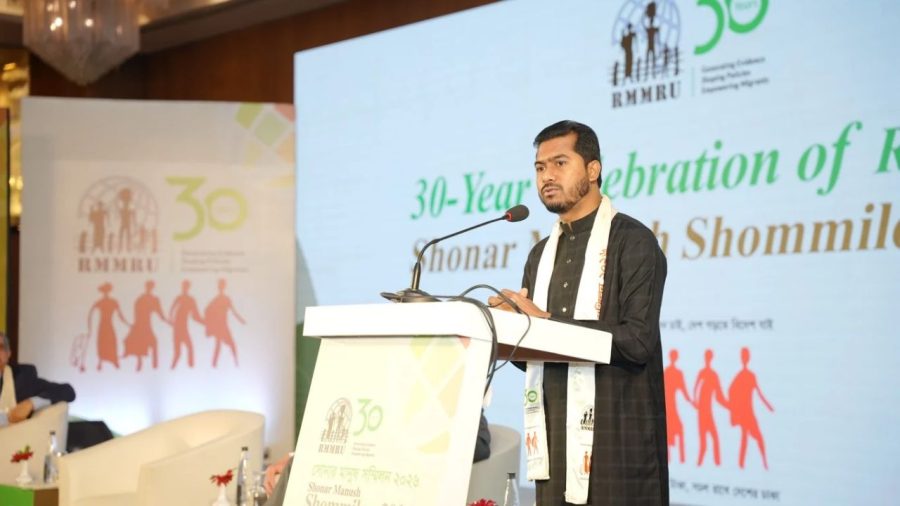
He made the remarks as a special guest at the first session of a two-day conference organised by the Refugee and Migratory Movements Research Unit (RMMRU) at Hotel InterContinental in Dhaka on Tuesday.
The conference and cultural event, titled Sonar Manush Sammilon 2026, marked RMMRU’s 30 years of work on forced and voluntary migration and climate change-induced displacement.
Addressing the event, the state minister described expatriates as “our golden people” and said the government is working to identify and resolve their longstanding problems.
Recalling his involvement in student movements beginning in 2008 and subsequent political processes, he said he had spoken directly with expatriates from different countries through Google Meet and Zoom to understand their concerns.

He identified three major problems faced by migrant workers- difficulties in obtaining passports, failure to receive promised jobs abroad and inadequate access to services at Bangladesh’s diplomatic missions.
Many people have to rely on middlemen even to obtain passports in Bangladesh, he said, stressing the need to eliminate broker networks and corruption in passport services.
He added that many Bangladeshis travel abroad after borrowing money but fail to secure the jobs they were promised, leaving them struggling to survive. Expatriates also face difficulties obtaining services at Bangladeshi embassies and high commissions, while airport mismanagement and other problems add to their hardships.
Card to connect expatriates with public, private services
The proposed Probashi Card will serve purposes beyond financial transactions, with plans to use it to facilitate access to a range of services, the state minister said.




The initiative is expected to help preserve expatriates’ basic information and simplify their access to services at Bangladesh’s diplomatic missions abroad and government and private institutions at home.
The government is also considering special healthcare facilities for expatriates at public and private hospitals.
Many expatriates face land and property-related disputes after returning home. The government is working to provide faster services to resolve such problems, Nurul Haque said.
Discussions are underway with the relevant authorities on providing necessary services or remedies within a specified period, particularly within seven days.
The government is also encouraging expatriates to send remittances through formal channels. A 3 per cent incentive is available for remittances sent through authorised banking channels, he said.
Expatriates’ Welfare Bank may expand services
Referring to the interim government, Nurul Haque said irregularities and corruption in the banking and financial sectors under the previous government had eroded public confidence in financial institutions.
The government is taking steps to make the Expatriates’ Welfare Bank, which operates under the Ministry of Expatriates’ Welfare and Overseas Employment, more effective. Plans are being considered to integrate the bank into general banking operations.
The proposed Probashi Card is also expected to be linked to the bank, he said.
The bank currently provides loans ranging from Tk3 lakh to Tk10 lakh to expatriates. The government is considering expanding these facilities to support those who return home and wish to start businesses, undertake other ventures or borrow money to construct houses.
Making loans easier to obtain and more accessible is a key consideration, the state minister said.
“We want expatriates to send remittances through legal channels. At the same time, the government is working to stop irregularities and illegal practices in the process of going abroad for employment,” he said, adding that various initiatives were being taken to address these problems.
Call for collective efforts to improve migration management
Speaking about young people and development, Nurul Haque said private organisations had played an important role in Bangladesh’s development over the past five decades. He noted that the prime minister had also acknowledged their contributions on various occasions.
Private organisations have also contributed to the migration sector, he said, expressing hope that their experience and achievements over the past three decades would continue to support the country’s development and improve migration management.
“The young people have dreamed of a new Bangladesh with aspirations for change. We must all play a responsible role in building that Bangladesh. We must work together to advance the country’s development and fulfil people’s expectations,” he said.
RMMRU marks three decades of work
Over the past three decades, RMMRU has conducted more than 100 research studies, contributed to the formulation of 13 national policies and strategies, and provided rights-based services to migrants in 21 districts of Bangladesh.
The conference aimed to share experiences from these activities, exchange new knowledge on migration and identify policy priorities for the coming years.
The opening remarks were delivered by RMMRU Deputy Executive Director Motasim Billah, who also moderated the programme, and Marina Sultana, director (programme). A documentary on RMMRU’s work on migration was screened afterwards.
Representatives of civil society, academics, researchers, cultural workers, international and domestic development organisations, the media-focused development organisation Samashti, and media outlets attended the event.