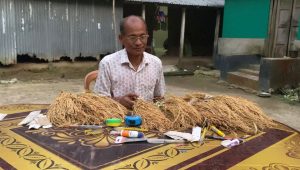
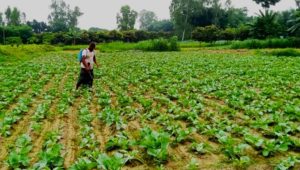
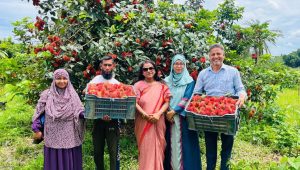
The government has adopted a series of master plans to implement “smart agriculture” activities aimed at increasing agricultural production, diversifying agricultural products, and tackling the impact of climate change, Prime Minister Tarique Rahman told parliament on Wednesday.
As part of these plans, the “Krishak Card” (Farmer Card) was launched on 14 April, through which farmers will receive 10 different types of services directly, the prime minister said while responding to a written question from Tangail-6 lawmaker Md Rabiul Awal during a session chaired by Speaker Hafiz Uddin Ahmed.
Bangladesh is an agriculture-dependent country where the sector plays a vital role in food security, poverty alleviation, and economic development, the prime minister noted.
However, he acknowledged that the sector faces various challenges due to climate change, population growth, diminishing land availability, and technological limitations.

Through the Krishak Card, farmers will receive services including distribution of agricultural inputs at fair prices, government subsidies and incentives, supply of agricultural machinery at low cost, irrigation facilities at fair prices, agricultural loans on easy terms, agricultural insurance benefits, facilities for selling products at fair prices, agricultural training, weather and market information on digital platforms, and advice on pest control.
The card will be provided to all farmers in phases, he added.
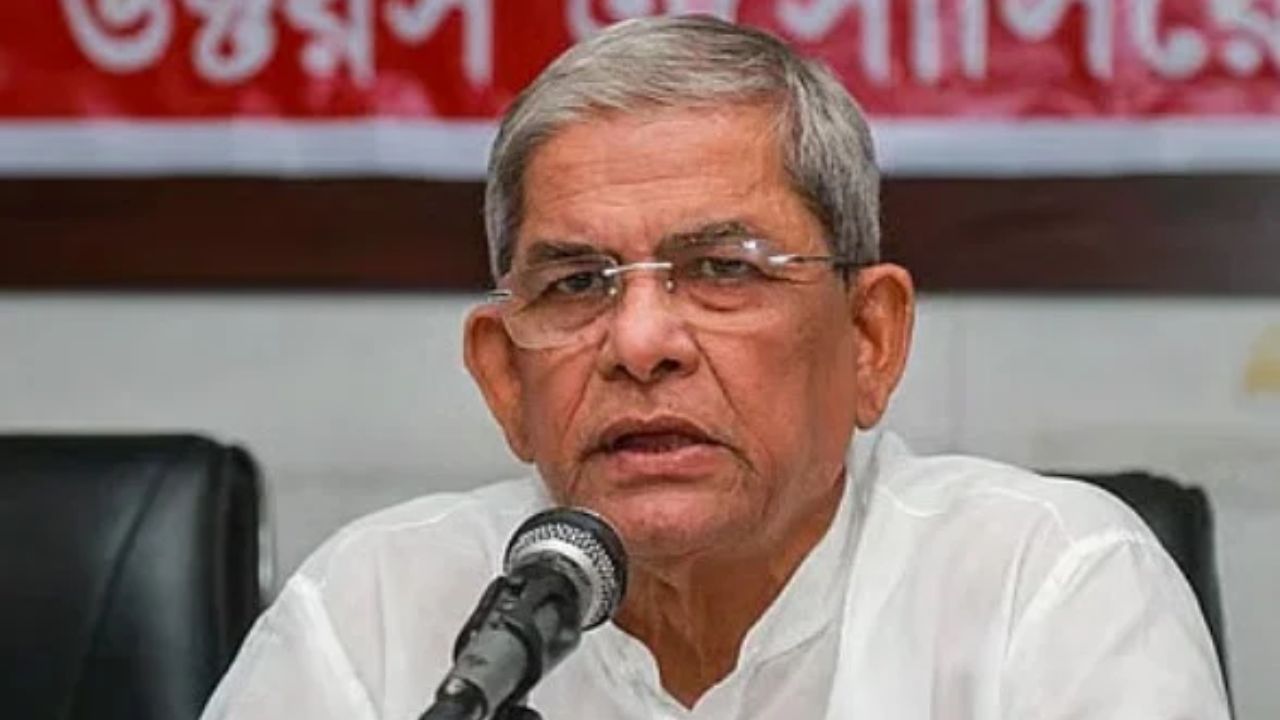


Seven-point plan
The prime minister outlined seven key areas of the government’s agricultural development plan:
1. Production and productivity: Plans have been taken to expand use of high-yielding seeds, balanced fertilisers, and modern irrigation systems. Excavation of 20,000km of canals has already been undertaken, and subsidies are being provided for agricultural mechanisation.
2. Crop zoning: This method has been introduced to bring fallow land under cultivation and ensure optimal land use, reducing wastage and increasing production.
3. Diversification: The government is taking measures to gradually expand the rice-dependent agricultural system into cultivation of fruits, vegetables, pulses, oilseeds, spices, and flowers.
4. Farmer incentives: Subsidies will be provided through the Farmer Card for seeds, fertilisers, and machinery. Low-interest agricultural loans and crop insurance are being introduced. In the current fiscal year, Tk70 crore was allocated for agricultural rehabilitation, of which Tk401.60 crore (sic; context suggests Tk 401.60 crore disbursed from allocation) has been released for free seeds and fertilisers, benefiting 25.22 lakh small and marginal farmers.
5. Preservation and export: Modern cold storages and warehouses are being constructed. Plans are in place to establish agricultural product export zones and purchase centres in the northern region.
6. Research and innovation: Institutions including BARI, BRRI, and BINA are developing high-yielding, disease-resistant, and short-duration crop varieties, with emphasis on climate-resilient crops.
7. Climate smart agriculture: The government is taking initiatives for salinity, drought, and flood-tolerant crops, sustainable technologies, and precision agriculture, including use of the “Khamari Apps” mobile application.