Gazipur Agricultural University (GAU) has developed a short-duration, high-yielding fine Aus rice variety named ‘GAU Dhan 4’, marking a significant milestone in the university’s agricultural research.
The variety was developed through nearly a decade of research led by renowned agronomists M Moynul Haque and Md Moshiul Islam of the Department of Agronomy, reads a press release.
With the release of GAU Dhan 4, the total number of crop varieties developed by the university has reached 95, including four rice varieties.
Aus rice in Bangladesh typically yields less compared to Aman and Boro seasons.

However, GAU Dhan 4 stands out for its short maturity period and higher productivity, enabling farmers to harvest early and cultivate three to four crops annually on the same land.
The variety is expected to benefit farmers in monga-prone northern regions, while its lower water requirement also makes it suitable for Aus cultivation across most parts of the country.
The development process involved systematic breeding, where researchers crossed the Aus variety Parija with BU Dhan 2, producing the promising line GAU-9974-52-7-2 after years of selection and testing.




The line underwent adaptability and multi-location trials across Bangladesh from 2022 to 2024 under the Bangladesh Seed Certification Agency.
The National Seed Board approved the variety as ‘GAU Dhan 4’ at its 115th meeting held on 5 February, 2026.
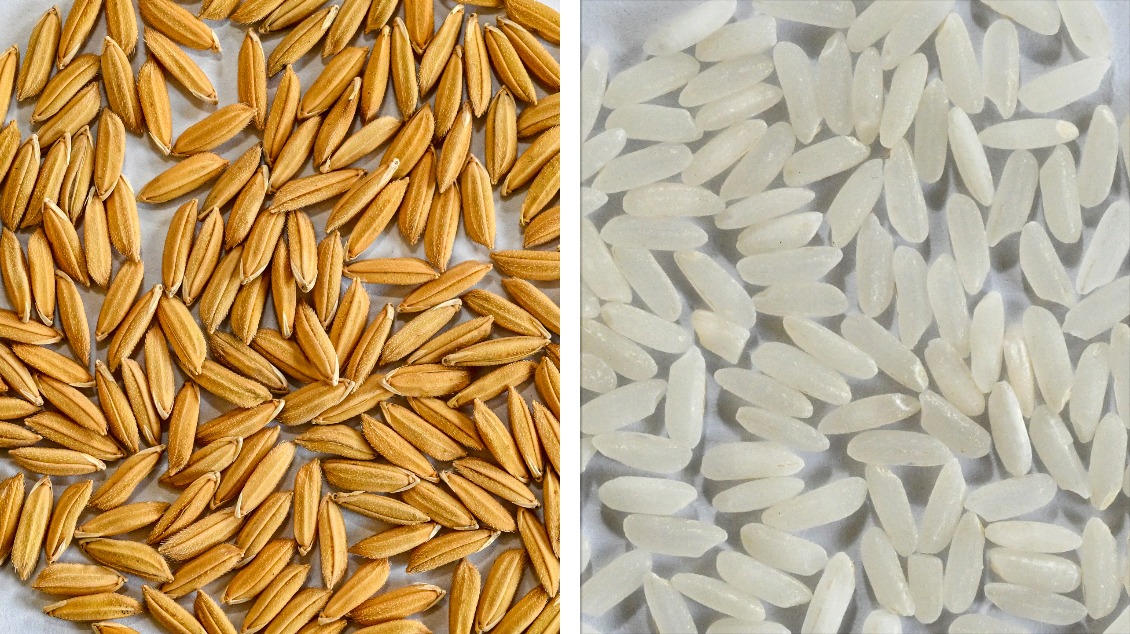
The rice contains about 24.58 percent amylose, which supports efficient carbohydrate digestion and energy supply, along with around 8.38 percent protein, important for human growth and tissue repair. The variety produces long, slender grains and matures within 90–100 days after sowing.
Its thousand-grain weight is about 20 grams, and under favorable conditions it can yield around 5–5.5 tonnes per hectare. Farmers require 25–30 kg of seed per hectare, making it cost-effective.
GAU Dhan 4 also shows improved tolerance to common diseases and delivers 10–15 percent higher yield than conventional varieties.
It performs best in sandy loam to clay loam soils, with seedbed sowing recommended in the first week of April and transplanting after 20–22 days, maintaining 20 cm × 15 cm spacing.
Moshiul, one of the lead developers, said the objective was to develop a short-duration, high-yield Aus rice variety with fine, market-preferred grains, expressing hope that it will increase farmers’ income and strengthen national food security.
GAU Vice-Chancellor GKM Mustafizur Rahman congratulated the researchers, saying the development reflects the dedication and expertise of the university’s scientists. He expressed hope that the new variety will create opportunities for farmers and contribute significantly to improving agricultural productivity in Bangladesh.