




Negotiations to renew the Ganges Water Sharing Treaty, set to expire in less than nine months, have yet to begin, raising serious concerns.
Experts say the upcoming talks must be comprehensive, particularly to address critical gaps such as the absence of climate change considerations, an issue far less prominent when the agreement was signed three decades ago.

Given growing environmental challenges, experts urged Bangladesh to push strongly for climate-related provisions in the renewed treaty.

Current situation
The existing treaty governs the sharing of the Ganges’ lean season flow from 1 January to 31 May.
It guarantees water distribution at the Farakka Barrage based on a 40-year average flow, structured in 10-day cycles, with provisions ensuring a 50:50 share during key periods in April.
According to the annexure, water distribution at Farakka follows a tiered structure.
If the flow is 70,000 cusecs or less, both countries receive equal shares.
If the flow is between 70,000 and 75,000 cusecs, Bangladesh receives 35,000 cusecs, with the remainder going to India.
If the flow is 75,000 cusecs or more, India receives 40,000 cusecs, and Bangladesh gets the rest.
However, recent data indicate that Bangladesh is receiving less water than expected due to reduced upstream flow.
Experts attributed the decline mainly to increased water withdrawal in India, which has lowered water availability at Farakka.
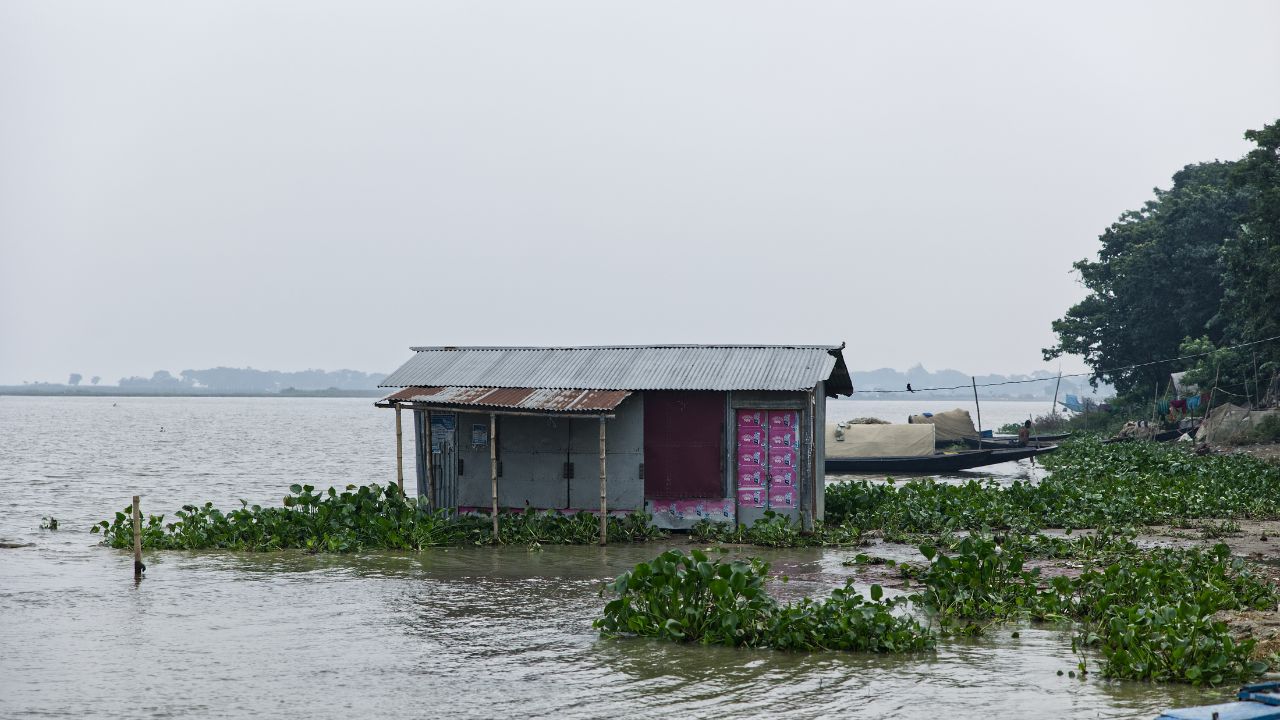
They said rivers across Bangladesh are drying up, while reduced sediment flow is contributing to the degradation of riverbeds.
The last ministerial-level meeting of the Joint Rivers Commission was held in August 2022 after a gap of nearly a decade.
The Bangladesh delegation was led by then state minister for water resources Zaheed Farooque, while the Indian side was headed by Union Jal Shakti Minister Gajendra Singh Shekhawat.
The 38th meeting aimed to revive bilateral cooperation on shared rivers and water resource management.
Both sides discussed key issues, including water-sharing arrangements for the Teesta and Ganga rivers, to advance long-pending agreements.
However, during the subsequent interim government period of more than 18 months, no ministerial meeting was held and no visible initiative was taken to advance negotiations.
Experts said the current treaty also fails to address ecological impacts, including sediment loss and reduced flow into the Padma River, both of which have long-term consequences.
BNP’s position
Before the election, BNP pledged to secure a fair share of water from transboundary rivers, including the Padma and Teesta.
The party also emphasised stronger border security and action against cross-border crimes such as smuggling, human trafficking, and drug trafficking.
Prime Minister Tarique Rahman, in a letter to Indian Prime Minister Narendra Modi last month, stressed advancing bilateral relations based on dignity, equality, mutual trust, and shared benefits.
He expressed optimism that Dhaka and New Delhi could achieve progress by addressing issues in ways that benefit their populations.
The need for immediate negotiation
Experts said formal negotiations must begin without delay as the treaty expiry approaches.
Former Ambassador to the European Union and former Deputy High Commissioner in New Delhi Mahbub Hassan Saleh said climate issues must be included in the renewed framework.
“We need to push for the inclusion of climate change issues in the treaty during renewal negotiations. Our rivers are drying up due to upstream water withdrawal,” he said.
He said nearly 80 rivers in Bangladesh have already dried up due to water scarcity, affecting livelihoods and ecological balance.
He said rivers that cross national boundaries are international natural resources, and their sustainable management is a shared responsibility.
Failure to ensure equitable and environmentally sound management could have severe consequences, particularly for downstream countries, he added.


