



The 2026 FIFA World Cup is barely three days old, and already one of its most uncomfortable storylines has moved centre stage. Thousands of empty seats at three of the tournament’s opening fixtures have drawn widespread attention, prompting questions about FIFA’s ticket pricing strategy, the reliability of its attendance figures and whether the governing body’s insistence that demand has never been greater reflects the reality inside the stadiums.
The issue surfaced most visibly during the Group A match between South Korea and the Czech Republic at Estadio Akron in Guadalajara. Large sections of empty seats, heavily concentrated around the centre circle, were visible throughout the broadcast. FIFA announced an official attendance of 44,985, just 679 short of the stadium’s listed World Cup capacity of 45,664, suggesting the ground was almost full. The images told a different story.
FIFA moved quickly to explain the discrepancy. “Official attendance figures reflect the number of tickets scanned and spectators present within the stadium footprint, rather than visual assessments of seating occupancy at any given moment during the match,” the governing body said. “Please note that, during last night’s match in Guadalajara, several ticketed fans could be seen standing in concourses rather than staying in their assigned seats throughout the match.”
The explanation drew scepticism. Observers noted that the vacant sections remained consistently unoccupied for extended periods throughout the match, including during sustained spells of play rather than just at half-time or after goals.

The pattern repeated itself in Toronto, where Canada played their first ever World Cup match on home soil against Bosnia-Herzegovina at BMO Field. Patches of empty seats were visible in the lower bowl and in a section of temporary seating added to bring the stadium up to FIFA’s minimum capacity requirements. The announced attendance was 43,002 from a listed capacity of 43,036. Tickets in the unsold categories were still available in the hours before kick-off, priced between $1,645 and $2,240.
The crisis then followed the tournament to California. Thousands of empty seats were visible throughout Levi’s Stadium in Santa Clara as Switzerland and Qatar played out a 1-1 draw in their Group B opener on Saturday. The vacant spots were particularly pronounced on the east side of the ground, where temperatures reached around 31 degrees Celsius at kick-off. Switzerland’s fans, dressed in bright red, blended into the unoccupied red seats, making the empty sections even more striking on television. FIFA’s concourse explanation, already met with scepticism once, was unlikely to satisfy critics for a third time.

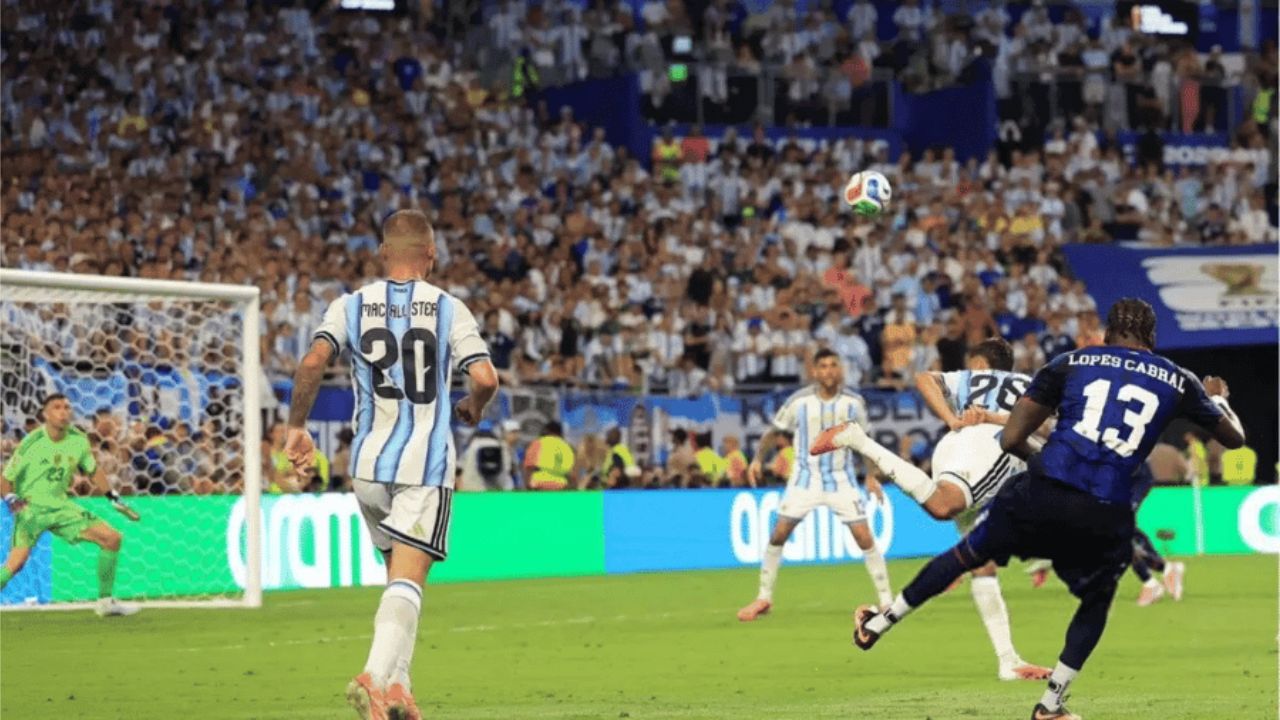


On the pitch at Levi’s Stadium, Switzerland dominated from the first whistle but paid the price for failing to convert their superiority. Breel Embolo gave them the lead from the penalty spot after Mahmoud Abunada brought down Remo Freuler inside the area. Granit Xhaka controlled the tempo from deep, and Switzerland finished with 24 shots and seven on target but could not find a second goal. Qatar defended resolutely throughout and were rewarded in the fifth minute of stoppage time when Boualem Khoukhi rose at the back post to power a header beyond Gregor Kobel, earning the Gulf nation their first ever point at a World Cup finals.
Ticket pricing lies at the heart of the broader controversy. FIFA has deployed a dynamic pricing model for all 104 matches across 16 venues in the United States, Mexico and Canada, with prices having increased repeatedly since the initial sale window opened following December’s draw. Costs have risen fivefold compared to the 2022 tournament in Qatar, according to Football Supporters Europe. For the United States opener against Paraguay in Los Angeles, Category 1 tickets were originally listed at $2,735. Those prices proved unsustainable. By matchday morning, Category 1 tickets on FIFA’s own resale platform were selling for under $1,150, with some Category 2 seats having dipped below $700 in the days prior. The Los Angeles match ultimately drew a sellout crowd of 70,492, largely because prices collapsed sufficiently in the final days to attract buyers.
Only 29 of the tournament’s 104 matches were sold out before the competition began. Matches involving smaller nations have seen tickets appear on secondary markets well below face value, with thousands of listings remaining active in the days leading up to games.
FIFA president Gianni Infantino has consistently defended the pricing approach. “Until today, we have sold over six million tickets. The demand has been unprecedented, not by a little bit, but by a factor of 10 or more.” He added that if FIFA was doing something wrong, then every organisation selling tickets in North America was doing something wrong, drawing comparisons to the steep cost of attending an NBA Finals game.
Critics have rejected that framing. The issue, they argue, is not merely the price of premium seats but the broader effect of dynamic pricing on ordinary supporters, many of whom were already contending with expensive flights, accommodation and visa complications. The concentration of empty seats around the halfway line at Guadalajara, an area typically allocated to corporate sponsors, added another dimension to the debate.
FIFA’s official attendance methodology, which counts any scanned ticket as a spectator regardless of whether the holder is in their seat, allows for legitimate discrepancies between announced figures and visible occupancy. But with the tournament only three days old and three separate venues already affected, the governing body faces a prolonged and uncomfortable conversation about access, affordability and whether the world’s most watched sporting event is pricing out the very people it depends on for its atmosphere.