Jatiya Sangsad on Friday passed the “July Uprising Memorial Museum Bill 2026” in an amended form, aiming to preserve the history, relics, and documents of the 2024 mass uprising for research and public display.
A key amendment to the bill mandates that the minister or state minister for cultural affairs will serve as chairperson of the museum board, replacing the original provision for an external expert.
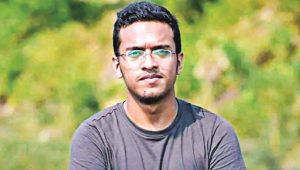
With this move, former cultural affairs adviser Mostofa Sarwar Farooki will not be able to serve as chairman of the museum’s governing board.
A TIMES of Bangladesh investigation report, published on 1 April 2026, found a series of irregularities in the establishment of the July Mass Uprising Memorial Museum, including a potential conflict of interest involving the then cultural affairs adviser Mostofa Sarwar Farooki.
According to the investigation, Farooki appointed himself chairman of the museum’s governing board while serving as cultural affairs adviser with ministerial rank in the interim government – a move governance experts say raises serious ethical concerns.
This bill was moved in the House by Cultural Affairs Minister Nitai Roy Chowdhury during a session presided over by Speaker Hafiz Uddin Ahmed.

While a special parliamentary committee had initially recommended passing 98 ordinances from the interim government’s tenure without changes, the House ultimately adopted three amendments to Section 8 of this specific bill.
Allegations of ‘political trickery’
Following the passage of the bill, Opposition Chief Whip Nahid Islam expressed intense anger and protest during an unscheduled discussion, describing the legislative process as “political trickery in broad daylight” and a “festival of politicising institutions.”
He alleged that a political consensus to pass the 98 ordinances “as is” was broken when an amendment was submitted only 30 minutes before the bill was tabled.




Islam strongly criticised the replacement of an expert with the minister as board chairperson, noting that institutions like Bangla Academy, Shilpakala Academy, and the National Museum are traditionally led by subject-matter experts.
He argued that the July Uprising Museum is a specialised institution and questioned the necessity of ministerial leadership, suggesting the government is attempting to bring the museum under total control.
The opposition chief whip accused the government of widespread politicisation across sectors, citing Bangladesh Bank, local government bodies, and the cricket board, where he claimed ministers’ children have been appointed as members.
He warned that if such practices continue, there would be “no need” for the opposition to remain in Parliament.
Justification for ministerial control
Defending the changes, Anisur Rahman, the ruling party lawmaker for Madaripur-3 who proposed the amendments, argued it was logical for the presiding minister to lead the board since the Ministry of Cultural Affairs oversees the museum’s operations and decision-making.
He described the July movement as a “movement for this nation’s liberation” and shared that he had been shot during the uprising.
Chief Whip Nurul Islam Moni supported the change, stating there was no justification for appointing an “outsider” as chairperson when the ministry is responsible for the project’s execution.
Other adopted amendments included the deletion of Clause 8(2)(a) and the insertion of a provision allowing the chairperson or board members to resign by submitting a signed letter to the government.
Additionally, the government now holds the authority to cancel any nomination in the public interest at any time.
Historical site and dissent
The museum is being established at Ganabhaban, the former official residence of ousted Prime Minister Sheikh Hasina, which was occupied by the public following the fall of the Awami League government on 5 August 2024.
The interim government’s advisory council approved the conversion of the site on 24 December 2024, aiming to document the final 36 days of the uprising alongside evidence of the preceding “misrule”.
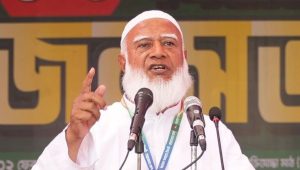
The amendments faced further opposition from Jamaat-e-Islami lawmaker Mir Ahmad Bin Quasem, who argued that the changes were not shared with members in advance for proper scrutiny.
He suggested passing the bill in its original form and amending it later after consultations with “July warriors” and the families of martyrs. However, the speaker ruled that only written amendments submitted in advance could be considered.