Failure to complete trials of those accused of crimes against humanity allegedly committed during the Awami League government’s tenure could set a dangerous precedent, allowing perpetrators of serious crimes to believe they can escape accountability, speakers at a human rights consultation said.
The remarks were made at a consultation titled “Human rights abuses and access to justice for victims”, organised by human rights organisation ‘Odhikar’ at the CIRDAP auditorium on Topkhana Road in Dhaka on Saturday.
The speakers warned that allowing accused individuals to avoid justice before the completion of legal proceedings could send a message that widespread violence, human rights violations, enforced disappearances and crimes against humanity may go unpunished.
They said countries that witnessed genocide, crimes against humanity and large-scale rights abuses had pursued lengthy judicial processes to ensure accountability and prevent recurrence.
They said ensuring justice for crimes against humanity, enforced disappearances and other serious rights violations is not only necessary to address past wrongs but also essential to prevent future abuses and maintain public confidence in the justice system.
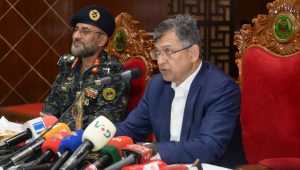
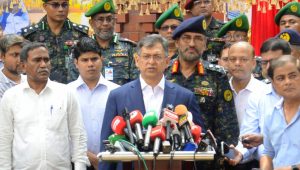
The event was chaired by Odhikar President Tasnim Siddiqui, with Law, Justice and Parliamentary Affairs Minister Asaduzzaman attending as chief guest.

Retired Supreme Court Justice Moinul Islam Chowdhury, Amar Desh Editor Mahmudur Rahman and Chief Prosecutor of the International Crimes Tribunal Mohammad Aminul Islam were among those who spoke at the event.
The law minister said various forms of domination, including Indian hegemony, imperialism, anarchism, fascism and extremism, were major obstacles to establishing fundamental and human rights in Bangladesh.
He stressed the importance of strengthening constitutional and state institutions, saying the judiciary still faces challenges in overcoming the impact of structures created under what he termed the previous fascist system.
Asaduzzaman said the law ministry has limited authority over disciplinary action against lower court judges. The ministry can only make recommendations and does not have the power to directly punish assistant judges or other judicial officers, he said.




He also claimed that although around 1,400 lower court judges were transferred between September and December 2024, about 70 per cent of government efforts to prevent the appointment of controversial judges were not approved by the Supreme Court.
Justice Moinul Islam Chowdhury said the fundamental purpose of law is to ensure justice, adding that any law that fails to provide proper justice becomes ineffective.
Mahmudur Rahman alleged that judges played a greater role than former prime minister Sheikh Hasina in creating an environment that allowed fascism to take root in the country.
He said judges associated with the previous regime should have been removed after the July uprising.
In the second session titled “Human rights situation: State responsibility, accountability and justice,” former ICT Chief Prosecutor Tajul Islam said the existing International Crimes Tribunal, prosecution team and investigation agencies lack sufficient manpower and infrastructure to handle the scale of alleged crimes committed during July and August.
He said incidents across 61 districts and cases of enforced disappearances require a larger workforce to conduct proper investigations, uncover facts and present findings before the public.
Tajul called for increasing the number of tribunals, saying delays in the trial process were partly due to limitations in existing institutional capacity.
He stressed the need for stronger investigative and judicial infrastructure to ensure timely justice.
He also highlighted the importance of ensuring security for witnesses appearing before the tribunal, warning that a lack of protection could discourage people from coming forward in future cases and weaken the justice process.
Journalist Akbar Hossain said Bangladesh’s human rights situation had improved significantly after the July uprising, though some incidents of violence continued to be reported.
He said mob violence was not a new phenomenon in Bangladesh, although the term has recently gained wider attention.
He added that while no country has achieved complete protection of human rights, governments that seek to remain in power at any cost often increase repression and rights violations.
Referring to South Africa’s Truth and Reconciliation model, Akbar said he personally supports reconciliation but argued that it requires acknowledgement of wrongdoing and accountability from those accused of serious rights abuses.
He also cited the trial of a journalist and radio presenter in Rwanda, who received a life sentence for inciting violence during the genocide despite not directly participating in killings.
He said international law considers incitement to genocide and crimes against humanity a serious offence.
Akbar also highlighted the importance of United Nations human rights reports in evaluating Bangladesh’s rights situation.