
Bangladesh’s manufacturing sector fell into contraction in the first 10 months of the past fiscal year despite stronger banking liquidity, record remittance inflows and improved external balances, exposing a widening gap between macroeconomic recovery and real economic activity.
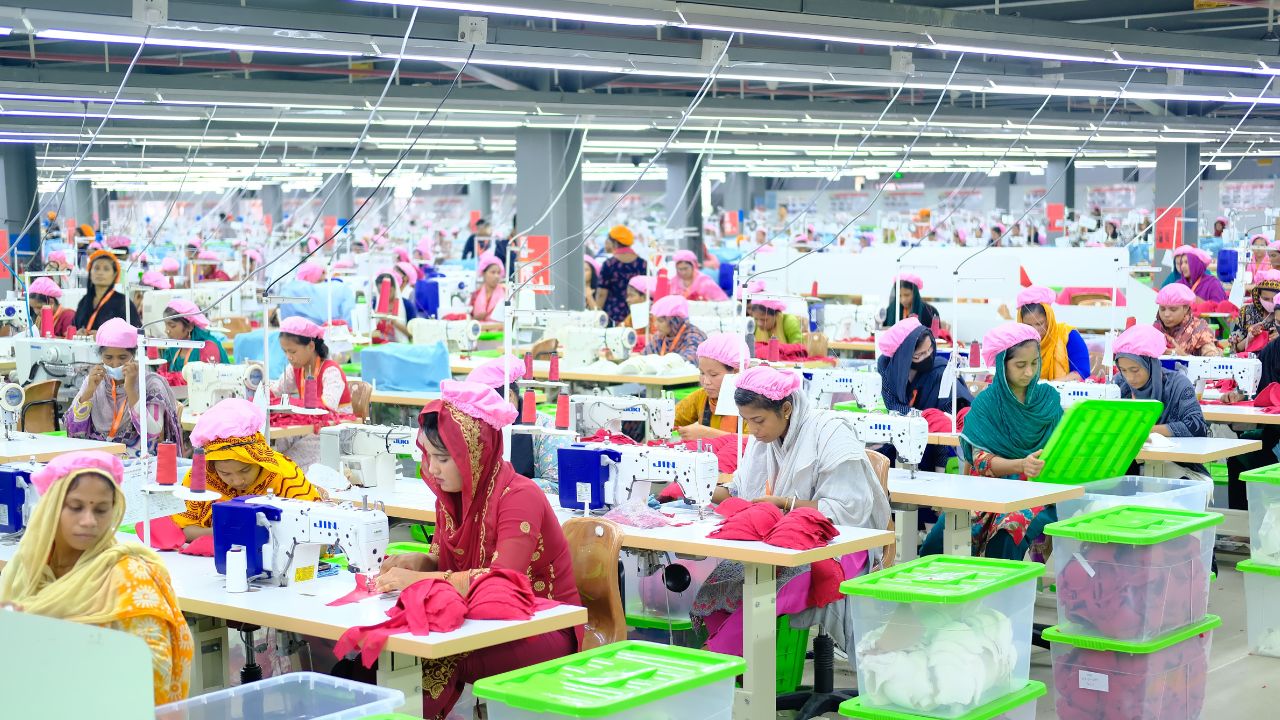
Large-scale manufacturing output declined 1.42 per cent during July-April of the fiscal year 2025-26, reversing a 6.97 per cent expansion in the same period a year earlier, according to Bangladesh Bank’s latest “Major Economic Indicators: Monthly Update.”
The slowdown highlights persistent weakness in business confidence, with exporters and manufacturers holding back production and investment despite improved foreign exchange conditions and liquidity in the banking system.
Private sector credit growth slowed to 4.98 per cent in May, one of the weakest levels in recent years, even as bank deposits increased 11.41 per cent, broad money expanded 12.45 per cent and excess liquidity remained high.

The divergence suggests that banks have funds available but businesses are not seeking new loans at a pace needed to support expansion, indicating weak investment appetite amid uncertainty over demand and costs.
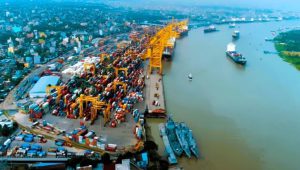
Manufacturing weakness has also coincided with a sharp slowdown in exports, a key driver of industrial activity. Merchandise exports grew only 0.17 per cent in FY26, compared with 8.60 per cent growth in the previous fiscal year.




The loss of export momentum has put pressure on industries dependent on global demand, particularly export-oriented manufacturing sectors that account for a significant share of industrial production.
Meanwhile, Bangladesh’s external sector has strengthened significantly. Remittance inflows surged 30.33 per cent to $35.59 billion in FY26, helping lift gross foreign exchange reserves to $37.58 billion.
The current account deficit narrowed sharply to $301 million from $778 million a year earlier, while the financial account turned around to a $4.16 billion surplus from a $214 million deficit.
The improvement helped the overall balance of payments move to a $4.02 billion surplus, reversing the deficit recorded in the previous year.
The contrasting trends underline an uneven recovery path, where improvements in foreign exchange stability and financial liquidity have yet to translate into stronger factory production, investment and job creation.
Inflation has shown some moderation but remains elevated. Point-to-point inflation eased to 9.16 per cent in June from 9.42 per cent in May, although the 12-month average inflation rate edged up to 8.68 per cent, interrupting the recent downward trend.
The latest indicators suggest that Bangladesh’s recovery is being supported more by external inflows and financial stability than by a broad-based revival in productive sectors.
For a durable recovery, economists say stronger private investment, export competitiveness and manufacturing expansion will be critical.