



As the country moves towards 13th parliamentary elections, a rush to approve large development projects in the final weeks of the interim government has raised serious questions about accountability, fiscal responsibility and the burden being left for the next elected administration.
One of the most contentious proposals was the Bangladesh Clean Air Project (BCAP), hurriedly placed before the Executive Committee of the National Economic Council (Ecnec) on 25 January, just days before the end of the interim government’s tenure. The project, led by Syeda Rizwana Hasan, adviser to the Ministry of Environment, Forest and Climate Change, ultimately failed to secure approval.
Valued at nearly Tk949 crore and overwhelmingly dependent on a World Bank loan, the proposal was tabled at a time when the interim government’s policy authority was under scrutiny and its legitimacy to commit the state to long-term financial obligations was being questioned.
Although officials described the move as part of a “routine administrative process”, the timing, scale and reliance on foreign borrowing sparked debate over whether such decisions should be taken by a non-elected administration at the very end of its tenure.
At the same meeting, Ecnec approved another major project that also depends almost entirely on foreign assistance that has yet to be formally secured. The project involves the construction of a 1,000-bed Bangladesh-China Friendship General Hospital in Nilphamari, combining government funding with anticipated Chinese aid.
Experts warn that even approved projects can eventually cost far more than initially estimated and create long-term economic pressure, particularly when financing remains uncertain.
During the final phase of the interim government led by Muhammad Yunus, from 1 December, 2025 to 25 January, Ecnec approved 64 projects with a combined cost of Tk1,06,993 crore. Of these, 40 were new projects requiring Tk79,356 crore for implementation. Officials acknowledge that while some initiatives were necessary, others were “less urgent” or controversial.
Over its one-and-a-half-year tenure, the interim government initiated 135 new projects with a total projected cost of Tk 2,03,000 crore.

Ecnec held 19 meetings during this period. At its final meeting on 25 January, 14 new projects costing Tk19,165 crore were approved. Earlier, on 23 December, another 14 new projects worth Tk45,080 crore were cleared. On 1 December, 12 new projects costing Tk15,111 crore received approval.
On paper, the objectives of the Bangladesh Clean Air Project appeared compelling. The proposal aimed to strengthen the Department of Environment’s monitoring and enforcement capacity, promote evidence-based decision-making, ensure public participation in air-quality management and reduce emissions from power plants and large industrial facilities.
However, critics argue that while the goals were ambitious, the implementation roadmap was vague. The project was scheduled to run until June 2030, meaning that none of the interim government’s members would be responsible for delivering its outcomes.
The government’s own contribution was limited to Tk4.86 crore, largely covering salaries and administrative expenses. The remaining Tk945 crore was expected to come as a World Bank loan, the repayment burden of which would fall on a future elected government and taxpayers.
There is broad consensus that air pollution is a major public health crisis in Bangladesh. World Bank data shows that more than 150,000 people die each year due to environmental and household air pollution. Yet questions remain over whether the project, had it been approved, would have delivered meaningful results.


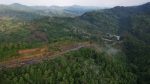
Officials within the Department of Environment acknowledged that real-time monitoring would have covered only 40 large industrial facilities and power plants. World Bank research indicates that around 28 percent of air pollution comes from burning solid fuels, while other major contributors—such as urban waste burning, construction dust and vehicle emissions—were largely excluded from the project’s scope.
Mohammad Abdul Motalib, deputy director of Air Quality Management at the Department of Environment, told TIMES of Bangladesh that the project’s impact would have been limited. He said the department’s legal mandate primarily covers industrial pollution, leaving major sources such as waste management and construction activities beyond its reach.
He identified city-corporation-led waste management as a far more effective approach, capable of addressing air, water and plastic pollution simultaneously.
Md Hasan Hasibur Rahman, director (Planning) at the Department of Environment, said the timing of the proposal inevitably raised ethical and political concerns.
“Given the political reality, proposing a loan-dependent project worth nearly a thousand crore taka at the final Ecnec meeting of an interim government just before a national election was bound to raise questions,” he said.
Critics argue the urgency reflected a desire to push the project through rather than ensure environmental effectiveness.
Professor Md Humayun Kabir of the University of Dhaka’s Department of Geography and Environment said monitoring alone could not solve air pollution. “In Dhaka, 25-year-old vehicles are still operating,” he noted, questioning whether borrowing such a large sum solely for monitoring could bring real change.
He also cited the timing of the proposal as evidence of the accountability gap that emerges during the final days of an interim administration.
Efforts of TIMES to reach Environment Adviser Syeda Rizwana Hasan for comment were unsuccessful.
Concerns over rushed approvals were further fuelled by Ecnec’s decision to approve the Bangladesh-China Friendship General Hospital project in Nilphamari, despite the absence of formal financing assurances from China.
According to the Planning Commission, the project was approved at the eighth Ecnec meeting of the current fiscal year on 25 January. Initiated by the Health Services Division and to be implemented by the Health Engineering Department and Public Works Department, the project is scheduled to run until December 2029.
The Development Project Proposal (DPP) shows a total estimated cost of Tk2,459.35 crore. Of this, only Tk179 crore would come from the government, while more than Tk2,280 crore is expected as Chinese aid.
However, no written guarantee, memorandum of understanding or policy-level assurance has been received from the Chinese authorities. This uncertainty was first flagged during the Planning Commission’s Project Evaluation Committee meeting, which recommended that work begin only after funding assurance was secured.
On 21 January, the Economic Relations Division formally informed the Health Services Division that China had not signed any MoU for the project. No feasibility study had been initiated, and no policy-level approval had been given. Despite this, the project was approved at Ecnec.
According to ERD procedures, foreign aid follows a step-by-step process, culminating in an MoU that serves as final assurance. None of these steps have been completed for the hospital project, despite government rules requiring written consent for foreign-financed initiatives to prevent cost escalation and state liability.
Shah Imam Ali Reza, additional secretary of the Planning Division, told TIMES that officials are in contact with ERD to secure Chinese funding.
Economists warn that the late-stage approval of multiple loan-dependent projects risks increasing fiscal pressure on the next government.
Professor Muhammad Shahadat Hossain Siddique of the University of Dhaka said the interim government had prioritised spending while failing to strengthen revenue capacity.
He noted that Tk354,000 crore has already been borrowed, arguing that approving large projects contradicts claims of fiscal tightening.
Reliance on foreign loans, he said, creates long-term obligations for future governments and raises serious questions about the intent and prudence of last-minute policymaking.