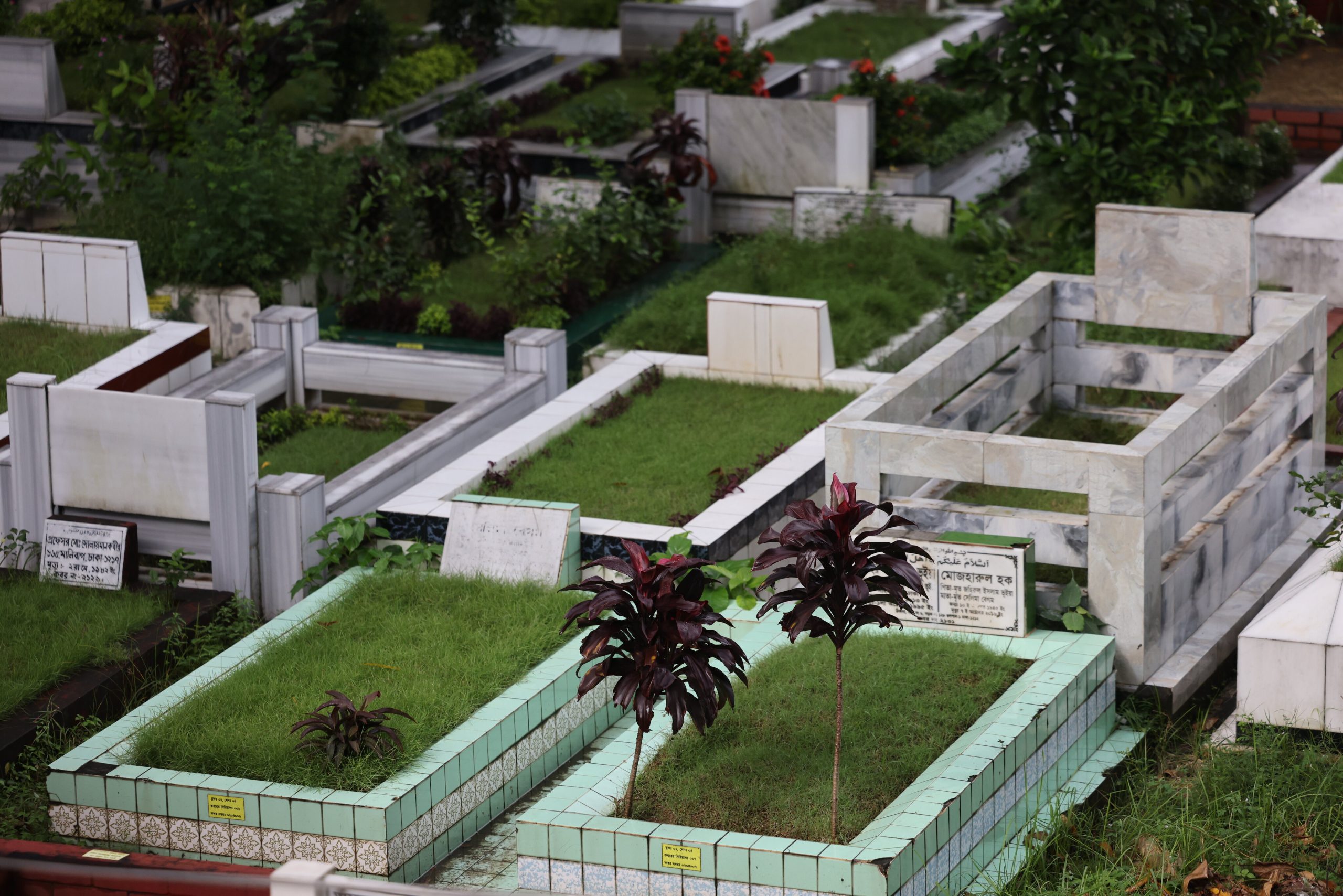
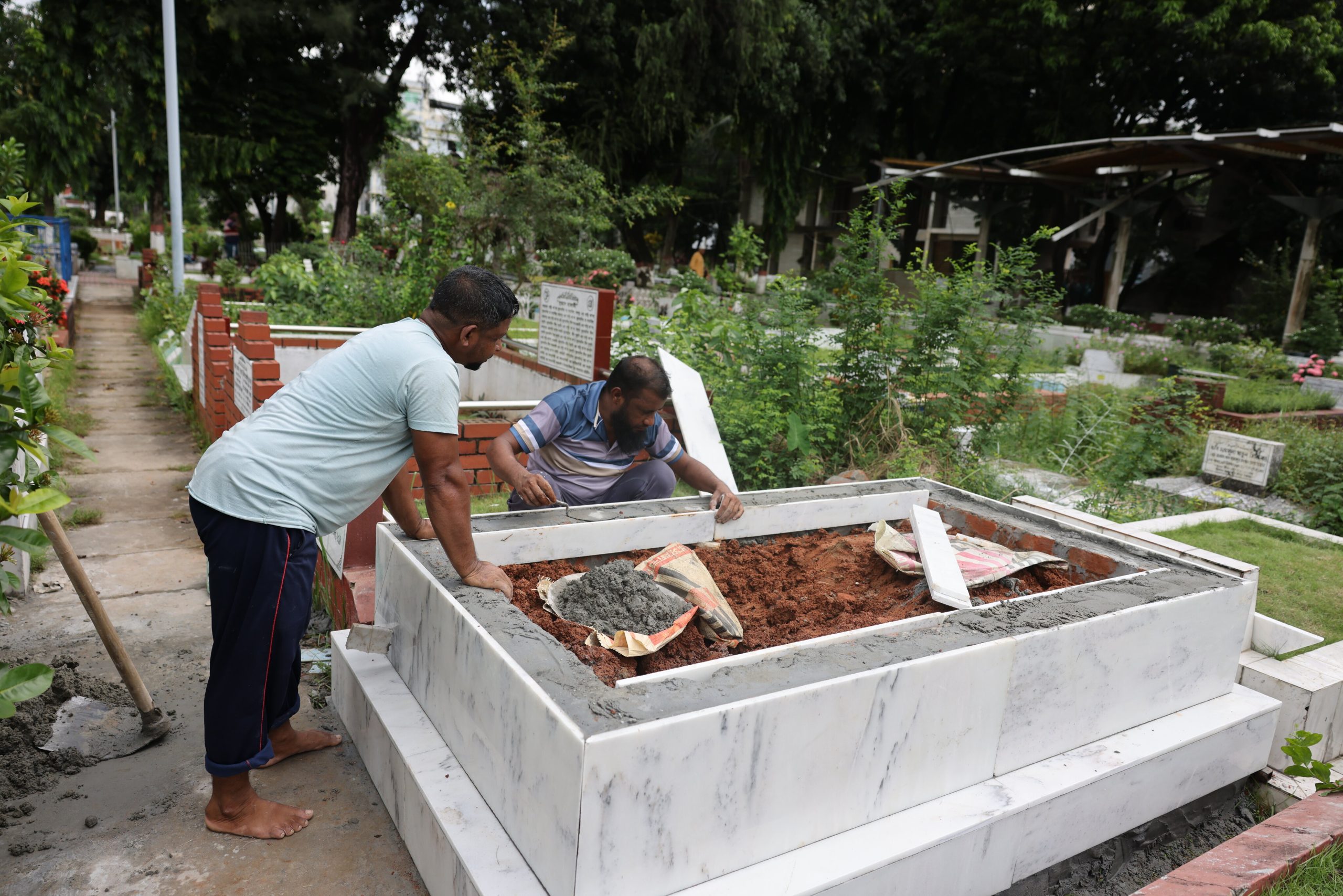
Dhaka’s Banani Graveyard, long regarded as one of the capital’s most prestigious final resting places, has now become one of the most expensive burial sites in the world when measured on a tenure-adjusted basis. A 25-year grave lease in Banani is reportedly priced as high as Tk 4.5 crore (around USD 370,000), a staggering figure that far exceeds the Tk 1.5 crore (USD 125,000) maximum fee outlined in Dhaka North City Corporation’s (DNCC) 2022 Graveyard Policy. Even at the higher, unofficial benchmark, the annualized cost of burial at Banani stands at roughly USD 14,800 per year, placing it in the same league as hyper-dense global markets like Hong Kong and Tokyo.
Click here to watch the video.
Unlike in the United States or parts of Europe, where soaring cemetery costs are often tied to heritage, celebrity proximity, or historical prestige, Banani’s extraordinary pricing stems from an aggressive policy decision. DNCC officials have openly acknowledged that the escalating “preservation fee” is designed to discourage families from retaining graves indefinitely, given the acute shortage of burial land in Dhaka.
“This is not a purchase of land,” Mohammad Mamun-ul-Hasan, Chief Social Welfare and Slum Development Officer at DNCC, told Times of Bangladesh. “It is a preservation fee.” He clarified that the higher fee for preserving a grave—sometimes reaching Tk 4.5 crore—is intended to “discourage preservation” and ensure sufficient space remains available for the public.

Across the globe, burial pricing varies widely depending on tenure rights. In Hong Kong, permanent ground plots are almost extinct, with rare sales fetching between USD 380,000 and USD 640,000. Tokyo has seen similar inflation, with traditional plots costing tens of thousands of dollars, while high-tech robotic columbaria offer cheaper alternatives. In the United States, the most expensive cemeteries rely less on scarcity and more on legacy
and prestige: a premium plot in New York’s Woodlawn Cemetery can cost up to USD 1.5 million, while resale values in celebrity-linked sites such as the crypt above Marilyn Monroe in Los Angeles have exceeded USD 4 million.




Measured in absolute terms, Banani does not surpass these ultra-luxury benchmarks. But in tenure-adjusted terms, it stands out dramatically. London’s municipal graves cost about USD 9,700 for a 75-year lease, which amounts to only USD 130 per year, while Paris offers 10-year concessions for under USD 1,000. By comparison, Banani’s USD 370,000 for 25 years translates to USD 14,800 per year—more than 100 times higher than the municipal rates in London or Paris. This makes Banani one of the most expensive graveyards in the world, not for reasons of glamour or prestige, but because of a policy choice to monetize scarcity aggressively.
The soaring costs at Banani highlight a stark divide within Dhaka itself. At Azimpur Graveyard, burials are available at a fraction of the price. “For a man, it costs Tk 1850… for a woman, Tk 1950. If a person is poor, we also have a completely free arrangement for them,” Mohammad Shafiqul Islam, Public Relations Officer of Al-Markazul Islam, told Times of Bangladesh.
A visitor, Farhan Ahmed, added that the government rate is around Tk 2500, a fee that covers essentials such as bamboo and matting. But these graves are temporary, often reused within two years.
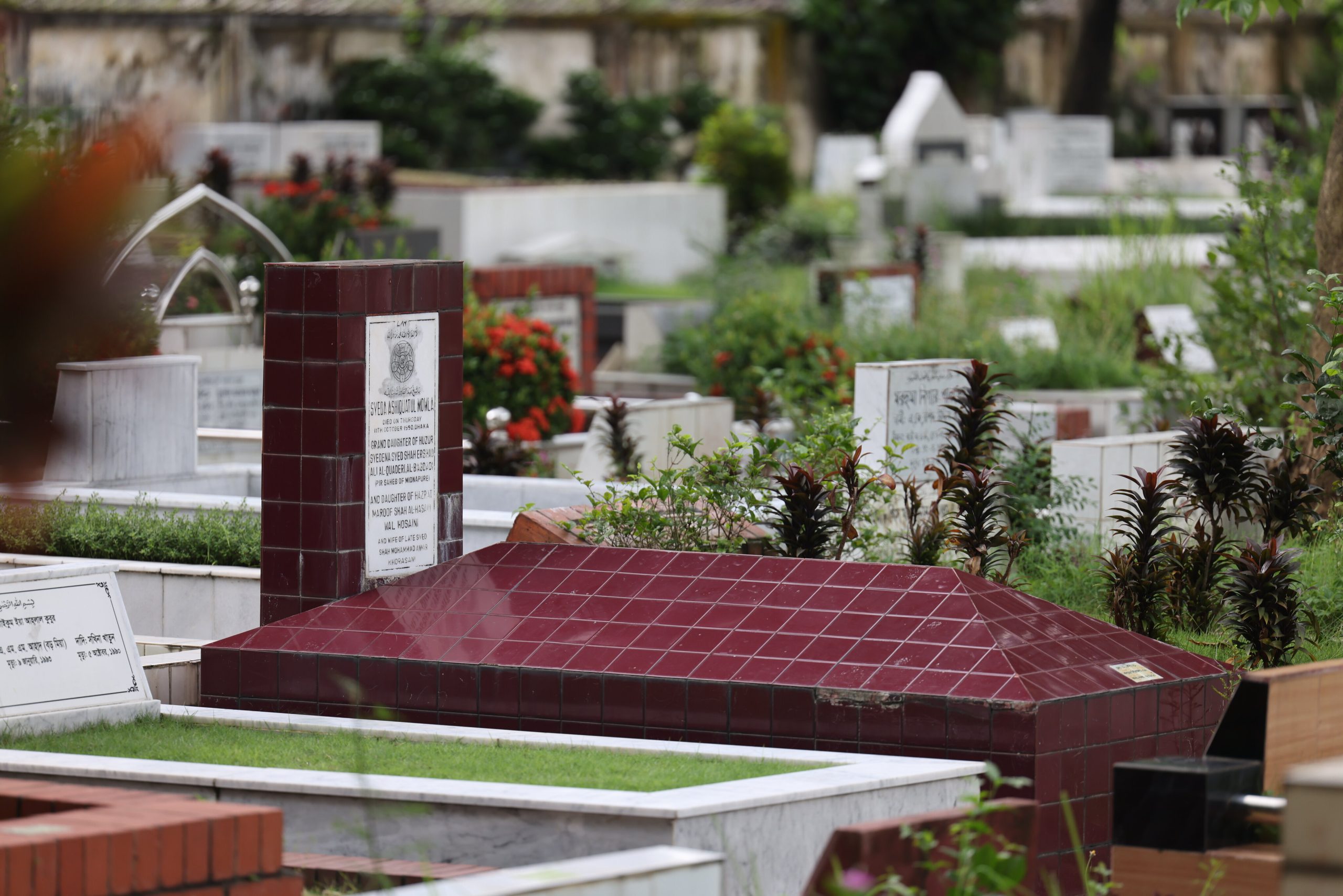
It is this lack of permanence that drives many families to seek Banani’s expensive plots. “If I die and I am buried in Azimpur, my grave will not be permanent. After two years it will be dug up. In Banani, the graves of the rich, industrialists, bankers, lawyers, businessmen, people from high society are decorated and permanent,” Mohammad Ruhul Kuddus, a visitor to Banani Graveyard, told Times of Bangladesh.
At Mirpur Saheed Buddhijibi Graveyard, Senior Mohrar Mohammad Sanowar Hossain explained that while graves can be reused for as little as Tk 500, families with emotional attachments often pay up to Tk 30 lakh for a 25-year preservation. For some, the expense feels justified. “My heart is satisfied,” Ruhul Kuddus said, reflecting on the peace of mind that comes with knowing a loved one’s grave is central, decorated, and easily visited.
Not all agree with this practice. Hafez Mawlana Nuruzzaman of Jannatul Mawa Graveyard told Times of Bangladesh that Islam prohibits making graves permanent or decorating them. Still, demand for permanence remains strong in Bangladesh, where many families hope for undisturbed rest until the Day of Judgment.
Dhaka’s reality, however, is shaped by land scarcity and the blunt instrument of policy. While ultra-luxury cemeteries in the United States may command higher absolute prices because of legacy or celebrity, Banani’s astonishing figures—driven not by heritage but by scarcity—make death itself a luxury that only a select few in Dhaka can now afford.