
A year after being declared a traditional grove, Baldha Garden in Old Dhaka stands between two contrasting realities, a protected sanctuary for rare flora and a shrinking green island struggling against the relentless pressures of a congested metropolis.
Inside the 3.38-acre sanctuary, century-old trees, rare plant species, serene water bodies, birds and bats continue to survive. Yet just beyond its gates, traffic noise, road dust, restricted sunlight and tree-maintenance challenges reveal that legal protection alone has failed to shield the historic garden from urban environmental stress.
The Forest Department designated the Wari-based garden a traditional grove on 10 August last year under Section 23(1) of the Wildlife (Conservation and Security) Act, 2012.
The measure was intended to conserve mature trees and biodiversity, safeguard the garden’s cultural and social significance, and foster opportunities for education and research.
Twelve months on, Baldha Garden remains a precious patch of green amid Old Dhaka’s concrete expanse.
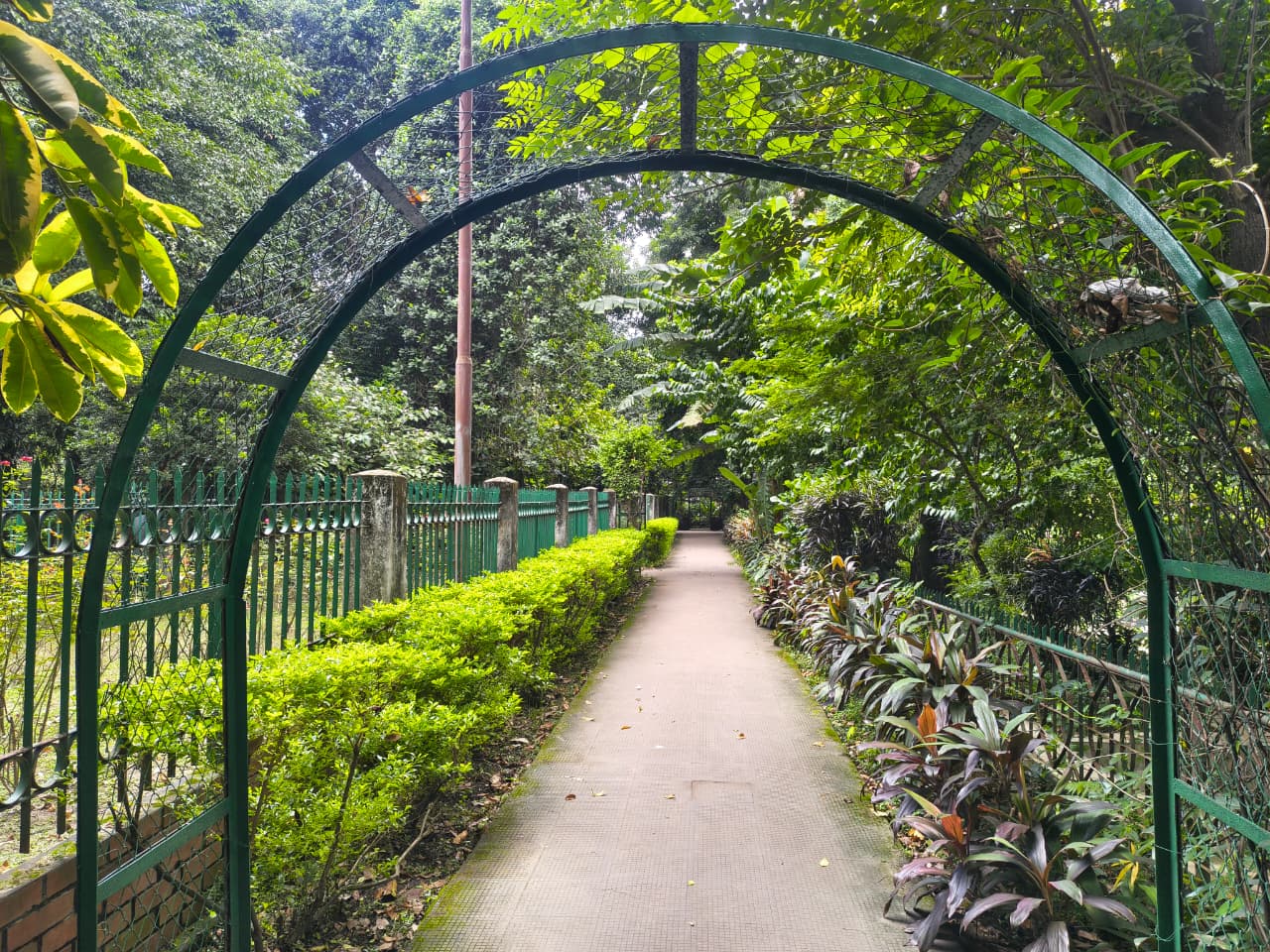
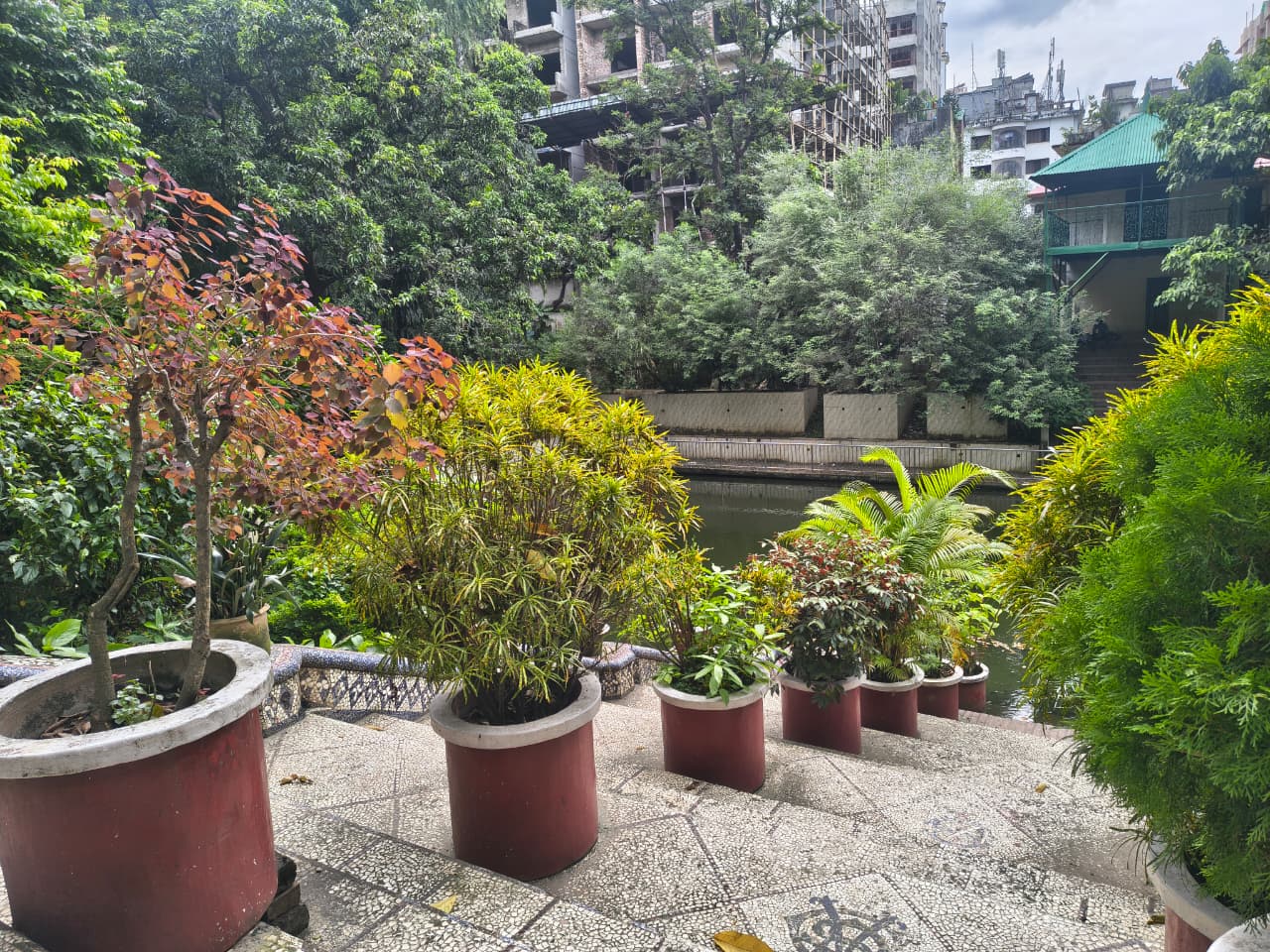
Visitors stepping into the grounds are greeted by birdsong, the cool shade of towering mature trees, and a tranquil pond, while bats roost quietly in the high canopy. Near the perimeter, however, dust-coated foliage and the incessant roar of traffic serve as a stark reminder of the city’s encroaching environmental toll.

A living archive of 15,000 plants
The garden was established in 1909 by Narendra Narayan Roy Chowdhury, the zamindar of the Baldha Estate and an ardent naturalist. Today, it functions as a satellite unit of the National Botanical Garden.
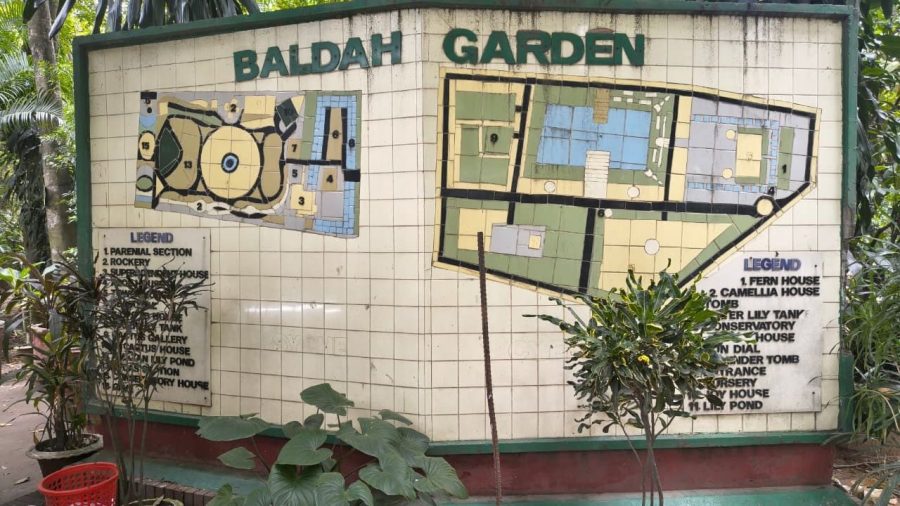
Divided into two distinct sections, Psyche and Cybele, Baldha Garden houses thousands of indigenous and exotic plant species. An archival signboard indicates that around 18,000 specimens were historically collected and preserved here.
However, current Forest Department records show the garden now contains approximately 15,000 plants across 672 species, whereas site signage lists nearly 800 species across both sections.
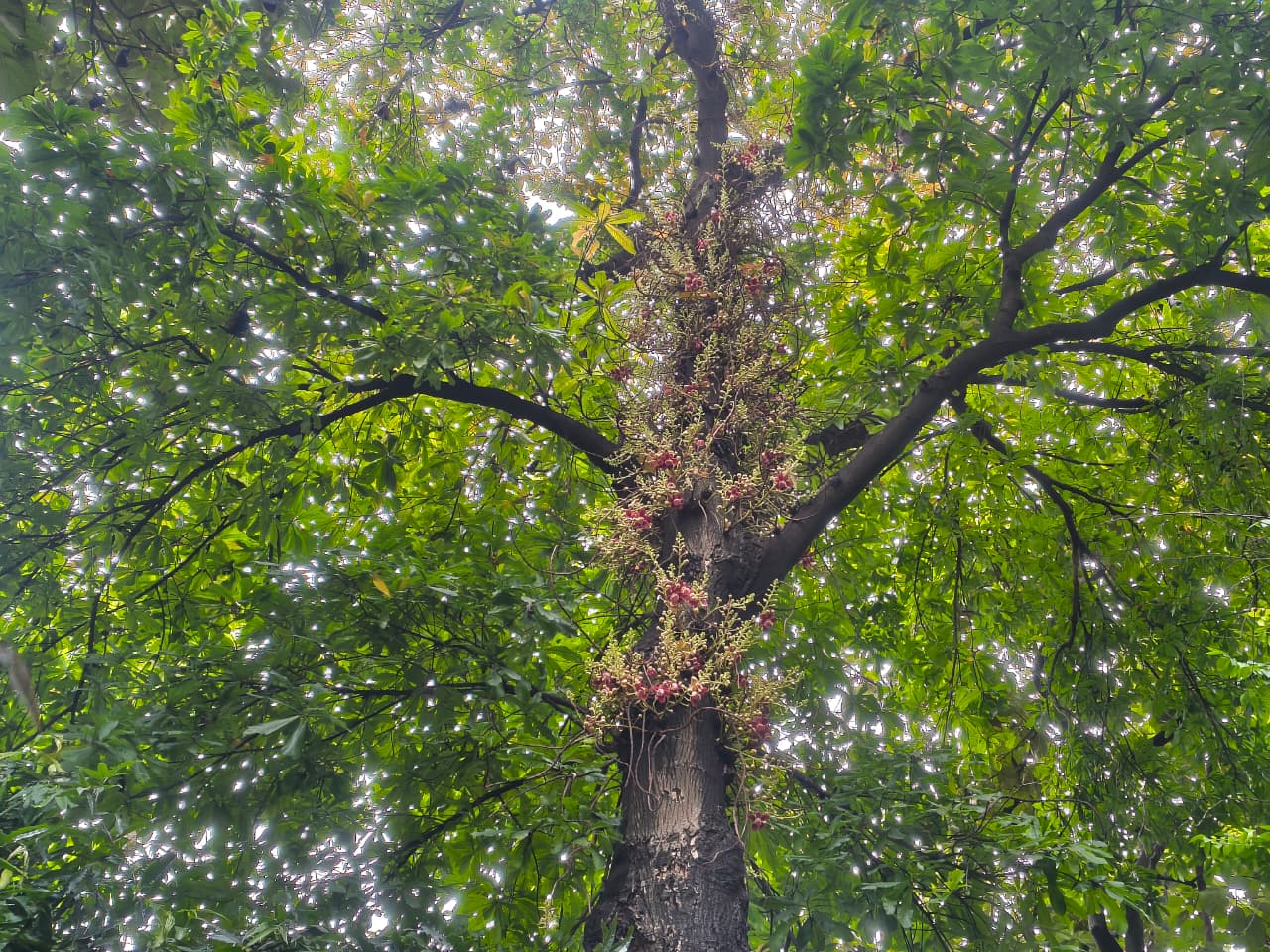
The Cybele section boasts several rare botanical highlights, including Shankhachur, camellias, golden ashoka, African tulip trees, a historic sundial, Joy House and the Fern House. A commemorative plaque notes that the Nobel laureate Rabindranath Tagore was inspired to write a poem after admiring the blooming camellias at Joy House.




Winding pathways lead visitors past royal ashoka, bon sonalu, wax jambu, variegated bakul, rubber plants, eucalyptus, hijal, cannonball trees, mussaenda and coccoloba. Fish dart across the pond, and bats hang from the branches, though no migratory birds were observed during a recent visit.
Although species identification tags are affixed throughout the grounds, several are weathered and damaged, while a number of trees lack nameplates altogether. Furthermore, heavy vegetation lining the main road is visibly choked under thick layers of road dust.
Pollution leaves its mark
The Curator and Officer-in-Charge of Baldha Garden, Taslima Khatun, noted that scientific research is required to quantify the exact impact of urban pollution on the garden’s botanical health.
“However, it is clear that pollution is adversely affecting the trees and plants,” she said.
She explained that airborne dust poses a major threat during the dry winter months, blanketing leaves and impairing photosynthesis and light absorption.
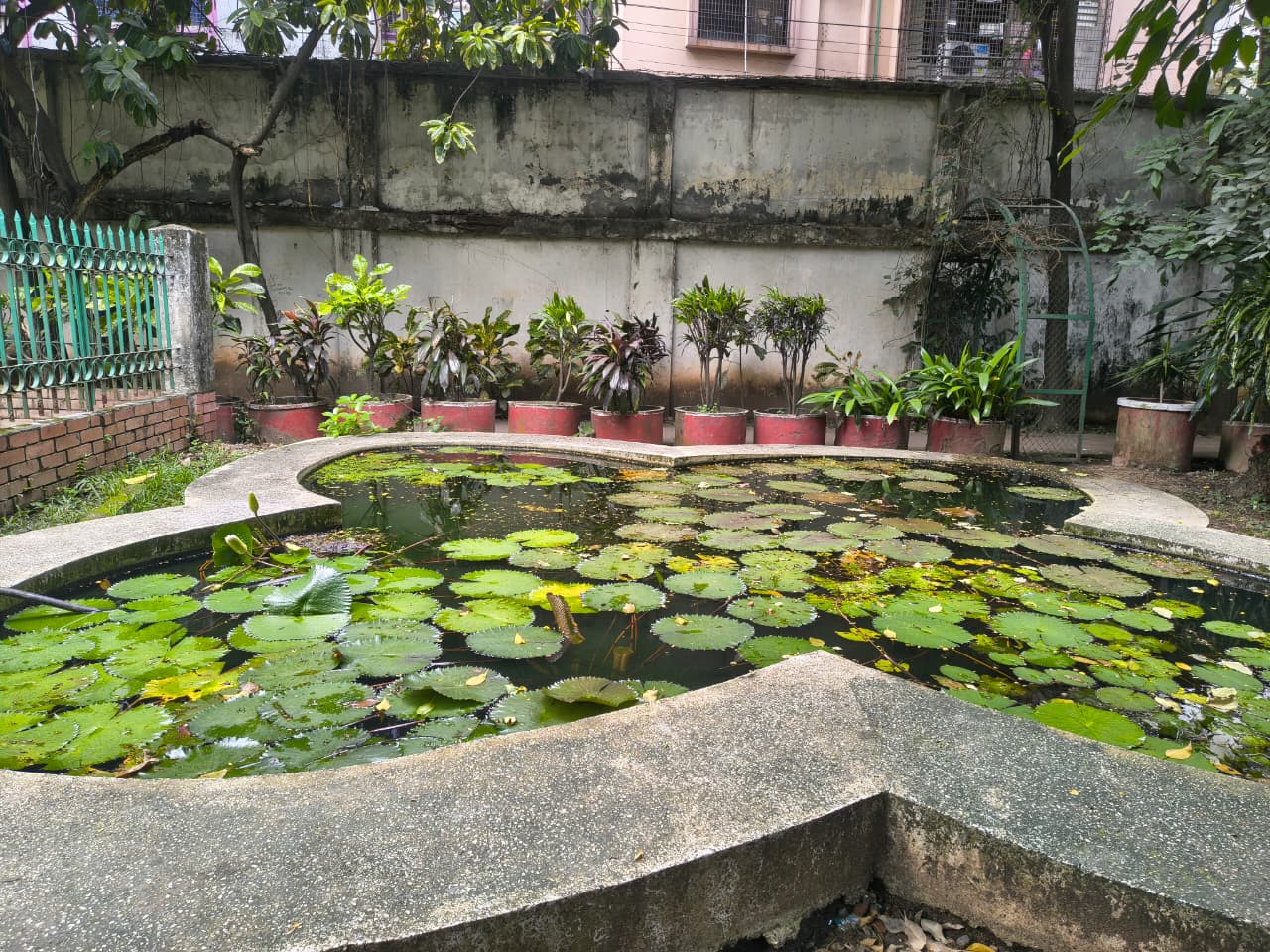
“Rare trees require adequate, unobstructed light for natural growth and longevity, but sunlight distribution across the garden is increasingly unequal. High-rise buildings nearby and general urban encroachment are major contributing factors,” she added.
Beyond trees: The need for ecosystem conservation
Environmental experts stress that conserving Baldha Garden requires a comprehensive ecological approach extending far beyond basic tree protection. Systematic monitoring of water quality, aquatic organisms and microclimatic shifts is essential to preserve the garden’s delicate ecosystem.
Specialists suggest creating dedicated health registers for rare and ancient trees, tracking their precise age, condition and maintenance requirements, to form the baseline of a long-term conservation blueprint alongside routine biodiversity audits.
Alamgir Kabir, General Secretary of Bangladesh Paribesh Andolan (BAPA), highlighted Dhaka’s critical deficit of green open spaces:
“Trees and open spaces are vital for improving air circulation, regulating ambient temperatures and mitigating urban pollution. They are equally vital for children’s recreation and mental health, as well as serving as crucial open refuges during natural disasters.”
Planner Sheikh Muhammad Mehedi Ahsan, vice-president of the Bangladesh Institute of Planners, observed that numerous open areas across Old Dhaka have succumbed to unplanned development and administrative neglect.
“Encroachment, permanent and temporary structures, and the pervasive use of concrete have irrevocably altered the natural landscape,” he noted.
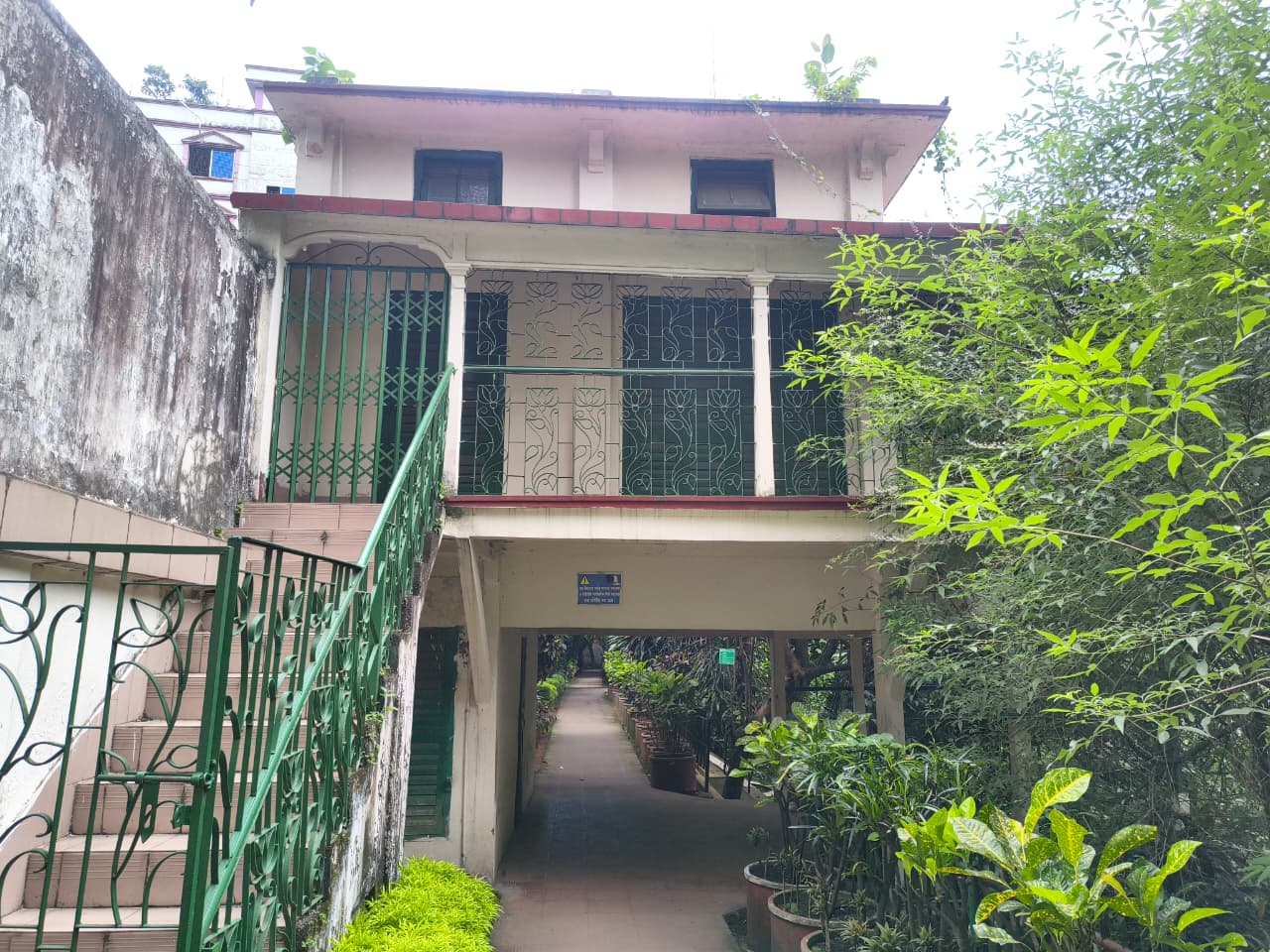
Fifty-three years after its founding, operational management of Baldha Garden was formally transferred to the Forest Department in 1962. Historic structures, including the Zamindar family tombs and Joy House, continue to preserve its rich heritage.
A year after attaining traditional grove status, Baldha Garden remains an irreplaceable symbol of Dhaka’s natural heritage, protected by law, yet increasingly vulnerable to the pressures of an expanding metropolis. Preserving this century-old sanctuary will demand far more than legal declarations; rigorous scientific management, pollution mitigation, restored access to sunlight, and sustained conservation planning are essential to secure its future.