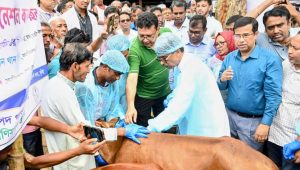
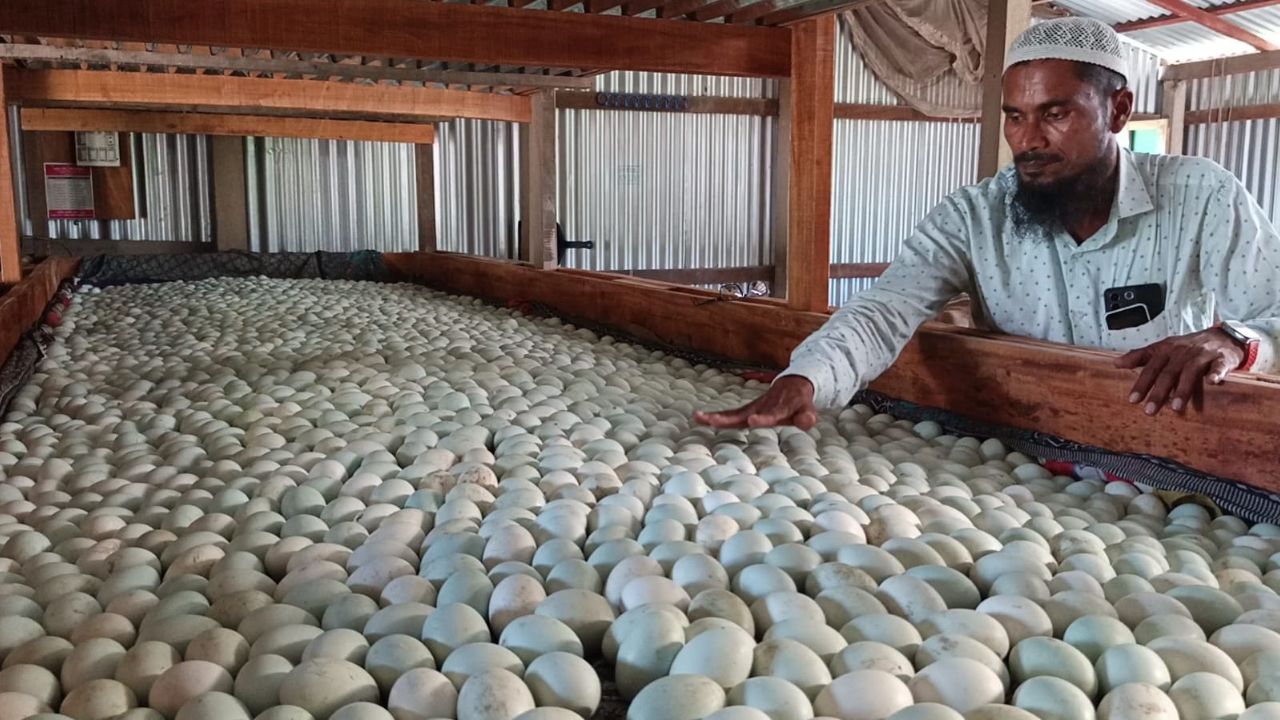
Fisheries and Livestock Adviser Farida Akhter has stated that to ensure the supply of safe meat, eggs, and milk, it is essential to first keep animals healthy and disease-free.
To achieve this goal, the government will further expand vaccine production activities to bring all animals under vaccination coverage. She said that many infectious diseases transmitted from animals to humans can take a severe form as zoonotic diseases. Therefore, integrated efforts must be made under the “One Health” concept, linking human health and animal healthcare.
The adviser made these remarks as the chief guest at the Divisional Progress Review Workshop of the Livestock and Dairy Development Project (LDDDP), held at Begum Rokeya Hall of Rangpur Dinajpur Rural Service (RDRS) on Sunday.

The Fisheries and Livestock adviser stated that women’s empowerment is not limited to the economic sphere; Women are performing the crucial task of educating the nation. She said that the lives and culture of women in char areas (riverine islands) are deeply connected with cattle and goat rearing. Therefore, special importance must be given to the livestock sector for the development of char areas.
The livestock adviser mentioned that the successful activities of the LDDDP project should be prioritised and advanced anew. Completing the unfinished work of the project will enhance the government’s reputation and increase the capacity of officials.


Referring to nutrition improvement as one of the SDG targets, the adviser said that milk is an essential food for us. Currently, the country has to import powdered milk worth about Tk4,000 crore annually. If chilling centres could be established in various areas under the LDDDP project, there would be no need to import milk, and there would be no shortage of milk in the country.
She further stated that through this project, the school milk feeding program has been expanded from 300 schools to 600 schools. Additionally, including eggs in the school feeding program would further improve students’ nutrition.
Chaired by the Director General of the Department of Livestock Services, Dr Md Abu Sufian, the special guest speech was delivered by the Secretary of the Ministry of Fisheries and Livestock, Abu Taher Muhammad Jaber. He said that alongside encouraging innovations by entrepreneurs, the tools they develop should be disseminated among other farmers.
To utilise the experience of trained farmers, arrangements should be made for them to train new entrepreneurs. He also mentioned that if the excess milk produced in the Rangpur division could be processed and distributed nationwide, the milk shortage would be somewhat reduced. Furthermore, he called upon relevant parties to utilise the savings of PG members in productive work.
Senior officials of the Ministry of Fisheries and Livestock, senior officials of the Department of Livestock Services, district and upazila-level officials of the Department of Livestock Services in Rangpur division, and PG farmers participated in the workshop.