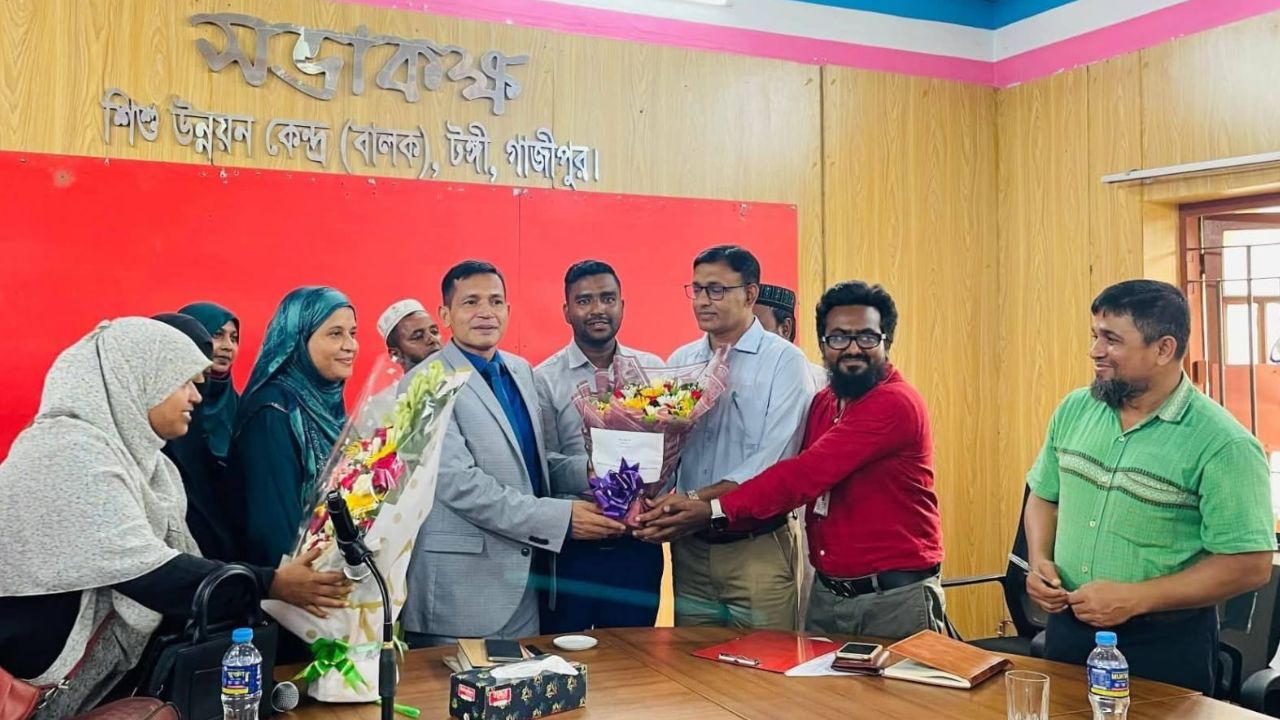

The Child Development Centre (Boys) in Tongi, Gazipur, marked a significant milestone on 22 July as Superintendent Md Emran Khan completed his first year in office.
Since assuming charge in 2025, Emran has led a series of reforms aimed at strengthening administrative efficiency while placing child protection, education, rehabilitation and the overall well-being of children at the centre of institutional development, reads a press release.
The Child Development Centre (Boys), Tongi, is one of Bangladesh’s key government institutions responsible for the care, rehabilitation, education and social reintegration of children in conflict with the law.
Since taking office, Emran has followed the philosophy that the success of a child development institution should be measured not only by its physical infrastructure but also by the positive transformation it brings to the lives of the children under its care.
Guided by this principle, the Centre has prioritised the best interests of children through initiatives designed to create a more humane, child-friendly and rights-based environment.
Strengthening child protection
Over the past year, the Centre has reinforced its child protection mechanisms to ensure children live in a safe, secure and supportive environment where their dignity and rights are respected.
Enhanced supervision, improved safeguarding practices and a stronger culture of compassionate care have made the institution more responsive to children’s needs.
The Centre has focused on preventing harm, promoting safety and ensuring every child receives protection in line with national child protection standards.
Expanding counselling and psychosocial support
Recognising that rehabilitation extends beyond physical care, the Centre has strengthened its counselling and psychosocial support services.

Regular counselling sessions, structured case management, personalised care plans and individual rehabilitation strategies have become integral to service delivery.
These measures aim to address children’s emotional, psychological and behavioural needs while supporting their recovery, confidence and successful reintegration into society.
The increased emphasis on mental health and psychosocial well-being reflects the Centre’s commitment to comprehensive and individualised rehabilitation.
Promoting education and skills development
Education and skills development have remained key priorities throughout the year.
The Centre has strengthened its education programmes while expanding vocational and technical training opportunities.
It has also enhanced life skills education, sports, cultural activities and creative learning programmes to support children’s holistic development.


These initiatives aim to improve academic learning while equipping children with practical skills, confidence, discipline and positive values to help them rebuild their lives and pursue productive futures after leaving the Centre.
Strengthening family-based rehabilitation
The Centre has recognised family engagement as a vital component of successful rehabilitation.
During the past year, it has made family visitation arrangements more organised, humane and child-centred.
It has also increased efforts to involve families throughout the rehabilitation process, recognising that successful reintegration depends on strong family support and community acceptance.
By strengthening family connections, the Centre has established a stronger foundation for children’s long-term social reintegration and emotional well-being.
Improving health and living standards
The Centre has also focused on improving the quality of life within the institution.
Continuous efforts have strengthened healthcare services, improved hygiene and sanitation, ensured safer accommodation, promoted better nutrition and enhanced children’s daily living conditions.
These improvements have created a healthier environment that supports both the physical and psychological well-being of children while reinforcing the Centre’s commitment to comprehensive care.
Advancing good governance and accountability
Institutional reforms have also focused on governance and administration.
Greater transparency, accountability, systematic documentation, monitoring, reporting and the implementation of Standard Operating Procedures (SOPs) have strengthened organisational management and operational efficiency.
These measures have established more structured administrative processes and helped ensure services are delivered consistently in accordance with recognised standards of child care and institutional management.
Expanding partnerships
Collaboration has been another key feature of the Centre’s progress over the past year.
The institution has strengthened cooperation with government agencies and non-governmental organisations (GO-NGOs) to expand opportunities in education, healthcare, skills development, psychosocial support and rehabilitation services.
These partnerships have enabled the Centre to mobilise additional expertise and resources while providing more comprehensive support for children.
Visible progress across multiple areas
The combined impact of these initiatives has resulted in visible progress across a broad range of institutional functions.
Significant improvements have been observed in child protection, education, counselling, rehabilitation, vocational training, healthcare, recreational activities, cultural programmes, service quality, governance and collaborative partnerships.
Together, these achievements reflect the Centre’s continued transformation into a more professional, child-centred and humane institution committed to promoting children’s rights and supporting their successful reintegration into society.
Leadership with a child-centred vision
Those who have worked closely with Emran describe him as a leader whose decisions consistently prioritise the best interests of children.
As a child protection professional who has had the opportunity to work alongside him, I have personally witnessed his unwavering commitment to improving children’s lives.
His approach combines professional discipline with compassion, encouraging teamwork and evidence-informed decision-making while maintaining a strong focus on children’s rights and well-being.
He firmly believes that changing the life of one child has the potential to change the future of an entire family. This philosophy continues to guide his leadership and inspires colleagues to work collectively towards building a more responsive and service-oriented institution.
Looking ahead
As Emran completes his first year as Superintendent of the Child Development Centre (Boys), Tongi, the institution stands as an example of how committed leadership, effective governance and a child-centred approach can drive meaningful institutional transformation.
While challenges remain, the progress achieved over the past year provides a strong foundation for continued reform and improvement.
The Centre’s ongoing efforts to strengthen child protection, rehabilitation, education, governance and partnerships reflect a shared commitment to ensuring every child receives the care, opportunities and support needed to rebuild their lives with dignity and hope.