



The government’s decision to raise rawhide prices ahead of Eid-ul-Adha appears to have had the opposite effect, with many people unable to sell sacrificial animal hides anywhere near the official rates.
The collapse in prices has hit low-income groups particularly hard, as money earned from selling hides traditionally goes to poor families and charities after the annual sacrifice festival.
Traders said the situation was not straightforward even for seasonal rawhide buyers, many of whom also suffered losses after failing to resell hides at wholesale markets.
Several traders reportedly discarded hides after being unable to secure buyers at warehouses.
Although official figures on the number of sacrificial animals and the volume of wasted hides have not yet been released, reports from across the country since Eid day suggest that thousands of hides were either discarded or buried after sellers failed to find buyers.
This year, the government fixed the price of salted cowhide at a minimum of Tk55 per square foot outside Dhaka and up to Tk67 in the capital, an increase of Tk2 per square foot from the previous year.
But many people who offered sacrifices said they were forced to sell hides for as little as Tk5 to Tk7 per square foot, far below the official rates.
Industry insiders said the cost of salting a hide is no more than Tk8 per square foot, raising questions about why market prices fell so sharply despite the government announcement.
People connected to the sector said the crisis was not new and reflected deeper structural problems in Bangladesh’s leather industry.
They blamed the continued dysfunction of the Central Effluent Treatment Plant (CETP) at the leather industrial estate for causing environmental pollution, which has discouraged European buyers from purchasing Bangladeshi leather.
As export demand weakens, Bangladesh has struggled to use the full potential of its leather sector. Industry insiders say the country is simultaneously wasting large quantities of rawhide while importing processed leather for export-oriented manufacturing.
Leather traders say the roots of the crisis can be traced back more than a decade.

In 2013, the government-fixed price for cowhide stood at Tk85 to Tk90 per square foot. Since then, prices have steadily declined, while official rates have increasingly failed to reflect market realities.
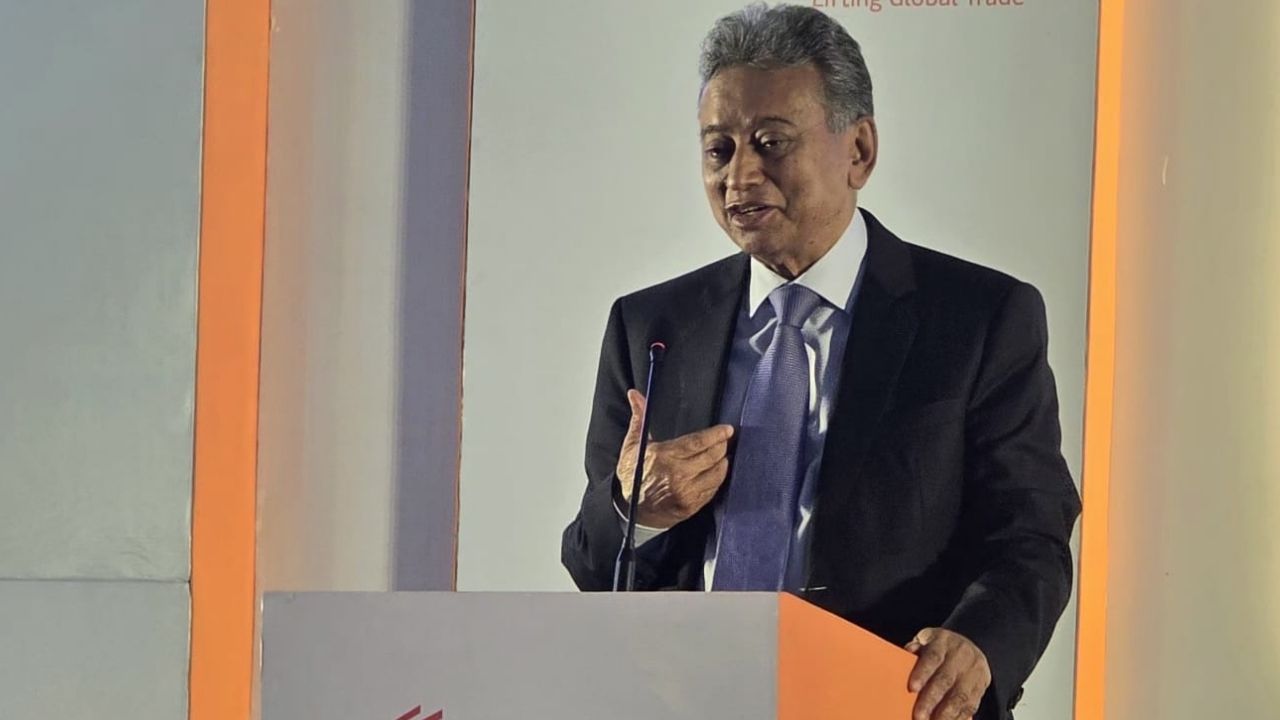
“The financial difficulties facing tanneries, outstanding payments and continued uncertainty in the market have forced many traders to leave the sector,” Bangladesh Hide and Skin Merchants Association President Monzur Hasan told TIMES of Bangladesh.
In Posta, the main rawhide trading hub in Old Dhaka, traders were seen taking various measures to preserve salted hides after Eid.
The government fixed this year’s price of salted cowhide in Dhaka at Tk62 to Tk67 per square foot.
Based on the official rates, a small hide measuring 16 to 20 square feet should sell for between Tk990 and Tk1,200, a medium-sized hide of 21 to 30 square feet for Tk1,300 to Tk1,850, and a large hide of 31 to 40 square feet for Tk1,900 to Tk2,600.
The official price for goat skin was set at Tk22 to Tk27 per square foot.
But traders in Posta said large and medium-sized unsalted cowhides were sold for no more than Tk500 to Tk700 this year, equivalent to around Tk20 per square foot or less.
Many wholesalers refused to buy smaller hides altogether. Those that did offered only Tk250 to Tk300 a piece, well below the government’s benchmark rates.



Traders said similar hides sold for Tk700 to Tk900 last year.
Demand for goat skin was even weaker, with many traders struggling to find buyers at any price.
A significant portion of sacrificial hides is traditionally donated to mosques and madrasas, which rely on the proceeds as a source of income.
At Posta, Rahmatullah, the principal of a madrasa, was seen trying to sell around 150 hides collected during Eid.
“We hired a vehicle to bring them here, and we cannot take them back,” he said.
“We will have to sell them for whatever price we can get.”
‘50% of rawhides’ remain uncollected in Ctg
Rawhide traders in Chattogram say nearly half of the sacrificial animal hides generated during Eid-ul-Adha were not collected this year.
Around 50 warehouses in the port city collected and preserved rawhide, while 220 madrasas also stored hides with government-supplied salt, according to traders.
They estimate that the total number of hides collected in Chattogram may have reached around 4 lakh.
But the Department of Livestock Services said more than 8 lakh animals were sacrificed in the district this year, suggesting that nearly 50 per cent of hides were either wasted, damaged or never entered the formal market.
“A large portion of the hides was damaged before reaching warehouses,” Chattogram Rawhide Traders Association General Secretary Mohammad Yunus told TIMES.
“Some were spoiled in the extreme heat, while others were cut badly during slaughter and became unsuitable for processing,” he said.
Officials at the regional office of the Bangladesh Small and Cottage Industries Corporation said many seasonal collectors returned home without being able to sell their hides.
In Aturar Depot area of Chattogram, a truck carrying around 800 hides reportedly failed to find a buyer. The entire consignment was later discarded.
Chattogram City Corporation officials said discarded hides were found at several dumping stations across the city, although the quantity was lower than in previous years.
Leather traders said many businesses had preserved hides after receiving assurances that fair prices would be ensured by the government.
“If we cannot sell at the government-fixed rates, many warehouse owners will face heavy losses,” said leather traders’ association leader Moslem Uddin.
Similar scenes were reported in Savar’s leather industrial estate, where most hides were sold for between Tk300 and Tk500.
Mufti Mohammad Abul Hasan Shahjli, who brought 50 hides from a madrasa in Dhamrai, said prices had collapsed compared with last year.
“Hides that sold for Tk800 to Tk900 last year are not attracting offers above Tk300 to Tk400 this time,” he said.
In Rajshahi district and metropolitan areas, nearly 3.75 lakh animals were sacrificed this year, although there is no clear estimate of how many hides were ultimately collected.
Abu Jafar, from the Raipara area, said he waited until Eid afternoon but could not find a buyer for the hide of his sacrificial animal. He later donated it to a madrasa.
In Khulna, large cowhides were sold for Tk400 to Tk450, while smaller hides fetched between Tk200 and Tk300.
Khulna Rawhide Traders Association President Abdus Salam Dhali said mounting unpaid dues from tanneries, the absence of a stable market and weak government support had pushed many traders out of the business.
Weak tannery sector at heart of crisis
Nearly 60 per cent of the country’s leather raw materials are generated within just a few days during Eid-ul-Adha. But traders and industry leaders say the sector still lacks the infrastructure needed to handle such a large seasonal supply.
The Central Effluent Treatment Plant (CETP) at Savar Leather Industrial Estate has faced capacity problems for years.
The government launched the Savar relocation project in 2003 to move tanneries from Hazaribagh and make the industry environmentally compliant. But more than two decades later, the industrial estate has still not become fully environment-friendly.
The CETP at the 200-acre estate remains only partially functional, contributing to pollution in the Dhaleshwari River.
“The environmental compliance crisis has caused European buyers to move away from Bangladeshi leather products,” Bangladesh Tanners Association Vice Chairman Ashikur Rahman told TIMES.
China is currently the largest buyer of Bangladeshi leather, although traders say Chinese buyers generally offer lower prices than European markets.
Commerce Minister Khandaker Abdul Muqtadir recently acknowledged shortcomings in Savar’s CETP and said steps would be taken to address them.
As a short-term solution, Bangladesh Hide and Skin Merchants Association President Monzur Hasan suggested introducing a government-backed buffer stock system to stabilise the seasonal market.
“A partial government procurement or buffer stock system here could save seasonal traders from heavy losses,” he said.