
Dr Palto Datta
From ancient Greece to the edge of the twenty-first century, we have witnessed the steady progress of human civilisation. The advancement of human thought, science, politics, and humanity, when clocked in historical perspective, offers an inspiring reflection for society. Greek philosophers urged people to ask, “What is truth?” Such insight lies at the quintessence of modern rationalism, democracy, science, and even justice. The question of ‘truth’ as taught by the great thinkers also gave rise to the Renaissance, the Industrial Revolution, and modern science.
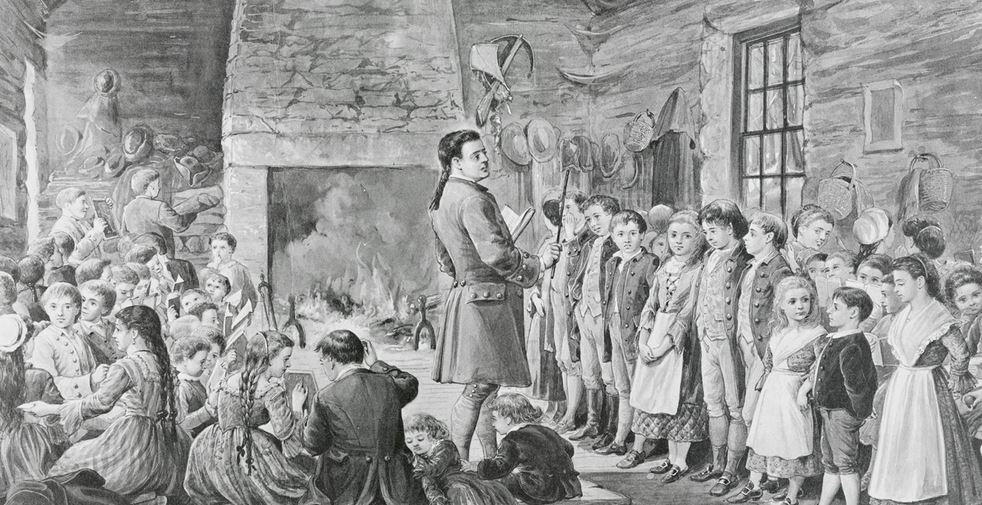
Education brought humanity from darkness to light. The past thousand years have seen education extend beyond mere teaching and learning. From the modern university to ancient academies in every civilisation, such as Mesopotamia, Egypt, the Indus Valley, and China, education has been seen as the source of modern civilisation. Through education, only an individual becomes an agent of transformation, not just a repository for information. Progress, justice, equality, and humanity all emerge from the fertile soil of education and continues to illuminate the path for the world. Civilisation advanced with every Gregorian and Athenian academy, every modern university in Europe, every Gurukul in Asia, and the digital education in contemporary times.

However, the current education, as we witnessed, is destined to decline. Today, when talking about social change, development, or technological advancements, excluding education from the picture is simply pointless. The true purpose of education is now merely a commercial value to be bought and sold. The entire system of education, from primary schooling through higher education, is primarily designed to satisfy the market. The bond between a teacher and a student, which was once inspirational, is now, unfortunately, a mere formality. The wisdom of a degree, which it pretends to contain, is now of secondary importance to its mere possession. The history of education and inquiry is proof of the societies which have risen to glory, as well as those which have neglected education and descended into ignorance. Therefore, reclaiming the purpose of education remains vital. It should again become the path of freeing the spirit, the sanctuary of contemplation, and the protector of human dignity.
Globally, the most technologically advanced, economically developed, and socio-culturally balanced countries share one common feature to some extent: they have well-developed, inclusive education systems in which the education of the mind is free, the cultivation of reason is applauded, and the spirit is nourished with compassion. These societies view education not as mere knowledge acquisition, but rather as a journey of profound self-discovery. Where education is truly absent, superstition replaces reason, arrogance clouds the conscience, and a mere shell of humanity remains. Just as Western philosophy viewed education as the path toward enlightenment, so too does Eastern philosophy. Gautama Buddha said, “Darkness can’t be extinguished by external light.” The Upanishads invoked “true education is that which liberates.” “Education builds character; without it, knowledge is shallow,” said Confucius. The message is clear. Education must integrate professional skills with the moral sense, ethics, and social conscience.



In the modern era of globalisation, technologically advanced and unjust economies, it is education that rebalances the scales. Education acts as a window to the limitless sky of civilisation. It teaches us the limitations of self, the obligation of self, and the responsibility of others. It is the flow from which knowledge, humanity, and justice, all civics, stem. In times of societal darkness, it is the individual who cultivates education- the torch that lights the way. In times of division and conflict, it is the individual who uses education to build empathy and foster peace. Each impactful transformation in history has been the result of that silent revolution in education. The unification of knowledge and conscience is the highest goal of civilisation, and the integration of the two is civilisation’s highest purpose.
The current social system poses complex challenges for individuals and the education system. The gap between technological advances and humanity’s moral stagnation is widening. But only education has the power to fix the unfairness, inequality, social division and capitalist materialism. The Nordic countries admirably address such issues. Their education systems prioritise character development alongside a focus on innovation, productivity, and sustained prosperity. Korea and Finland are also strengthening their education systems. Post-WWII Korea focused on human capital, inclusive education, and ethics in creativity and technology. Moreover, respect for Finnish educators fostered an exceptional educational culture. Unlike many education systems, Finnish schools foster a sense of wholeness and flourishing in life, teaching students not only to succeed but also to think, question, and embrace failure.
If we are to repair the fractures in modern civilisation education must once again be our primary focus. As Confucius said, “When a nation gives importance to education, discipline and justice naturally follow.” An effective and inclusive education system is essential for the balanced development of extensive human values. Bangladesh’s achievements in increasing the number of girls in school are very positive; however, improving the quality of education and increasing access to digital learning must be prioritised even more. The elements of moral education should be incorporated in the school curricula.
The importance of education does not require debate. It is the lifeblood of a civilisation in the same way that it serves as a shield against poverty, a weapon for justice, and a means to escape stagnation. Beyond the acquisition of knowledge, justice requires educating the conscience. Such a conscience should aspire to the establishment of societies in which quality of life is measured in humanity, not merely economic wealth. In such a society, knowledge will be accompanied by responsibility, and conscience by courage. It is this society that will make our world a better, kinder, and more humane place.
The writer is an educator, author, and researcher